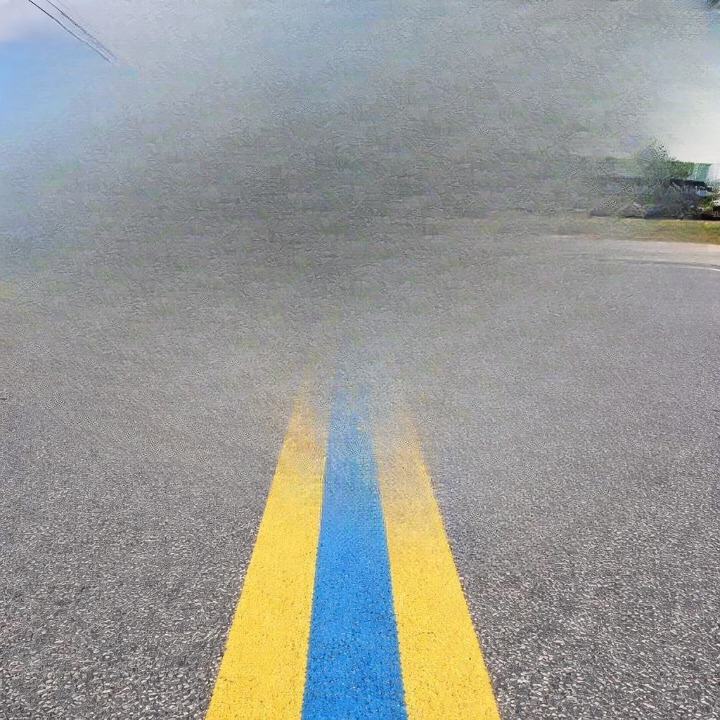
If you’ve recently been driving in certain parts of the United States, you may have spotted something unusual painted along the center of the road: a thin blue line running between the traditional yellow lane markers. At first glance, it might seem like a new traffic guideline, but its meaning is deeper and more symbolic.
These blue lines are part of an initiative to honor local law enforcement officers, recognizing their dedication to keeping communities safe. While subtle in appearance, the marking sends a clear message of respect and appreciation to those who serve in public safety roles, bridging the gap between drivers and civic institutions.
Where It Started
The first thin blue line projects were introduced in select locations in Maryland, with Ocean City taking a leading role. On 65th Street, a key thoroughfare leading directly to the city’s police department, officials painted the blue line with both symbolism and visibility in mind. The route was chosen carefully to represent the link between the community and the officers who help maintain safety in a bustling tourist destination.
Mayor Rick Sheehan has been a vocal supporter of the initiative. He emphasized that Ocean City relies heavily on its police department to ensure a safe environment for residents, visitors, and businesses alike. During peak tourist season, the workload for officers increases, and initiatives like the thin blue line serve as a tangible acknowledgment of their efforts. It’s a small gesture, but one that signals civic pride and gratitude.
A Practical Symbol
Beyond its symbolic meaning, the blue line has a practical aspect. Drivers can use it as a subtle guide, helping them navigate toward the police department or other key municipal services along the route. In this way, the marking combines functionality with recognition, blending roadway safety with community outreach.
City officials explain that the project is more than decorative. By incorporating the thin blue line into public roads, the city reinforces positive relationships between local residents, tourists, and law enforcement officers. Simple, visible acknowledgments can foster trust, encourage cooperation, and strengthen the sense of civic connection that helps communities thrive.
Inspiring Broader Interest
The success of the Ocean City project has sparked curiosity in other municipalities. Several towns are exploring similar programs to show support for public service personnel in their areas. From volunteer fire departments to police units, highlighting the contributions of individuals who dedicate themselves to public safety has become an effective way to boost community morale.
Community leaders note that the gesture is not only symbolic; it also helps residents and visitors recognize the importance of these roles. It reminds people that public safety isn’t just a background service — it is essential to the functioning and well-being of neighborhoods. Initiatives like the thin blue line create a visible and thoughtful acknowledgment that is both non-intrusive and meaningful.
Strengthening Civic Awareness
The thin blue line also serves as a tool for civic education. Passersby may ask about its purpose, providing an opportunity to explain the values of public service and the work that goes into keeping communities safe. In this way, the marking becomes a conversation starter, sparking awareness and appreciation in a way that traditional announcements or signage may not.
The line’s presence also fosters a subtle sense of accountability. It’s a visual reminder that law enforcement officers are part of the everyday fabric of the community, and that mutual respect strengthens relationships between residents and those who serve them.
A Modest Gesture with Meaning
While it may appear simple, the impact of the thin blue line is significant. It combines recognition, utility, and symbolism in a small but visible way. Residents driving along streets like 65th Street in Ocean City are reminded of the dedication and hard work of public safety officers. Tourists and new residents are given an immediate visual cue of the city’s values and priorities.
In essence, the line is a quiet yet powerful tribute. It communicates respect without overwhelming the visual landscape of the roadway. It’s a reminder that appreciation can take many forms — even in something as ordinary as a painted stripe on the pavement.
Looking Ahead
As the concept gains traction, more cities may adopt similar measures to honor law enforcement and other public service workers. The thin blue line is an example of how a simple, thoughtful design can foster goodwill, civic pride, and recognition for people who often work behind the scenes.
Whether interpreted as a guide, a symbol of gratitude, or a visual tribute, the thin blue line represents a meaningful connection between citizens and the individuals who keep their communities organized and safe. It shows that even small gestures, when thoughtfully applied, can have a lasting impact on public awareness, morale, and community cohesion.
Next time you notice a subtle blue stripe on the road, take a moment to reflect — it’s more than just paint. It’s a tribute, a reminder, and a small but thoughtful symbol of respect for those who dedicate themselves to public service.
The Origins of the “Thin Blue Line” Concept
While the blue line painted on roads is a relatively new phenomenon, the symbolism behind it has a long history. The term “thin blue line” has been used for decades as a metaphor representing law enforcement standing as the barrier between order and chaos. It signifies the role police officers play in protecting communities from crime while maintaining societal stability.
Historically, the phrase originated in the United Kingdom in the 19th century, referencing military formations where a single line of soldiers held back opposing forces. Over time, the metaphor shifted to policing, eventually gaining popularity in the United States as a representation of solidarity among officers and their dedication to public service. The road markings in Maryland are a modern, visual extension of this longstanding symbolic tradition.
By translating a metaphor into a physical marker, city planners have created a visible reminder of the importance of law enforcement. It’s no longer just a phrase in speeches or literature — it’s literally painted on the streets that officers and citizens share every day.
Community Reactions and Public Sentiment
The response from the Ocean City community has been largely positive. Residents appreciate the gesture as a simple yet meaningful way to honor local officers, especially in a city where tourism brings large crowds and increased demands on public safety personnel. Many locals describe the initiative as a thoughtful acknowledgment that officers often go unrecognized for their daily contributions.
Tourists, too, have expressed curiosity. Visitors unfamiliar with the symbolism may initially wonder about the purpose of the line. This curiosity sparks conversations that serve as informal public education, explaining both the practical and symbolic roles of law enforcement. In this way, the thin blue line functions as more than decoration — it fosters understanding and appreciation among the broader community.
Some residents have suggested that the initiative encourages a sense of accountability as well. When drivers see the line, they are reminded of the shared responsibility to follow traffic rules and respect public spaces, reinforcing a cooperative relationship between citizens and law enforcement.
Practical Benefits Beyond Symbolism
Though primarily symbolic, the thin blue line also has tangible benefits for navigation and urban planning. By marking key routes leading to police stations or other civic facilities, it subtly guides drivers, especially those unfamiliar with the area. For emergency response planning, visible markings can assist with traffic flow and improve wayfinding during peak hours or large events.
City officials have noted that this dual function — symbolic and practical — makes the initiative particularly valuable. While the line honors officers, it also adds to road clarity, improving safety for all drivers. This combination of respect and utility exemplifies how thoughtful urban design can address multiple community goals simultaneously.
Expanding the Idea to Other Communities
The success in Ocean City has inspired other municipalities to consider similar projects. Across the United States, local leaders are exploring how minor changes to infrastructure can promote civic pride and recognition. Some towns have discussed painting thin blue lines along routes leading to fire stations, city halls, or community centers. Others are considering color-coded markings for pedestrian paths, school zones, or bike lanes, blending functionality with symbolism.
The trend reflects a growing awareness that even small, visible gestures can strengthen connections between citizens and the institutions that serve them. Public infrastructure doesn’t have to be purely utilitarian; it can also convey values, honor contributions, and spark dialogue.
The Psychology of Visible Recognition
Psychologists and sociologists note that visible acknowledgment of effort can significantly influence morale. For public service workers, such recognition reinforces the idea that their work is valued. Even subtle gestures, like a painted line or symbolic marker, contribute to a sense of pride and belonging.
Similarly, for community members, the line serves as a reminder of the people who work tirelessly to maintain order and safety. In a fast-paced, modern world, such visual cues can help cultivate gratitude and mindfulness, prompting citizens to consider the often-unseen efforts that support their daily lives.
A Model for Civic Engagement
The thin blue line initiative in Ocean City demonstrates how cities can creatively engage their residents. By incorporating meaning into physical infrastructure, leaders provide a subtle but powerful tool for education and community building.
The marking encourages curiosity, discussion, and appreciation without imposing on the public space or interfering with traffic patterns. It’s a model that other cities can replicate, proving that civic engagement doesn’t always require large-scale campaigns or complex programs. Sometimes, a single stripe of color on the pavement can achieve more than a poster, announcement, or event.
Challenges and Considerations
While the thin blue line has been well-received, it also requires careful planning to ensure it is understood correctly. Officials must consider how new residents or visitors might interpret the markings and provide context when necessary. Informational signage or local media coverage can help explain the purpose, maintaining clarity and avoiding confusion.
Additionally, municipalities must weigh maintenance costs. Painted lines need periodic upkeep to remain visible and effective. Balancing symbolic impact with practical longevity is an important part of planning for such initiatives.
Looking Toward the Future
As cities continue to explore ways to recognize public service and enhance community relationships, the thin blue line may inspire new forms of visual acknowledgment. From color-coded lanes for different services to markings that celebrate volunteer efforts or civic achievements, the possibilities are virtually endless.
The Ocean City example serves as proof that thoughtful urban design can be both functional and meaningful. It shows that respect, appreciation, and civic pride don’t have to be abstract concepts — they can be tangible, visible, and interactive.
Final Thoughts
The next time you notice a thin blue line painted on the road, take a moment to reflect. It’s more than just paint; it’s a symbol of dedication, community, and mutual respect. It reminds us that law enforcement officers play an essential role in maintaining public safety, often behind the scenes, and that even small gestures can have a lasting impact.
By combining symbolism with utility, the blue line connects drivers, residents, and officers in a shared experience. It transforms a simple roadway into a space of recognition, gratitude, and civic engagement. And perhaps most importantly, it demonstrates that thoughtful design, even in small doses, can strengthen the bonds that make communities safer, stronger, and more connected.