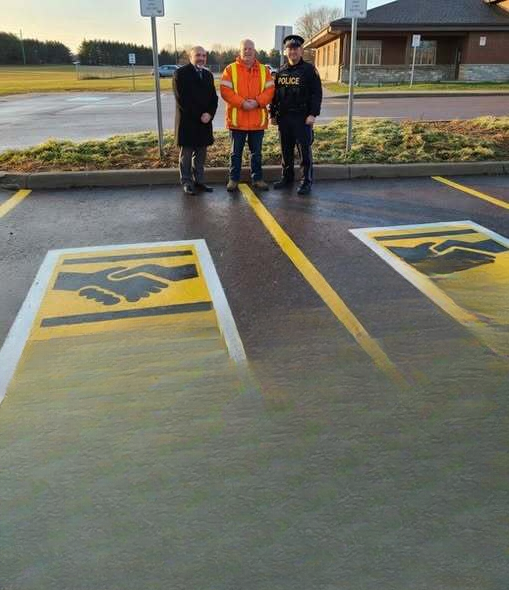
Introduction: A Small Symbol With a Big Purpose
If you have ever visited a public parking lot and noticed a painted symbol of two hands shaking on the ground, you might have assumed it was decorative or part of a local art project. At first glance, it appears simple and harmless—just a handshake icon marking a parking space like any other painted marking.
However, in many communities across North America and beyond, that symbol carries a much more important meaning. It represents a designated safe exchange zone, a space specifically created to support safer in-person meetings between individuals who are buying and selling goods through online marketplaces.
These areas are part of a growing effort by municipalities and law enforcement agencies to adapt public infrastructure to modern digital behavior. As peer-to-peer commerce becomes increasingly common, so does the need for safe environments where strangers can meet briefly to complete transactions.
The handshake symbol is not just a mark on pavement. It is a visual signal of trust, safety, and community responsibility.
The Growth of Online Buying and Selling
Over the past decade, the way people exchange goods has changed dramatically. Instead of relying solely on traditional retail stores or classified ads, millions of individuals now use digital platforms to buy and sell directly with one another.
Platforms such as:
- Facebook Marketplace
- Craigslist
- Kijiji
- eBay local listings
have made it easier than ever for people to find second-hand items, sell unused belongings, and discover local deals.
This shift has created clear benefits:
- Lower prices for buyers
- Extra income for sellers
- Reduced waste through reuse
- Convenient local transactions
However, while communication begins online, many transactions still require a face-to-face meeting. This is where challenges can arise, especially when two strangers meet in an unregulated environment.
Concerns such as personal safety, theft, scams, and uncertainty have encouraged communities to rethink how and where these meetings should take place.
What the Handshake Symbol Actually Represents
The handshake symbol painted on the ground typically indicates a community exchange zone, also known as a safe trade area or safe exchange point.
The symbol itself is carefully chosen. A handshake is widely recognized as a universal sign of:
- Agreement
- Mutual understanding
- Respect
- Trust
- Cooperation
By placing this symbol in a public parking space, authorities are communicating that this location is intended for structured, low-risk exchanges between private individuals.
These spaces are usually located in:
- Police station parking lots
- Municipal buildings
- Community centers
- Other public, well-lit facilities
The goal is to create a neutral environment where both parties feel safer conducting transactions.
Importantly, these zones are not monitored as active transaction services. Instead, they function as safe meeting points designed to reduce risk.
How Safe Exchange Zones Developed
Safe exchange zones emerged as a response to increasing reports of uncomfortable or unsafe situations during in-person marketplace meetups.
As online commerce grew, so did the number of transactions between strangers who had no prior connection. Most of these interactions are harmless, but law enforcement agencies identified certain risks:
- Meetings in isolated parking lots
- Exchanges at private residences
- Late-night meetups in poorly lit areas
- Lack of witnesses or surveillance
To address these concerns, municipalities began introducing designated public exchange locations.
One widely recognized example is Project Safe Trade, implemented in various regions in Canada and the United States. These programs designate specific parking spaces—often marked with a handshake symbol—where buyers and sellers can safely meet.
The idea is simple: instead of meeting in random or private locations, individuals can use a standardized, public, and visible space.
Key Features of Community Exchange Zones
Although designs vary between cities, most safe exchange zones share several common characteristics.
1. Public Visibility
These areas are typically placed in highly visible locations, ensuring that there is natural public activity nearby.
2. Lighting
Good lighting is a priority, especially for transactions that may occur early in the morning or after work hours.
3. Surveillance Presence
Many locations are near security cameras or monitored municipal buildings, which can discourage misconduct.
4. Accessibility
The spaces are usually open 24/7 and do not require permission or booking.
5. Clear Markings
The handshake symbol or accompanying signage clearly identifies the purpose of the space.
These features work together to create an environment that is both practical and reassuring.
Why These Spaces Are Important
1. Supporting the Growth of Digital Commerce
Online marketplaces have become a major part of everyday life. People now regularly rely on them to:
- Sell used items
- Purchase affordable goods
- Find rare or second-hand products
- Participate in local trade
As usage increases, so does the need for safe real-world meeting locations.
2. Reducing Risk in Face-to-Face Transactions
While most peer-to-peer exchanges are safe, meeting a stranger always involves some level of uncertainty. Safe exchange zones help reduce that uncertainty by providing:
- A neutral meeting environment
- Increased visibility
- Reduced isolation
- A structured public setting
Even small changes in environment can significantly improve personal safety and confidence.
3. Encouraging Responsible Behavior
Public spaces influence behavior. When individuals meet in a clearly marked, publicly recognized exchange zone, they are more likely to act respectfully and transparently.
The handshake symbol itself acts as a subtle reminder that the space is intended for honest and responsible interaction.
Benefits for Buyers and Sellers
For Buyers
Safe exchange zones provide buyers with:
- A place to inspect items before purchase
- Reduced fear of unsafe environments
- Easier communication in public settings
- Greater confidence in completing transactions
This is especially useful when purchasing electronics, tools, or other high-value goods.
For Sellers
Sellers benefit in several ways:
- No need to share home addresses
- Increased personal safety
- More professional transaction setting
- Greater trust from buyers
Many sellers also find that suggesting a safe exchange zone increases buyer confidence and speeds up sales.
Safety Guidelines for Using Community Exchange Zones
Although designated handshake-marked parking spaces significantly improve safety, users are still encouraged to follow basic precautions when completing in-person transactions. These practices help ensure that both buyers and sellers remain protected and that exchanges proceed smoothly.
One of the most widely recommended guidelines is to always meet in a clearly designated public exchange zone whenever possible. These areas are specifically designed to reduce uncertainty by offering visibility, lighting, and proximity to public services. If a formal exchange zone is not available, the next best option is a busy public location such as a shopping center parking lot or outside a community building.
It is also strongly advised to avoid private or isolated meeting spots, such as residential driveways or secluded roads. While many people may feel comfortable in familiar surroundings, these locations do not offer the same level of public oversight or environmental safety.
Another important safety practice is to bring someone along when meeting a stranger. Having a friend or family member present adds an additional layer of security and can help deter inappropriate behavior. Even if the second person remains in a vehicle or nearby, their presence alone can provide reassurance.
Timing also plays a role in safety. Whenever possible, transactions should be scheduled during daylight hours or early evening, when visibility is higher and public activity is more consistent. Well-lit environments reduce uncertainty and make interactions easier to manage.
Buyers are encouraged to carefully inspect items before completing payment. This step ensures that the product matches the description provided online and helps prevent misunderstandings. Sellers benefit from this transparency as well, since it builds trust and reduces the likelihood of disputes after the exchange.
Payment methods should also be considered carefully. While cash is commonly used for local peer-to-peer transactions, some individuals prefer digital payment systems that provide confirmation records, adding an extra layer of documentation and accountability.
It is equally important to keep communication records, including messages, listings, and agreed terms. These records can be helpful if any clarification is needed later or if there is disagreement about the original listing.
Most importantly, individuals are encouraged to trust their instincts. If something feels unclear, rushed, or uncomfortable at any point during the exchange process, it is completely reasonable to pause or cancel the meeting.
How Exchange Zones Strengthen Community Safety
Community exchange zones are not just practical tools for individuals—they also contribute to broader public safety goals. By offering structured meeting spaces, municipalities help reduce the likelihood of risky encounters occurring in unmonitored or private areas.
Law enforcement agencies generally report that these zones encourage more responsible behavior among participants. When people know they are meeting in a publicly recognized and visible location, they are more likely to act respectfully and follow agreed terms.
In addition, these spaces help reduce the number of informal meetups happening in isolated or unpredictable environments. This shift alone can significantly improve overall community safety without requiring heavy enforcement.
The Psychological Effect of Safe Meeting Spaces
Beyond physical safety, handshake-marked exchange zones also have a psychological impact on users. Designated safe environments tend to reduce anxiety by providing structure and predictability.
When individuals meet in a clearly marked public space, they often experience:
- Reduced stress before the meeting
- Greater confidence during the exchange
- Improved communication between parties
- A stronger sense of mutual accountability
Even subtle visual cues—such as signage or the handshake symbol itself—can influence behavior. The presence of a recognized safety marker reassures both parties that the location has been intentionally chosen to support secure interactions.
This concept is known in environmental psychology as situational safety design, where the physical environment is structured to encourage safer decision-making and reduce uncertainty.
Expanding Role in Modern Communities
As online marketplaces continue to grow, the role of community exchange zones is becoming increasingly important. These spaces are no longer just optional conveniences; in many areas, they are becoming a standard part of local infrastructure.
Municipalities are also exploring ways to improve these zones by adding better lighting, clearer signage, and more accessible locations. Some regions are considering integration with mobile apps that help users locate the nearest safe exchange point.
The handshake symbol itself has become a recognizable part of this system, representing a shared understanding between residents, local governments, and law enforcement.
Ultimately, these zones reflect a broader shift in how communities adapt to digital commerce—bridging the gap between online interaction and real-world safety.