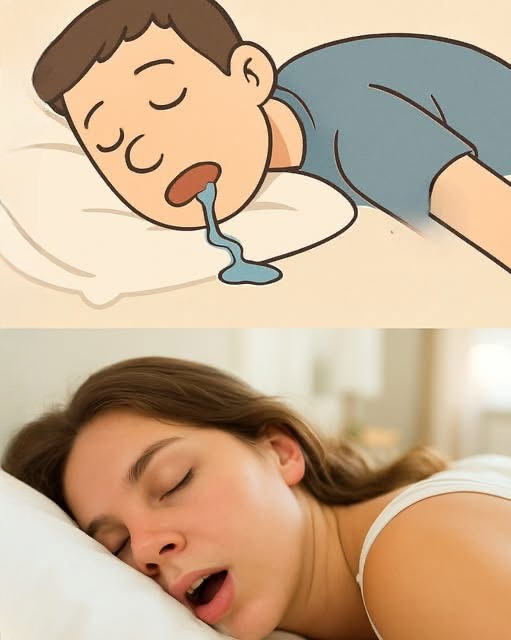
Waking up to find saliva on your pillow can feel a little embarrassing, but in reality, it’s something that happens to many people. Occasional drooling during sleep is usually harmless and is often just a normal sign of how the body behaves during deeper stages of rest.
Understanding why it happens can help reduce worry and make it clear when it’s simply a normal bodily function—and when it might be worth paying attention to.
What Happens in Your Body During Sleep
When you fall asleep, your body goes through several natural changes. One of the most important is muscle relaxation. This affects almost every part of the body, including the muscles in your face, jaw, and throat.
During deeper sleep stages, these muscles become even more relaxed. This can lead to:
- A slightly open mouth
- Slower swallowing reflexes
- Reduced awareness of saliva buildup
Because swallowing happens less frequently, saliva can accumulate in the mouth without being consciously managed.
Why Saliva Ends Up on Your Pillow
Normally, saliva is swallowed continuously throughout the day without you even noticing. But during sleep, this automatic process slows down.
If saliva builds up faster than it is swallowed, it has to go somewhere. In many cases, it simply escapes from the mouth, especially if the lips are slightly open.
This is how drooling occurs during sleep.
It’s not a sign that something is wrong—it’s just a result of how your body naturally relaxes.
Sleeping Position Makes a Big Difference
Your sleeping position plays a major role in whether or not drooling happens.
People who sleep in certain positions are more likely to experience it:
- Side sleepers: Gravity makes it easier for saliva to flow out of the mouth
- Stomach sleepers: The face is often turned downward, increasing the chance of drooling
On the other hand:
- Back sleepers are less likely to drool because saliva tends to stay in the mouth or throat area rather than leaking outward
This is why you may notice differences depending on how you sleep each night.
Mouth Breathing and Nasal Blockages
Another common cause of drooling during sleep is mouth breathing.
When your nose is blocked due to:
- Allergies
- Cold or flu symptoms
- Sinus congestion
your body naturally shifts to breathing through the mouth instead.
Mouth breathing can:
- Keep the mouth open during sleep
- Increase saliva accumulation
- Make drooling more likely
This is especially common during seasonal allergies or respiratory infections.
The Role of Deep Sleep
Drooling is more likely to happen during deep sleep stages, when the body is in its most relaxed state.
In these phases:
- Muscle control is reduced
- Reflexes slow down
- Awareness of bodily functions disappears completely
This combination makes it easier for saliva to escape without interruption.
Digestive Factors and Saliva Production
In some cases, digestive conditions may also contribute to drooling.
For example, acid reflux can cause the body to produce extra saliva as a protective response. This helps neutralize stomach acid in the throat.
During sleep, however, this extra saliva may not be swallowed efficiently, increasing the chance of drooling.
While this is not always the case, it can be one of several contributing factors.
Is Drooling During Sleep Normal?
In most situations, yes.
Occasional drooling is completely normal and affects many healthy individuals. It is simply a result of:
- Relaxed muscles
- Natural sleep cycles
- Body position
- Temporary breathing patterns
It does not usually indicate a medical problem.
When Should You Pay Attention?
Although drooling is typically harmless, there are situations where it may be worth paying closer attention.
You should consider speaking with a healthcare professional if you notice:
- Sudden or severe increase in drooling
- Difficulty swallowing during the day
- Ongoing breathing issues at night
- Unexplained changes in sleep quality
These symptoms may point to underlying conditions that should be evaluated.
However, in most cases, drooling alone is not a cause for concern.
Simple Ways to Reduce Nighttime Drooling
If you find drooling uncomfortable or frequent, a few simple changes may help:
- Try sleeping on your back instead of your side or stomach
- Address nasal congestion with appropriate remedies
- Stay hydrated during the day
- Maintain good sleep posture with proper pillow support
These small adjustments can reduce the likelihood of saliva escaping during sleep.
A Normal Part of Sleep Biology
It can be easy to overthink nighttime drooling, especially when it seems unusual or inconvenient. But from a biological standpoint, it is simply part of how the body relaxes during sleep.
When the mind shuts down and the body enters deep rest, control over small automatic functions naturally decreases. Drooling is just one visible result of that process.
Final Thoughts
Drooling while sleeping is common, natural, and usually harmless. It reflects a normal state of relaxation where the body prioritizes rest over constant muscle control.
While factors like sleep position, nasal congestion, and digestion can influence it, most cases do not require concern.
Understanding why it happens can turn something embarrassing into something simple—and help you see it for what it really is: just another quiet detail of how your body takes care of itself while you sleep.