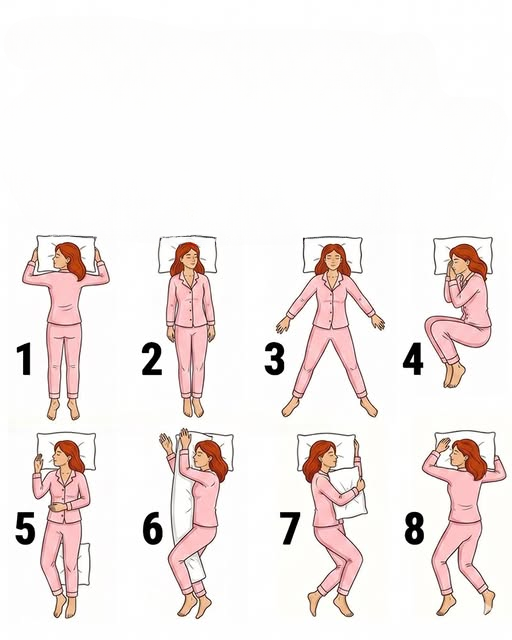
The idea that your sleep position can reveal whether you’re “lazy” sounds intriguing—but let’s be clear right away:
👉 There is no scientific evidence that sleep position determines laziness or work ethic.
Still, the topic is popular online because it’s fun, relatable, and encourages self-reflection. Let’s break down what’s real, what’s not, and what your sleep habits might actually say.
🧠 What Science Really Says
Sleep position is influenced by:
- Physical comfort
- Breathing patterns
- Mattress and pillow support
- Habit and muscle relaxation
It is not linked to personality traits like laziness, motivation, or productivity.
However, sleep quality does affect energy levels—which can sometimes be confused with motivation.
🛌 Common Sleep Positions (and Popular Interpretations)
These interpretations are entertainment-based, not scientific—but they’re still interesting to explore.
🙌 “Arms Up” Sleeper
- Lying on your back with arms raised
- Often described as open and relaxed
👉 Reality: This position may simply support comfortable breathing and spinal alignment.
📏 Straight Back Sleeper
- Arms by the sides, body aligned
👉 Often linked to discipline and routine—but in reality, it’s just a stable, comfortable posture.
🌙 Side Sleeper
- One of the most common positions
👉 Associated with balance and practicality—but actually, it’s popular because it reduces pressure on the body and can improve breathing.
🤱 Fetal Position
- Curled up on the side
👉 Often described as emotionally sensitive—but scientifically, it’s just a natural comfort position, especially in cooler environments.
⭐ Starfish Sleeper
- Spread out, taking up space
👉 Linked to comfort and relaxation—but really, it may just mean the person has more room or prefers less pressure on joints.
🔄 Combination Sleeper
- Moves between positions
👉 Often labeled adaptable—and this one actually has some truth:
People who shift positions may be responding to body signals for comfort.
⚠️ Why the “Laziness” Myth Exists
The confusion comes from this simple link:
👉 Poor sleep → Low energy → Less productivity
So if someone:
- Sleeps poorly
- Wakes up tired
- Feels sluggish
…it may look like laziness, but it’s actually fatigue.
😴 What Really Affects Your Energy
Instead of sleep position, focus on what actually matters:
✔ Sleep Quality
Deep, uninterrupted sleep is key.
✔ Sleep Duration
Most adults need 7–9 hours.
✔ Consistent Schedule
Going to bed and waking up at the same time helps regulate your body clock.
✔ Nighttime Habits
- Less screen time
- Calm environment
- Reduced stress before bed
🧠 The Real Takeaway
Sleep position is:
✔ About comfort
✔ About body alignment
✔ About habit
It is not:
❌ A measure of laziness
❌ A personality test
❌ A predictor of success
✅ Final Thoughts
Exploring sleep positions can be fun—but it’s important to separate entertainment from science.
If you want more energy and productivity, focus on:
- Better sleep habits
- Consistent routines
- Reducing nighttime distractions
👉 In the end, it’s not how you sleep—it’s how well you sleep that truly matters.