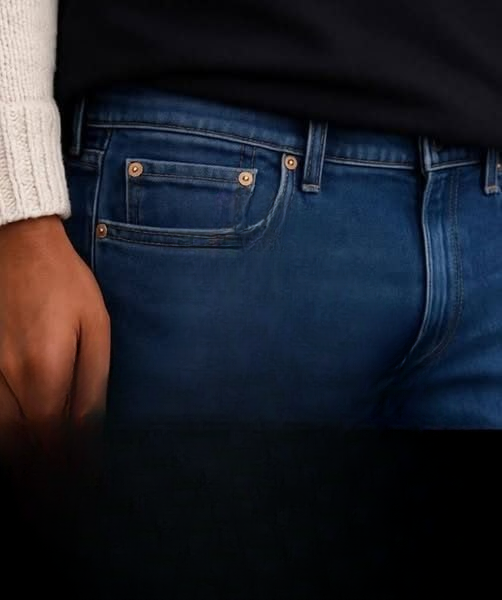
Most people barely notice it anymore—that tiny extra pocket tucked inside the front pocket of a pair of jeans. It’s too small for a phone, awkward for modern wallets, and often ignored completely. Yet despite changing fashion trends and decades of redesigns, this small detail continues to appear on jeans around the world.
What many people don’t realize is that the tiny pocket actually has a fascinating history dating back nearly 200 years. Far from being decorative, it was originally created for a very practical purpose during a time when jeans were designed for hard physical work rather than fashion.
Long before denim became a global style staple, jeans were worn mainly by miners, railroad workers, ranchers, and laborers who needed durable clothing that could survive rough conditions. Every feature of early jeans served a function, including reinforced stitching, rivets, thick fabric, and the small inner pocket that still exists today.
That pocket was originally known as a “watch pocket.”
In the 1800s, pocket watches were one of the most important personal items a man could own. Wristwatches were not yet common, so people carried small mechanical watches attached to chains. These watches were valuable, fragile, and easy to damage during physical labor or horseback riding.
Workers needed a secure place to store them safely.
Regular pockets were too loose, allowing watches to swing around, scratch, or fall out during movement. To solve this problem, clothing manufacturers created a smaller reinforced compartment sewn inside the main pocket. This helped keep the watch stable and protected while people worked.
At the time, this feature was extremely practical rather than fashionable.
Cowboys, railroad workers, miners, and factory laborers relied on the pocket daily. It prevented expensive watches from cracking or being lost during long workdays. The design quickly became standard on denim work pants and eventually became part of the classic five-pocket jeans layout still recognized today.
Over time, however, technology changed.
Pocket watches slowly disappeared as wristwatches became more affordable and convenient. Eventually, the original reason for the tiny pocket became less important. Yet the pocket itself never vanished.
One major reason is tradition.
Jeans evolved from practical workwear into one of the most recognizable clothing items in the world. The five-pocket design became iconic, and manufacturers kept the small pocket because it represented authenticity and classic denim craftsmanship.
Even people who never used the pocket expected jeans to have it.
Another reason it survived is because fashion often preserves old details long after their original purpose disappears. Similar examples exist throughout clothing history. Decorative buttons, extra stitching, and certain jacket features often remain because they have become part of a garment’s identity.
The tiny pocket became one of those lasting details.
Although it no longer carries pocket watches, many people still find modern uses for it today. Some store coins, rings, guitar picks, keys, USB drives, or earbuds inside it. Others use it simply because it offers a secure place for tiny items that might otherwise get lost in larger pockets.
Its usefulness may have changed, but the pocket itself adapted with time.
Interestingly, the tiny pocket also reflects how thoughtfully clothing used to be designed. Early jeans were not created to follow trends—they were built to solve problems. Every stitch and feature had a practical purpose connected to real daily life.
That attention to function helped jeans survive generation after generation.
Modern denim has evolved enormously in terms of cuts, colors, materials, and style, but the tiny pocket remains one of the few features that stayed almost completely unchanged. It acts like a small historical fingerprint connecting modern fashion to the rugged workwear origins of denim.
Many people wear jeans every day without ever realizing they are carrying around a piece of 19th-century design history.
The pocket also represents something larger about human design and innovation. Sometimes the smallest details tell the biggest stories. A tiny stitched compartment hidden inside a pocket reveals how people once lived, worked, traveled, and protected their belongings in a very different world.
Even now, clothing designers continue preserving these historical elements because they add personality and authenticity to modern fashion.
Without the tiny pocket, jeans would still function perfectly well. But its presence adds continuity—a reminder that fashion is not only about appearance, but also about history, utility, and craftsmanship passed down over time.
Today, countless jean styles exist across every culture and age group imaginable. Trends constantly shift between slim, relaxed, ripped, oversized, vintage, and designer fits. Yet through all those changes, the tiny pocket quietly survives almost untouched.
That consistency is part of what makes denim timeless.
The next time you slide your hand into your jeans pocket and notice that little compartment, you’ll know it was never random decoration. It began as a protective space for pocket watches during an era of hard labor and rugged living. Over generations, it transformed into one of the most recognizable features in fashion history.
Small, simple, and often overlooked, the tiny pocket proves that even the smallest design choices can carry surprisingly big stories.