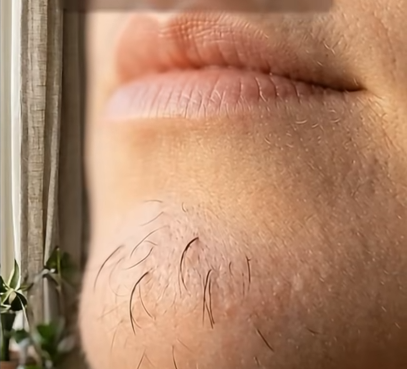
Many people have experienced the same surprising moment.
You look in the mirror one morning and suddenly notice a single thick hair growing from your chin. It seems to have appeared overnight, despite the fact that you are certain it wasn’t there the day before. Your first instinct is often simple: remove it and move on with your day.
For most individuals, that’s exactly what happens.
However, health experts say that changes in hair growth patterns can sometimes provide useful information about what’s happening inside the body. While an occasional chin hair is usually harmless, understanding why it appears can offer valuable insight into hormones, aging, genetics, and overall health.
Why Chin Hairs Appear
Hair growth is influenced by several factors, including genetics, hormones, age, and individual sensitivity of hair follicles.
Every person has tiny hair follicles across much of their body. These follicles respond to hormonal signals that help determine whether hair remains fine and nearly invisible or becomes thicker and darker.
One of the primary influences on this process is a group of hormones called androgens.
Although androgens are often associated with men, women naturally produce them as well. The most well-known androgen is testosterone, but several related hormones also contribute to normal bodily functions.
When hormone levels shift, even slightly, some hair follicles can become more active than they were before. As a result, coarse hairs may begin appearing in areas such as:
- The chin
- Upper lip
- Jawline
- Neck
- Sideburn area
In many cases, this change is completely normal and not a cause for concern.
The Role of Genetics
One of the biggest factors influencing facial hair growth is family history.
If your mother, grandmother, aunt, or sisters have experienced similar facial hair growth, there is a good chance genetics plays a significant role.
Some people inherit hair follicles that are naturally more sensitive to hormonal signals. Even normal hormone levels can trigger thicker hair growth in these individuals.
This explains why some women develop noticeable chin hairs while others with similar hormone levels do not.
Genetics often determines:
- Hair thickness
- Hair color
- Hair density
- Growth speed
- Sensitivity to hormones
Understanding your family’s history can help provide context for changes that may otherwise seem unusual.
Hormonal Changes Throughout Life
The body’s hormone balance naturally changes over time.
Puberty, pregnancy, postpartum recovery, perimenopause, and menopause all involve significant hormonal shifts that can affect hair growth patterns.
Many women notice new facial hairs appearing during midlife as estrogen levels begin to decline.
Estrogen and androgens exist in a delicate balance. As estrogen decreases with age, the effects of androgens may become more noticeable even when androgen levels themselves remain relatively stable.
This is one reason why some women begin seeing facial hair later in life despite never having experienced it during their younger years.
While these changes can be frustrating, they are often a normal part of the aging process.
Could It Be Polycystic Ovary Syndrome (PCOS)?
One condition frequently associated with increased facial hair growth is Polycystic Ovary Syndrome.
PCOS is a common hormonal disorder that affects millions of women worldwide.
The condition can cause elevated androgen levels, which may lead to symptoms such as:
- Increased facial or body hair
- Irregular menstrual cycles
- Acne
- Weight gain
- Difficulty losing weight
- Scalp hair thinning
- Fertility challenges
Not everyone with PCOS experiences all symptoms, and severity can vary significantly from person to person.
Because symptoms develop gradually, many women remain undiagnosed for years.
If facial hair growth is accompanied by several of these symptoms, it may be worth discussing with a healthcare professional.
Stress and Hormonal Balance
Chronic stress can affect the body’s hormonal system in surprising ways.
When stress levels remain elevated for extended periods, the body produces higher amounts of stress hormones such as cortisol.
Over time, these hormonal changes may indirectly influence other hormone systems, including those involved in hair growth and reproductive health.
While stress alone typically does not cause dramatic facial hair growth, it can contribute to hormonal fluctuations that make existing tendencies more noticeable.
Managing stress through healthy habits may support overall hormonal balance.
Helpful strategies include:
- Regular exercise
- Quality sleep
- Relaxation techniques
- Mindfulness practices
- Balanced nutrition
- Social support
The Connection Between Insulin and Hormones
Researchers have also identified links between insulin resistance and hormonal changes.
Insulin resistance occurs when the body’s cells become less responsive to insulin, causing the pancreas to produce more of the hormone.
Elevated insulin levels can sometimes stimulate increased androgen production, which may contribute to facial hair growth in certain individuals.
This relationship helps explain why conditions such as PCOS are often associated with both insulin resistance and excess hair growth.
Maintaining healthy blood sugar levels through balanced nutrition and regular physical activity may support hormonal health over the long term.
When Should You Seek Medical Advice?
Most occasional chin hairs are not a medical emergency.
However, healthcare providers recommend evaluation when facial hair growth:
- Appears suddenly
- Increases rapidly
- Becomes widespread
- Occurs alongside other unusual symptoms
Additional symptoms that may warrant medical attention include:
- Significant menstrual changes
- Unexplained weight gain
- Persistent fatigue
- Severe acne
- Voice deepening
- Hair thinning on the scalp
- Difficulty becoming pregnant
These symptoms can sometimes indicate underlying hormonal conditions that benefit from professional assessment.
Early evaluation may help identify issues before they become more difficult to manage.
Treatment Options
For individuals bothered by facial hair growth, several options are available.
Temporary methods include:
- Tweezing
- Waxing
- Threading
- Shaving
- Depilatory creams
Longer-lasting solutions may include:
- Laser hair removal
- Electrolysis
In situations where hormonal imbalances are contributing to excessive hair growth, healthcare providers may recommend medical treatments designed to address the underlying cause.
Treatment recommendations vary depending on the individual’s symptoms, health history, and specific diagnosis.
Why There’s No Reason for Embarrassment
Perhaps the most important thing to remember is that facial hair is incredibly common.
Many women experience occasional chin hairs at some point in their lives.
Despite this, the topic often carries unnecessary stigma.
Social expectations sometimes create the impression that facial hair is unusual or abnormal, when in reality it is a common biological occurrence influenced by factors largely outside a person’s control.
Understanding the science behind hair growth can help reduce unnecessary worry and embarrassment.
Listening to Your Body
Our bodies constantly provide information about our health.
Changes in energy levels, sleep patterns, appetite, skin condition, and hair growth can all serve as clues that something is changing internally.
Most of the time, a single chin hair is simply a normal part of life.
Occasionally, however, it may be one small piece of a larger hormonal picture worth understanding.
Rather than viewing it solely as a cosmetic nuisance, it can be helpful to see it as a reminder to pay attention to overall wellness.
The body often communicates through subtle signals long before major symptoms appear.
And sometimes, even something as small as a lone chin hair can encourage a closer look at the factors that support long-term health and well-being.