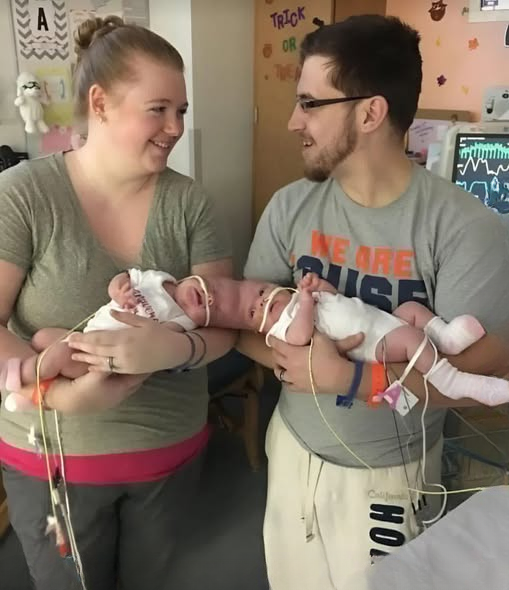
A Miracle of Modern Medicine: The Extraordinary Journey of Erin and Abby Delaney
In the annals of pediatric surgery, few cases capture the imagination and the heart quite like that of Erin and Abby Delaney. Born in 2016 at the Children’s Hospital of Philadelphia (CHOP), the sisters entered the world as craniopagus twins—a condition so rare that it occurs in only about one in every 2.5 million live births.
The story of their birth, their harrowing 11-hour separation surgery, and their remarkable lives nearly a decade later is not just a medical case study; it is a testament to the power of hope, parental devotion, and the cutting-edge frontiers of neurosurgery.
I. Understanding the Rarity: What are Craniopagus Twins?
The term “Siamese twins” is a historical reference to Chang and Eng Bunker, but in modern medicine, they are known as conjoined twins. Craniopagus twins are those joined specifically at the skull.
The Biological Complexity
Conjoined twins occur when a woman produces a single egg that does not fully separate after being fertilized. The developing embryo starts to split into identical twins during the first few weeks after conception but stops before the process is complete. In the case of craniopagus twins, the fusion occurs at the head, often involving shared blood vessels and, in the most complex cases, shared brain tissue.
The Statistical Odds
Craniopagus twins represent only about 2% to 6% of all conjoined twin cases. Because many such pregnancies do not reach full term, the birth of Erin and Abby was considered a significant medical event from day one.
II. The Path to Separation: A Global Medical Milestone
When Erin and Abby were born ten weeks premature via C-section, a specialized team at CHOP began a nearly year-long preparation for what would be one of the most complex separation surgeries in history.
The 11-Hour Operation
In June 2017, when the girls were just 10 months old, a team of 30 medical professionals—including neurosurgeons, plastic surgeons, and anesthesiologists—embarked on the separation.
-
The Brain Challenge: The girls shared a critical blood vessel known as the superior sagittal sinus. This vessel is responsible for draining blood from the brain and the face. Dividing this required a level of precision that pushed the boundaries of modern neurosurgery.
-
The Reconstruction: Once the skulls were separated, surgeons had to use synthetic materials and skin grafts to close the wounds and protect the exposed brain tissue of both infants.
The Breakthrough
The surgery was a resounding success. Unlike historical cases where one twin was often compromised to save the other, both Erin and Abby emerged from the operating room with the opportunity to live independent lives.
III. Nine Years of Resilience: Development and Growth
Today, Erin and Abby are nine years old. Their journey from the ICU to the classroom has been marked by both challenges and triumphs.
Navigating Developmental Milestones
It is a reality of craniopagus separation that the children often face developmental delays. Because their brains were positioned differently during their first ten months of life, their motor skills, speech, and cognitive processing required years of intensive physical and occupational therapy.
-
Individual Personalities: While they started life joined at the head, the girls have developed distinct and vibrant personalities. Erin is often described as the observant, thoughtful one, while Abby is known for her spirited and energetic approach to life.
-
The School Environment: The sisters attend school and participate in activities like their peers. While they may require additional support in certain areas, their integration into a “normal” childhood is nothing short of a miracle.
IV. The Emotional Core: The Delaney Family’s Strength
Behind every medical miracle is a family that refused to give up. Heather and Riley Delaney, the girls’ parents, have been vocal advocates for their daughters, sharing their journey to inspire other families facing rare diagnoses.
The Burden of Choice
The decision to undergo separation surgery is fraught with ethical and emotional weight. For the Delaneys, the goal was always to give their daughters the chance to look each other in the eye—a simple human experience that their initial condition made impossible.
A Community of Support
The successful outcome for Erin and Abby has also shed light on the importance of specialized pediatric centers. The Children’s Hospital of Philadelphia has since become a global beacon for families dealing with conjoined twins, proving that with enough expertise and heart, the “impossible” is achievable.
V. Looking Toward the Future
As the Delaney twins continue to grow, they remain under the watchful eyes of specialists who monitor their neurological health and physical development. However, the heavy lifting of the separation is behind them.
The legacy of Erin and Abby Delaney serves as a reminder of how far medicine has come. In decades past, craniopagus twins had very low survival rates. Today, thanks to 3D imaging, advanced neurosurgery, and comprehensive post-operative care, children like Erin and Abby aren’t just surviving—they are thriving.