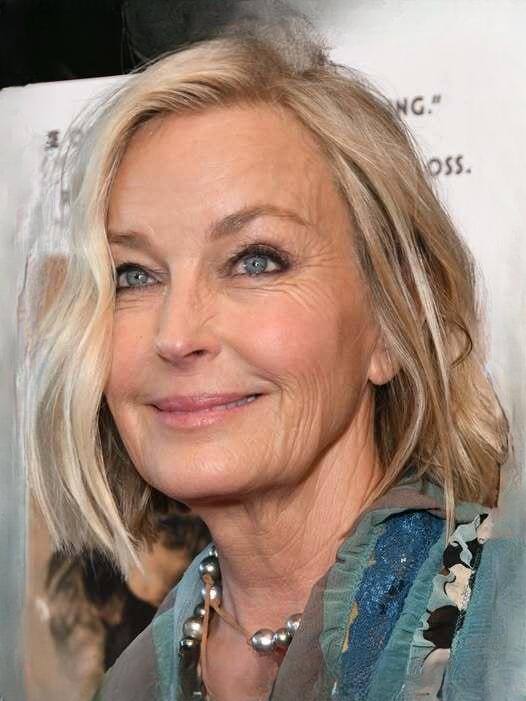
Bo Derek’s Journey: From Hollywood Icon to Humanitarian Advocate
For many, the name Bo Derek conjures a single, indelible cinematic image: a sun-drenched beach, a slow-motion run, and a striking cornrow hairstyle that would go on to define an entire era of beauty standards. While her breakout role in the 1979 film 10 catapulted her into the stratosphere of global stardom, Bo Derek’s story is far more nuanced than the “Perfect 10” label suggests. It is a narrative of profound personal choices, controversial mentorship, and a mid-life reinvention fueled by a deep-seated love for the natural world.
The Early Years: An Ingenue’s Introduction to the Spotlight
Born Mary Cathleen Collins in Long Beach, California, Bo’s introduction to the entertainment world was neither accidental nor entirely traditional. Raised in the surf culture of Southern California, she was the daughter of a Hobie Cat executive and a makeup artist. Her mother’s industry connections provided an early bridge into modeling, but it was a chance audition at the age of 16 that would change the trajectory of her life forever.
Meeting John Derek: A Pivotal Turning Point
The audition was for a film titled Once Upon a Love, directed by John Derek—a former matinee idol turned director known for his “Svengali-like” influence over his wives, who included Hollywood stars Ursula Andress and Linda Evans. Despite a 30-year age difference, the creative and personal chemistry between the teenage actress and the veteran director was immediate.
The relationship was fraught with external scrutiny from the beginning. To avoid legal complications in the United States regarding Bo’s age, the couple spent several years living in Germany. It was during this period of European exile that Mary Cathleen Collins was rechristened “Bo Derek.” John Derek acted not just as her partner, but as her photographer, director, and image architect, meticulously crafting the persona that would soon captivate the world.
The Cultural Phenomenon of 10
When Bo and John returned to the United States in 1976 and married, the stage was set for her cinematic debut. While she appeared in the horror film Orca in 1977, it was Blake Edwards’ 1979 romantic comedy 10 that served as her true arrival.
The Haircut Heard ‘Round the World
Perhaps nothing symbolizes Bo Derek’s impact more than her beaded cornrows. While the hairstyle has deep roots in African culture, Derek’s adoption of it for the film sparked a global fashion trend that persisted for years. From an analytical perspective, this was one of the first instances of a Hollywood film dictating a mainstream hair trend with such pervasive reach.
However, the success of 10 was a double-edged sword. It solidified her status as a sex symbol but often overshadowed her desire to be viewed as a serious actress. Following 10, her career became inextricably linked to her husband’s directorial projects, including Tarzan, the Ape Man (1981) and Bolero (1984). While these films were box-office successes, they often received harsh critical reviews, with many suggesting that John Derek’s focus on Bo’s aesthetics came at the expense of narrative depth.
Evolution and Reinvention: Life After John Derek
The death of John Derek in 1998 marked the end of a 22-year marriage and a creative partnership that had defined Bo’s entire adult life. Facing a world without her primary mentor and partner, Bo Derek chose a path of quiet strength and independence.
Finding Stability with John Corbett
In 2002, Bo was set up on a blind date with actor John Corbett, known for his roles in Sex and the City and My Big Fat Greek Wedding. Unlike the high-intensity, media-saturated nature of her first marriage, her relationship with Corbett has been defined by a relaxed, private, and enduring stability. Living together on a ranch in Santa Barbara, the couple maintained a 20-year partnership before secretly marrying in December 2020.
This chapter of her life represents a shift from being a “muse” to being a partner. Corbett has often spoken about their shared sense of humor and mutual respect as the foundation of their bond—a stark contrast to the controlling narratives often associated with her early years.
A Passion Beyond the Screen: Equestrianism and Advocacy
If Hollywood was Bo Derek’s job, horses have always been her purpose. A lifelong rider, Derek credits her connection to animals with providing the grounding she needed to survive the pressures of early fame. Her commitment to animal welfare is not a celebrity hobby; it is a central pillar of her life.
The American Horse Slaughter Prevention Act
Derek has been a tireless advocate for the American Horse Slaughter Prevention Act, testifying before Congress and working with organizations like the Animal Welfare Institute. Her advocacy is pragmatic and results-oriented, focusing on ending the export and slaughter of American horses for human consumption abroad.
Philanthropic Reach
Her charitable work extends beyond the equestrian world:
-
Veteran Affairs: She has served as an honorary chairperson for the National Rehabilitation Special Events for the Department of Veterans Affairs, supporting disabled veterans through sports.
-
WildAid: As a special envoy for the Secretary of State, she has worked on wildlife trafficking issues and conservation efforts.
-
California Horse Racing Board: Her expertise led to an appointment as a commissioner, where she worked to improve safety standards within the racing industry.
The Enduring Legacy of Bo Derek
Bo Derek’s story illustrates the complexity of a life lived in the public eye. She transitioned from a “perfect score” in a comedy film to a woman of substance who uses her platform for tangible good. Her journey highlights the importance of finding balance—nurturing a private happiness while maintaining a commitment to broader social and environmental causes.
Ultimately, Bo Derek reflects a blend of professional achievement and personal fulfillment. She has navigated the shifting sands of Hollywood’s expectations and emerged not just as a survivor, but as an advocate whose most meaningful work happens far from the glare of the camera.