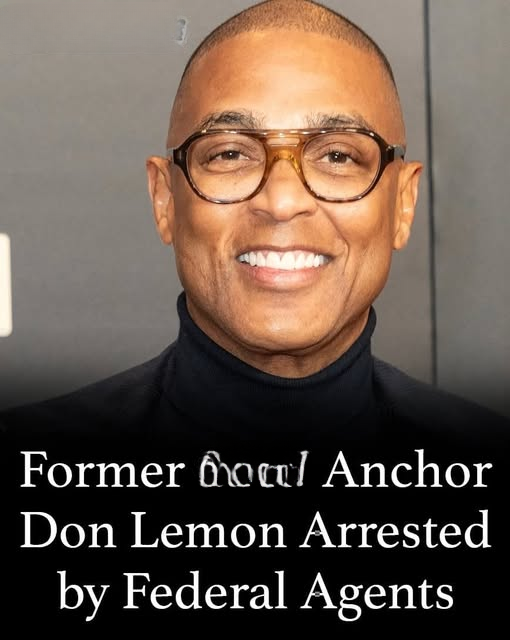
Former CNN anchor and veteran journalist Don Lemon is facing federal charges following his arrest in Los Angeles on January 29, 2026. The arrest, confirmed by his legal team and reported by multiple national outlets, has sparked widespread discussion about press freedom, protest coverage, and the legal limits surrounding demonstrations in places of worship.
Lemon, who was in Los Angeles covering the 68th Annual Grammy Awards, was taken into custody by federal authorities in connection with his presence at a controversial protest earlier in the month in Minnesota.
As the legal process unfolds, here is a comprehensive look at what has been confirmed — and what remains under investigation.
The Arrest in Los Angeles
According to official statements, federal agents arrested Don Lemon on the evening of January 29 while he was staying at a hotel in Beverly Hills. His attorney confirmed that the arrest was related to a federal indictment stemming from events that occurred nearly two weeks earlier in St. Paul, Minnesota.
After appearing before a federal judge in Los Angeles, Lemon was released pending further court proceedings. Conditions of release reportedly include travel restrictions and standard pretrial requirements.
At this stage, authorities have not alleged violence by Lemon personally but have charged him under federal statutes tied to interference with religious worship and civil rights protections.
The Minnesota Church Protest
The charges are linked to a January 18 protest at Cities Church in St. Paul, Minnesota. Demonstrators gathered to protest federal immigration enforcement policies and reportedly entered the church during a Sunday worship service.
The incident drew national attention due to its setting — a religious service — and the broader debate surrounding immigration enforcement policies and protest tactics.
Federal prosecutors allege that the demonstration interfered with the congregation’s ability to freely practice religion. A federal grand jury later issued indictments connected to the protest.
Lemon was present at the scene and livestreamed portions of the event as part of his reporting.
The Federal Charges Explained
Court documents indicate that Lemon faces charges related to alleged interference with civil rights protections, including statutes commonly used when access to religious services is disrupted.
One of the key laws cited is the Freedom of Access to Clinic Entrances Act, commonly known as the FACE Act. Although often associated with access to reproductive health clinics, the law also protects religious worship services from obstruction or intimidation.
Prosecutors argue that the events at Cities Church fall within the law’s scope.
Lemon’s legal team disputes that characterization, stating he was acting solely as a journalist covering a newsworthy event.
Lemon’s Legal Response
Through his attorney, Don Lemon has pleaded not guilty to the charges.
His defense centers on First Amendment protections, arguing that his presence at the protest was for journalistic coverage and not participation. Legal analysts note that the case may hinge on whether prosecutors can demonstrate active involvement beyond documentation or reporting.
Lemon has also assembled a legal team that includes experienced federal defense attorneys.
Press Freedom and First Amendment Debate
The case has reignited debate about the boundaries between protest participation and journalistic coverage.
Press freedom advocates argue that journalists must be able to cover demonstrations — even controversial or disruptive ones — without fear of criminal prosecution. Others maintain that journalists are not immune from legal consequences if they cross from reporting into active involvement.
The First Amendment protects freedom of speech and freedom of the press, but courts have historically examined each case individually to determine whether actions fall within constitutional protections.
Legal experts suggest the case could become an important test of how courts interpret journalistic presence during civil disobedience events.
Public and Political Reactions
Reaction to Lemon’s arrest has been divided.
Some civil liberties organizations have expressed concern about potential implications for media coverage of protests. Meanwhile, supporters of stricter enforcement argue that disruptions to religious services warrant accountability regardless of professional role.
Political commentators have also weighed in, framing the case within broader national discussions about immigration policy, protest rights, and federal authority.
Background on Don Lemon’s Career
Don Lemon built a long career in broadcast journalism, most notably as a prime-time anchor at CNN. Over the years, he covered major national events, political campaigns, and social justice issues.
Following his departure from CNN, Lemon transitioned into independent journalism and online reporting, continuing to cover political and social topics.
His prominence in national media has amplified public attention surrounding the current legal proceedings.
The Broader Legal Context
Federal laws protecting religious institutions are designed to ensure individuals can practice their faith without intimidation or disruption.
At the same time, courts recognize the right to protest government policies. Balancing those rights — religious freedom and free expression — has long been a complex legal issue in the United States.
This case may ultimately clarify how those competing interests are weighed when journalists are present at controversial events.
What Happens Next?
Lemon is expected to appear in federal court in Minnesota for future hearings. Pretrial motions, including potential arguments regarding constitutional protections, are likely in the coming months.
If the case proceeds to trial, prosecutors would need to prove beyond a reasonable doubt that Lemon’s conduct violated federal law. The defense is expected to argue that his actions were protected journalistic activity.
As of now, no trial date has been publicly confirmed.
Key Takeaways
-
Don Lemon was arrested in Los Angeles on January 29, 2026.
-
The arrest is linked to a January 18 protest at Cities Church in St. Paul, Minnesota.
-
He has pleaded not guilty to federal charges.
-
His defense centers on First Amendment protections.
-
The case could have broader implications for journalists covering protests.
Ongoing Developments
Because this is an active legal matter, further details may emerge through court filings, official statements, or judicial rulings.
Readers are encouraged to follow updates from verified court records and reputable news organizations as the case progresses.
The outcome may shape discussions about press freedom, protest boundaries, and the responsibilities of journalists operating in high-tension environments.