Global Tremors: Analyzing the Aftermath of Operation Midnight Hammer
Introduction: A Saturday That Changed the World
On June 21, 2025, the geopolitical landscape of the Middle East was fundamentally restructured. In a series of precision strikes codenamed Operation Midnight Hammer, the United States military targeted and successfully neutralized three of Iran’s most critical nuclear installations: Fordo, Natanz, and Esfahan.
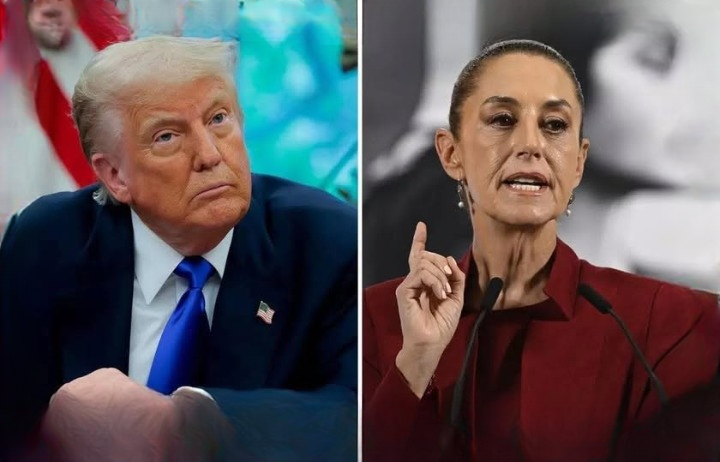
The announcement, delivered by President Donald Trump via Truth Social, described the mission as an “historic moment for the United States, Israel, and the World.” For many, it represented the culmination of decades of tension, failed diplomatic accords, and a escalating “shadow war” that had finally broken into the light of direct kinetic action. This article explores the intricate details of the operation, the immediate diplomatic fallout, and the long-term implications for global security.
Chapter 1: The Mechanics of Operation Midnight Hammer
To understand the gravity of the event, one must first look at the technical complexity of the mission. The primary target, Fordo, was widely considered the most difficult target in the world to strike.
The Challenge of Fordo
Buried deep within a mountain near the city of Qom, Fordo was designed specifically to be “bomb-proof.” Standard munitions would simply bounce off the granite shield protecting the centrifuges within.
-
The Weaponry: The U.S. deployed the GBU-57A/B Massive Ordnance Penetrator (MOP), a 30,000-pound “bunker buster” that only the B-2 Spirit stealth bomber is capable of carrying.
-
The Strategy: Reports indicate that bombers utilized a “drilling” technique, dropping multiple munitions on the exact same GPS coordinate in sequence. The first blast removes the concrete cap; the subsequent blasts penetrate deeper into the mountain’s core.
Natanz and Esfahan
While Fordo was the “hard” target, Natanz and Esfahan served as the heart of Iran’s enrichment and research capabilities. By striking all three simultaneously, the U.S. aimed not just to delay the program, but to “obliterate” the infrastructure required for nuclear breakout.
Chapter 2: The Global Diplomatic Response
The international community’s reaction was immediate and sharply divided, reflecting the complex web of alliances and interests that define modern foreign policy.
Mexico: A Voice for Peace and Sovereignty
In a notable response that gained significant traction in the Americas, Mexican President Claudia Sheinbaum addressed the escalation with a call for restraint. Grounding her response in Mexico’s constitutional principles of non-intervention, Sheinbaum emphasized that “Mexico will always be a factor for peace.”
“War is the greatest failure of humanity,” Sheinbaum stated, quoting the late Pope Francis. She urged the United Nations to step forward as the primary mediator, highlighting that the “self-determination of peoples” must be the guiding star of international relations.
The Iranian Defiance
Iranian Foreign Minister Abbas Araghchi’s response was one of “outrage.” In a statement on X (formerly Twitter), he categorized the strikes as “lawless and criminal behavior,” asserting that Iran reserves “all options” for a legitimate response under the UN Charter. This rhetoric underscores the risk of a retaliatory cycle that could engulf the region in a broader conflict.
European and Middle Eastern Tensions
-
United Kingdom: Prime Minister Keir Starmer took a pragmatic yet firm stance, acknowledging that while stability is the priority, “Iran can never be allowed to develop a nuclear weapon.”
-
Russia: Officials in Moscow strongly condemned the strikes, calling them a “gross violation of international law,” further straining the already tenuous relationship between the West and the Kremlin.
-
Saudi Arabia: The Kingdom expressed “deep concern,” a carefully worded phrase that avoids outright condemnation while signaling anxiety over regional instability.
Chapter 3: Economic and Social Ripples
Military actions of this scale never occur in a vacuum; they immediately impact global markets and domestic populations.
The Collapse of the Rial
Following the strikes, the Iranian Rial experienced a catastrophic devaluation. This economic pressure acted as a secondary “shockwave,” leading to widespread protests within Iran. By early 2026, these demonstrations spread to clerical strongholds like Qom, with citizens expressing frustration over the government’s focus on nuclear research over economic stability.
Global Energy Security
The threat of a closure of the Strait of Hormuz—a vital artery for the world’s oil supply—remains the greatest economic fear. Analysts suggest that any Iranian retaliation targeting the Strait could send global oil prices into a tailspin, potentially triggering a worldwide recession.
Chapter 4: The Path Forward—Diplomacy or Escalation?
As we enter 2026, the world watches to see if the destruction of the nuclear sites will lead to a new “Grand Bargain” or a protracted conflict.
The “Locked and Loaded” Doctrine
President Trump has maintained a posture of maximum pressure, recently stating that the U.S. is “locked and loaded” to support the Iranian people if the regime uses violence against peaceful protesters. This shifts the focus from external military strikes to internal regime stability.
The Role of the United Nations
For the UN to be effective, it must bridge the gap between those who see the strikes as a necessary preventative measure and those who see them as an illegal act of aggression. The “construction of justice,” as President Sheinbaum phrased it, will require a level of diplomatic finesse that has been absent from the international stage for years.
Conclusion: A World in Transition
The strikes on Fordo, Natanz, and Esfahan were more than just a military operation; they were a definitive statement on the limits of nuclear proliferation in the 21st century. Whether this “historic moment” leads to the lasting peace President Trump envisions or a new era of regional instability depends on the choices made in the coming months by leaders in Washington, Tehran, and Mexico City.
History teaches us that while bombs can destroy facilities, they cannot destroy ideas or the desire for sovereignty. The true test of Operation Midnight Hammer will not be measured in the depth of the craters at Fordo, but in the stability of the world that rises from the smoke.