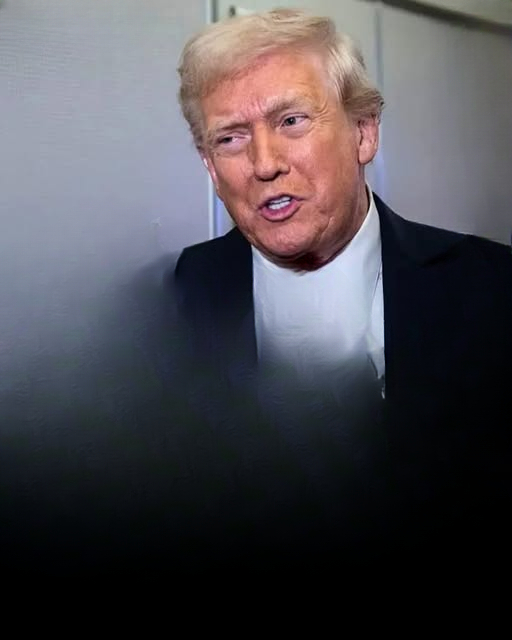
At first glance, the idea sounded straightforward and appealing. Former President Donald Trump proposed that tariffs on imported goods could generate enough money to provide a $2,000 payment to American households—a kind of “dividend” drawn from what he described as revenue collected from foreign countries. The pitch was intentionally simple: trade penalties make the nation wealthier, and that added revenue can be returned directly to working families.
But beneath the simplicity of the message lies a complex web of economic calculations, legal constraints, and political hurdles. When examined closely, the proposal faces significant challenges that complicate its feasibility and raise questions about whether such payments could realistically materialize.
This article takes a detailed look at how tariff revenue works, what the numbers actually show, the legal battles surrounding executive authority, and why congressional approval remains a critical—and uncertain—factor.
The Core Claim: Tariffs as a Source of Direct Payments
The foundation of the proposal rests on a basic premise: tariffs generate large sums of money for the federal government, and those funds could be redistributed to Americans in the form of direct payments.
Tariffs are taxes imposed on imported goods. While they are often described politically as costs paid by foreign exporters, economists generally agree that much of the burden ultimately falls on domestic consumers and businesses through higher prices.
Nevertheless, tariffs do generate revenue for the U.S. Treasury. The question is whether that revenue is sufficient—and legally accessible—to fund large-scale payments to the public.
What the Numbers Actually Show
According to publicly available data, tariff collections during Trump-era trade policies generated under $200 billion in total revenue over several years. While that figure may sound substantial, it falls well short of what would be required to fund $2,000 payments on a national scale.
To put the math into perspective:
-
There are roughly 130 million U.S. households.
-
Providing each household with $2,000 would require approximately $260 billion.
-
That amount exceeds total tariff revenue collected to date, even before accounting for administrative costs or other budgetary obligations.
This gap between revenue and promised payments highlights a fundamental mismatch between the proposal’s scale and the resources available to support it.
Revenue vs. Availability: Why Collected Funds Aren’t “Free Money”
Even if tariff revenue were sufficient on paper, it would not automatically be available for redistribution. Federal funds are subject to budgetary rules that dictate how money is allocated, spent, or returned.
Tariff revenue typically flows into the general Treasury, where it becomes part of the broader federal budget. Those funds are often used to offset other costs, such as:
-
Subsidies to industries affected by trade disputes
-
Federal operations and programs
-
Debt servicing
In other words, tariff revenue is already spoken for in many cases. Redirecting it toward direct payments would require legislative action and reallocation of existing funds.
Legal Challenges: Executive Authority Under Scrutiny
Beyond the financial math, there is a significant legal dimension to the proposal. Many of the tariffs in question were imposed using emergency powers granted to the president under existing trade and national security laws.
These authorities allow the executive branch to act quickly in certain circumstances, but they are not unlimited. Over time, legal challenges have questioned whether such powers were used appropriately or exceeded statutory boundaries.
The Supreme Court has signaled skepticism about broad interpretations of emergency authority, particularly when those interpretations result in long-term economic policies rather than short-term crisis responses.
A ruling that limits or overturns these tariff authorities could have far-reaching consequences.
The Possibility of Refunds Instead of Rebates
One of the less-discussed but highly consequential outcomes of an unfavorable court ruling is the possibility that tariffs could be invalidated retroactively.
If courts determine that certain tariffs were unlawfully imposed, the government could be required to refund money collected from importers. That scenario would reverse the revenue flow entirely, turning anticipated “dividends” into liabilities.
Such refunds would not go to consumers directly, but to the companies that paid the tariffs—further undermining the idea that the money could be redistributed to households.
Congress Still Holds the Power of the Purse
Even if the legal issues were resolved favorably, the proposal would still face a major procedural obstacle: congressional approval.
Under the U.S. Constitution, Congress controls federal spending. No large-scale payment program can be implemented without legislation that specifies:
-
Who qualifies to receive payments
-
How payments are distributed
-
Whether they take the form of checks, tax credits, or rebates
-
How the program is funded and administered
At present, there is no consensus in Congress on any of these questions. Lawmakers remain divided not only on the concept of tariff-funded payments, but on broader trade and tax policy priorities.
Eligibility Questions Remain Unanswered
One of the most significant unknowns involves eligibility. Trump has suggested that high-income earners would be excluded, but has not provided specific thresholds or criteria.
Key questions include:
-
Would eligibility be based on income, household size, or tax status?
-
Would retirees or non-tax filers qualify?
-
Would payments be one-time or recurring?
Without clear guidelines, the proposal remains more conceptual than actionable.
Delivery Mechanisms: Checks, Credits, or Something Else?
Another unresolved issue is how the money would reach recipients. Possible mechanisms include:
-
Direct checks mailed to households
-
Direct deposit payments
-
Refundable tax credits
-
Reductions in payroll or income taxes
Each option carries administrative costs, timelines, and equity considerations. Implementing any of them would require coordination between multiple federal agencies and detailed legislative instructions.
“We’ll Do Something Else”: Flexibility or Uncertainty?
Trump has stated that if courts block his tariff approach, he would pursue alternative methods to deliver benefits. While this flexibility may appeal to supporters, it also introduces uncertainty.
Without specifics, it is unclear:
-
What alternative funding sources would be used
-
Whether new taxes or spending cuts would be required
-
How quickly any new plan could be implemented
For households evaluating their finances, such uncertainty makes it difficult to plan or rely on promised benefits.
The Broader Economic Context
The proposal also raises broader economic questions about tariffs as a policy tool. While tariffs can protect certain domestic industries, they can also:
-
Increase prices for consumers
-
Disrupt supply chains
-
Invite retaliatory measures from trading partners
Any evaluation of tariff-funded payments must consider these downstream effects, particularly for working families who may already face higher costs as a result of trade restrictions.
Public Reaction: Familiar Patterns
For many Americans, the proposal evokes a sense of déjà vu. High-profile promises of direct payments have become a recurring feature of modern political campaigns, often generating headlines before details are finalized.
While some voters welcome ambitious ideas, others remain skeptical, having seen similar proposals stall due to legal, fiscal, or political constraints.
This skepticism is reinforced when announcements precede clear legislative pathways.
Political Strategy vs. Policy Reality
From a strategic standpoint, the simplicity of the message is part of its appeal. Framing tariffs as “found money” that can be returned to the public is easy to communicate and emotionally resonant.
However, policy implementation rarely aligns with campaign messaging. Translating broad ideas into workable programs requires navigating institutions designed to slow, scrutinize, and refine proposals.
This tension between messaging and mechanics is not unique to this proposal, but it is particularly pronounced given the scale and novelty of the idea.
What Would Need to Happen for Payments to Materialize
For tariff-funded payments to become reality, several conditions would need to be met:
-
Courts would need to uphold the legality of existing tariffs
-
Tariff revenue would need to increase significantly
-
Congress would need to pass authorizing legislation
-
Eligibility and delivery systems would need to be established
-
Funding gaps would need to be addressed
Each step presents its own challenges, making the overall path uncertain.
A Promise Without a Timeline
One of the most notable aspects of the proposal is the absence of a clear timeline. No specific date has been offered for when payments might occur, reinforcing the sense that the idea remains aspirational rather than imminent.
In public policy, timelines matter. They signal readiness, feasibility, and seriousness. Without them, proposals risk being perceived as symbolic rather than substantive.
Conclusion: Between Vision and Viability
The concept of a $2,000 tariff dividend is built on an appealing narrative of national wealth being returned to citizens. However, the economic data, legal landscape, and legislative realities paint a far more complicated picture.
Tariff revenue to date falls short of what would be required. Legal challenges threaten the very foundation of the funding mechanism. Congressional approval remains uncertain, and key details about eligibility and delivery are unresolved.
For now, the proposal exists more as a political idea than a concrete policy. Americans are left weighing the promise against the practical obstacles—recognizing a familiar gap between headline-grabbing announcements and the slow, methodical process required to turn them into law.
Until those obstacles are addressed with specificity and consensus, the $2,000 dividend remains an idea on paper, not money in hand.