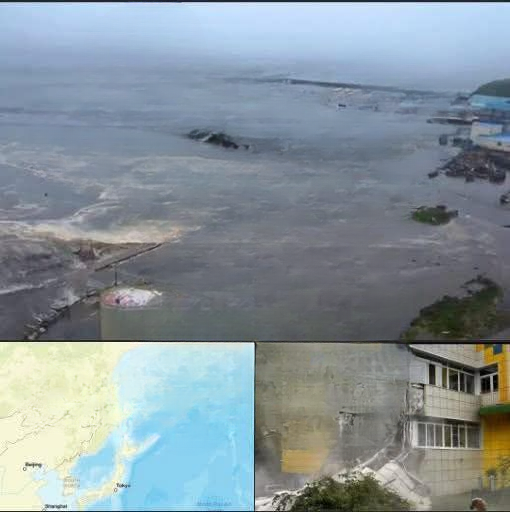
Late on Wednesday evening, Alaska’s normally tranquil landscapes were suddenly disrupted by a powerful seismic event. A significant earthquake, registering a magnitude of 8.2 on the Richter scale, struck the Alaskan Peninsula, sparking widespread concern throughout the Pacific region. Centered approximately 91 kilometers east-southeast of the small fishing community of Perryville, the quake occurred at a depth of roughly 35 kilometers beneath the Earth’s crust, highlighting the region’s constant geological volatility.
The tremor’s effects were felt over vast areas of southern Alaska. In towns such as Kodiak and other coastal communities, emergency sirens sounded to alert residents of potential tsunami risks, prompting many to evacuate to higher ground. Social media quickly filled with footage capturing the tension as families moved to safer locations, underscoring both the fear and the preparedness ingrained in communities accustomed to seismic events. Officials stressed that, at the time of the initial reports, there were no confirmed injuries or major structural damages, although emergency services remained on high alert, ready to respond if the situation deteriorated.
Immediate Alerts and Regional Coordination
The U.S. National Tsunami Warning Center (NTWC) swiftly issued alerts covering southern Alaska, stretching from Hinchinbrook Entrance to Unimak Pass—areas historically most susceptible to earthquake-triggered tsunamis. Initially, warnings extended to more distant locations, including Hawaii and Guam, as a precautionary measure. After careful assessments, however, authorities determined that these distant regions were not in immediate danger.
Alaska’s Governor, Mike Dunleavy, confirmed that the state’s emergency operations center was activated to ensure rapid coordination of resources and communication. The Pacific Tsunami Warning Center, alongside international agencies in Japan, New Zealand, and other Pacific nations, began meticulous monitoring, assessing the possibility of tsunami waves spreading across the ocean basin.
Seismologists reported multiple aftershocks following the main tremor, including at least eight notable quakes, two of which exceeded a magnitude of 6.0. Experts warned that aftershocks of this size, while not uncommon after a major earthquake, can still generate significant hazards, particularly in areas already destabilized by the initial tremor. Authorities emphasized that residents, especially in remote regions, remain vigilant and adhere strictly to all emergency advisories until conditions were officially declared safe.
Understanding the Scale: What an 8.2 Earthquake Means
An earthquake of 8.2 magnitude is extraordinarily powerful. The Richter scale is logarithmic, meaning that each whole-number increase represents approximately 31.6 times more energy released than the previous number. Consequently, an 8.2 quake releases an immense amount of energy compared to smaller, everyday tremors. Its depth and location compounded its potential impact, as the Alaskan Peninsula lies along a highly active subduction zone where the Pacific Plate gradually slides beneath the North American Plate.
Earthquakes of this magnitude can trigger secondary hazards, including landslides, infrastructure damage, and tsunamis. Alaska’s rigorous building codes and relatively sparse population mitigate the risk of widespread structural devastation in larger towns, but smaller fishing villages and coastal communities remain vulnerable. Limited emergency infrastructure in these areas amplifies the risks, necessitating prompt and well-coordinated emergency responses.
Tsunamis: Mechanics and Historical Context
Following a significant earthquake, one of the primary concerns is the generation of tsunamis—large waves caused by the rapid displacement of water. Undersea earthquakes, especially in subduction zones, can lift or lower sections of the ocean floor suddenly, displacing massive amounts of water that travel across oceans at high speeds.
Alaska has a history of catastrophic tsunamis, the most notable being the 1964 Good Friday earthquake. That 9.2-magnitude quake, the largest recorded in North American history, generated tsunamis that devastated coastal communities, leading to loss of life and widespread destruction. While modern early-warning systems, such as tsunami sirens and automated alerts, have improved dramatically, the threat remains significant whenever powerful subduction-zone quakes occur. These systems are critical for providing residents with enough time to evacuate and protect lives.
Geological Features of the Alaskan Peninsula
The Alaskan Peninsula sits at the convergence of the Pacific and North American tectonic plates, one of the most geologically active zones on Earth. The Pacific Plate’s subduction beneath the North American Plate accumulates immense geological stress over centuries. When the stress exceeds the strength of surrounding rock, it is suddenly released as an earthquake.
This region has experienced some of the most powerful earthquakes recorded in history. Subduction zones not only produce earthquakes but also generate significant volcanic activity, as magma forces its way through the Earth’s crust along fault lines. The combination of seismic and volcanic risks makes the Alaskan Peninsula particularly susceptible to natural disasters, requiring constant vigilance and preparedness among residents and authorities alike.
Emergency Response and Public Safety Measures
Following the quake, state and local authorities acted swiftly to prioritize public safety. Emergency operations centers were activated, evacuation routes were disseminated, and coordination with federal agencies, including the Federal Emergency Management Agency (FEMA), was intensified. Communities were reminded to prepare for potential aftershocks and tsunami waves.
Authorities stressed the importance of having emergency kits ready, avoiding low-lying coastal areas, and staying tuned to official updates. In remote regions with limited communication infrastructure, local governments relied heavily on sirens and radio broadcasts to relay urgent instructions. This rapid mobilization highlights lessons learned from previous seismic events: early-warning systems, community preparedness, and coordinated responses are crucial in reducing casualties and damage during natural disasters.
Aftershocks and Their Scientific Implications
Seismologists continue to monitor aftershocks, which can last days or even weeks following a major earthquake. Each aftershock has the potential to cause additional hazards, especially in areas where initial tremors weakened buildings or destabilized slopes. Analyzing the frequency and magnitude of these aftershocks provides critical data for understanding seismic behavior, improving predictive models, and enhancing future preparedness strategies.
Experts note that aftershocks can sometimes exceed magnitude 6, which can inflict considerable damage on already vulnerable structures. In Alaska, where communities are adapted to seismic events, authorities still urge caution, as secondary tremors can disrupt transportation, utilities, and emergency response capabilities.
Eyewitness Accounts: Personal Stories from the Peninsula
Residents of affected towns described the quake as a sudden, disorienting jolt. In Kodiak, one resident shared, “The ground shook for what felt like an eternity, and the sirens went off almost immediately. We grabbed our emergency kits and headed uphill. It was terrifying, but everyone knew what to do.”
In Perryville, locals described the chaos of evacuating in darkness, with families navigating narrow paths and steep terrain. Many praised the rapid communication from authorities and the sense of community as neighbors helped each other reach safety. These firsthand accounts underscore the importance of preparedness and the resilience of communities in the face of natural disasters.
Expanding the Coverage: Global Monitoring and Pacific-Wide Effects
International monitoring centers, including those in Japan, New Zealand, and other Pacific nations, closely tracked the earthquake and its potential to generate transoceanic tsunami waves. Though preliminary assessments indicated that distant regions were safe, the event serves as a reminder of the interconnectedness of seismic hazards. Earthquakes in Alaska can produce waves that travel thousands of kilometers, impacting coastal regions across the Pacific.
The coordination among global monitoring agencies is vital to ensure timely alerts, minimize false alarms, and prevent unnecessary panic while safeguarding lives. Modern technology, including satellite monitoring, real-time seismographs, and automated alert systems, enhances the world’s ability to respond to major earthquakes swiftly and efficiently.
Advances in earthquake detection and tsunami prediction have improved safety worldwide. Early-warning systems can now provide residents with crucial seconds to minutes to evacuate or take protective action. Seismologists are refining predictive models using data from historical events, aftershocks, and real-time monitoring to enhance risk assessments.
Communities in Alaska and similar seismic zones are increasingly investing in resilient infrastructure, public education campaigns, and emergency drills. These proactive measures reduce the impact of earthquakes and tsunamis, demonstrating the importance of preparedness in mitigating natural disasters’ consequences
Beyond the scientific data and emergency alerts, the earthquake’s most profound effects are felt in the lives of residents. Families in coastal towns like Kodiak and Perryville described moments of sheer panic as the ground shook beneath them. Many recounted grabbing their children, pets, and essential supplies before rushing to higher ground. Elderly residents, especially those living alone, relied on neighbors and local volunteers to ensure they evacuated safely.
Local leaders praised the resilience of their communities. In one example, a small fishing village organized impromptu evacuation squads to help those with limited mobility. This sense of collective responsibility highlights how communities in disaster-prone regions often develop deep social cohesion, which becomes crucial during emergencies.
Despite the anxiety and disruption, residents also expressed gratitude for modern warning systems. Sirens, automated text alerts, and radio broadcasts provided vital information that allowed families to act quickly, potentially saving lives. This human aspect of disaster response emphasizes that preparedness isn’t only about infrastructure but also about awareness, education, and trust in authorities.
Aftershocks and Geological Monitoring
Following the main earthquake, seismologists closely monitored a series of aftershocks. At least eight were recorded, two of which were above magnitude 6.0. While these secondary tremors were less powerful than the initial quake, they still posed serious risks to already stressed buildings and roads.
Experts explained that aftershocks occur as the Earth’s crust adjusts to the sudden release of pressure. The intensity and frequency of aftershocks can offer critical insights into the stability of the affected region and inform authorities about ongoing risks. Some aftershocks can cause landslides, further structural damage, or disruptions to utilities.
Seismic monitoring stations across Alaska and neighboring regions provided real-time data to researchers and emergency management teams. This data is crucial for predicting potential secondary hazards and coordinating timely responses to ensure the safety of residents.
Economic and Environmental Implications
While the immediate priority after an earthquake is human safety, long-term consequences also demand attention. Infrastructure, including roads, bridges, ports, and power lines, can be damaged, affecting both local economies and essential services. Fishing communities along the Alaskan Peninsula, which rely heavily on maritime industries, could face disruptions to their livelihoods if ports or equipment are compromised.
Environmental impacts are also significant. Earthquakes can trigger landslides that alter landscapes, disrupt rivers, and affect wildlife habitats. Coastal erosion and underwater disturbances may impact marine ecosystems, highlighting the interconnectedness of natural and human systems in the wake of a major seismic event.
Authorities are likely to conduct thorough assessments over the coming weeks and months to evaluate damage and plan repairs. These efforts require coordination between federal, state, and local agencies, as well as collaboration with scientific experts who can recommend strategies for minimizing future risks.
Preparedness Lessons and Future Planning
This earthquake serves as a reminder of the importance of preparedness, not only for Alaskans but for communities in other seismic regions worldwide. Key lessons include:
-
Community Drills and Education: Regular training ensures residents know evacuation routes and emergency procedures.
-
Infrastructure Resilience: Buildings, bridges, and critical facilities must meet stringent seismic standards to minimize damage.
-
Communication Networks: Sirens, radio alerts, and automated messaging systems are vital in areas with limited internet access.
-
Emergency Supplies: Households are encouraged to maintain kits with food, water, medical supplies, and important documents.
-
Mental Health Support: Experiencing earthquakes can be traumatic; access to counseling and community support helps residents cope with stress and anxiety.
Experts note that proactive measures, combined with technological advancements in earthquake detection, significantly reduce casualties and long-term damage.