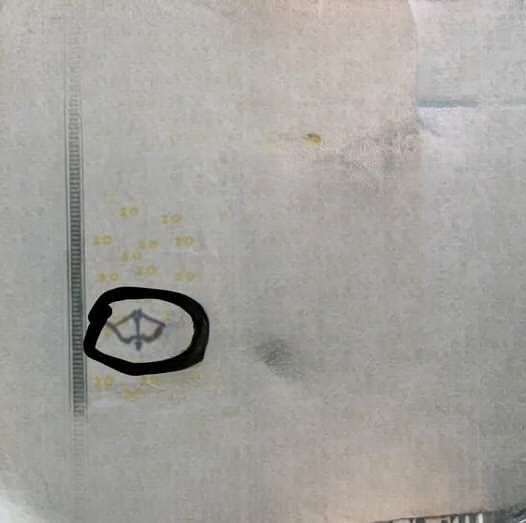
Have you ever examined a U.S. dollar bill closely and noticed small, unusual symbols? Perhaps there were tiny stamps, initials, or even miniature shapes like a bow and arrow. These curious marks are known as chop marks, and they tell a fascinating story about the global journey of paper currency. While many people may overlook them, chop marks serve as a window into international trade, banking practices, and the measures people take to verify the authenticity of money.
What Are Chop Marks?
Chop marks are small stamps applied to banknotes by money handlers or currency exchangers. The primary purpose of these marks is verification: they signal that the bill has been inspected and confirmed as genuine. Unlike damage or defacement, chop marks are generally minor and do not reduce the currency’s value or usability.
These marks are particularly common in regions such as Southeast Asia, Africa, and Latin America, where foreign currency plays an important role in commerce and counterfeit detection is a serious concern. While some people may mistake these symbols for graffiti or decorative markings, their origin is purely functional.
The Origins of Chop Marks
The concept of chop marks is believed to have originated in China, a country with a long history of stamping coins for authenticity. In the past, silver coins were stamped to indicate weight, value, and genuineness. This practice ensured that merchants and buyers could trade with confidence, minimizing disputes over counterfeit or substandard coins.
As global trade expanded, the practice of stamping currency migrated from coins to paper money. With the U.S. dollar becoming one of the most widely circulated currencies internationally, it naturally became a target for chop marking in foreign markets. Merchants, banks, and currency traders used these small stamps to keep track of bills as they moved from hand to hand, country to country, and transaction to transaction.
How Chop Marks Work
A chop mark can take many forms:
-
Initials or letters identifying a bank or money handler
-
Small shapes or symbols, such as stars, bows, or arrows
-
Unique stamps used to indicate verification at a specific point in a trade
Each chop serves as a record of authenticity. When bills pass through multiple markets, they may accumulate several chop marks, showing a trail of verification across regions. In some cases, a heavily marked bill may even be prized by collectors for its historical journey.
It’s important to note that chop marks are different from defacement. While U.S. law prohibits mutilating currency to the point that it loses value, chop marks are generally minor and functional. They are intended to maintain the integrity of trade rather than diminish the bill’s worth.
Global Significance of Chop Marks
Chop marks provide insight into international commerce and the circulation of currency outside the United States. They reflect:
-
Economic connections between countries
-
Measures against counterfeit currency
-
Trade practices in markets where foreign cash is commonly used
In Southeast Asia, for example, U.S. dollars are often used alongside local currencies in everyday transactions. Merchants apply chop marks as a security measure to verify authenticity before completing a trade. Similarly, in parts of Africa and Latin America, chop marks help protect traders from counterfeit bills while allowing U.S. currency to circulate more reliably in local economies.
The Collector’s Perspective
Interestingly, chop marks have also become a subject of interest among currency collectors. A bill with multiple, legible chop marks can tell a story about its international journey. Collectors often study these marks to trace the history of a bill’s circulation, the regions it passed through, and the types of businesses that verified it. In some cases, bills with historical significance or unique stamps can even gain added value among enthusiasts.
U.S. Legal Considerations
While chop marks themselves are generally harmless, it’s important to remember U.S. regulations regarding currency handling. The law prohibits defacing or mutilating bills in a way that renders them unusable. Minor marks, such as chop stamps, do not violate this rule because the bill remains functional and retains its value.
However, banks or automated machines may occasionally reject heavily stamped bills due to their appearance. In these cases, the bill can often still be exchanged for a fresh note at a financial institution. This highlights the delicate balance between practical international practices and domestic regulations.
Cultural and Historical Context
The practice of chop marking offers a fascinating window into how people around the world adapt to the challenges of using widely circulated foreign currency. Before modern anti-counterfeit technology, these stamps provided a simple yet effective method to maintain trust in transactions.
By studying chop marks, historians and economists gain insight into the flow of money, trade networks, and even local business practices. Each mark represents a small but meaningful interaction: a bill verified, a transaction completed, and trust maintained across borders.
While chop marks originated as a practical solution in times before advanced anti-counterfeit technology, they remain relevant as a historical tool for understanding currency security practices. Today, U.S. bills include sophisticated features such as watermarks, color-shifting inks, security threads, and microprinting. These modern measures make it far more difficult to produce counterfeit bills.
However, in many regions where cash circulation remains high and banking infrastructure may be less accessible, chop marks continue to serve as an additional layer of verification. They are a simple, low-tech method that complements modern security features, especially in markets that rely heavily on physical currency transactions.
Even in a digital age, the tactile act of stamping a bill and visually confirming authenticity carries symbolic weight. It reflects a human element in commerce: trust, attention, and diligence in handling money. For many traders, seeing a chop mark assures them that the bill has been scrutinized and accepted by others before them.
Chop Marks Around the World
Southeast Asia
Southeast Asia is one of the regions where chop marks are most commonly found. Countries such as Thailand, Vietnam, and Singapore frequently see U.S. dollars in everyday use, particularly in border regions and tourist-heavy areas. Merchants, money changers, and banks apply stamps to verify authenticity and prevent counterfeit circulation.
Interestingly, the style of chop marks can vary by region or even by individual business. Some are simple initials, while others are intricate symbols reflecting local culture or company logos. For collectors, these variations add richness and context to the story of a single bill.
Africa
In parts of Africa, U.S. dollars are often used alongside local currencies for major transactions, such as real estate, imports, and exports. Here, chop marks serve both as a security measure and as a record of a bill’s journey across different traders. In regions with high counterfeit risk, the chop marks create a visual “trust trail,” allowing businesses to accept foreign currency confidently.
Latin America
Countries in Latin America also showcase the practical use of chop marks. In local markets, small businesses often deal with both local and foreign currency. Chop marks help ensure that foreign bills—especially those coming from outside the region—are genuine. This practice highlights the adaptability of local financial systems, which integrate foreign currency while managing authenticity concerns.
Chop Marks in Numismatics
Beyond their functional use, chop marks have become an object of fascination for numismatists—collectors and scholars of currency. Chop-marked bills can reveal fascinating stories:
-
Historical trade routes: Each mark may correspond to a transaction in a particular market or region.
-
Cultural symbolism: Some marks incorporate local designs, logos, or patterns that reflect the merchant’s identity or regional customs.
-
Rarity and collectibility: Certain chop marks are rare or unusual, making bills highly sought after by collectors.
For example, a U.S. dollar with multiple chop marks from a series of Southeast Asian banks may be prized for its ability to document international circulation in a pre-digital era. Collectors often study the style, placement, and type of mark to determine its origin and significance.
Tips for Travelers and Currency Handlers
For travelers who encounter chop-marked bills, there are several practical considerations:
-
Acceptance: Most businesses accept chop-marked bills without issue, though heavily marked notes might be questioned.
-
Bank Exchange: If a bill is excessively stamped or damaged, banks can usually exchange it for a fresh note.
-
Collector’s Interest: Some travelers keep chop-marked bills as souvenirs, as they represent the journey and story of money across cultures.
-
Observation: Noting the types and locations of chop marks can provide a unique perspective on regional financial practices and trade habits.
Being aware of chop marks adds a layer of understanding to the experience of using currency abroad. It illustrates how physical money is not just a medium of exchange, but also a record of trust, interaction, and economic history.
The Cultural Significance of Chop Marks
Chop marks also carry broader cultural meaning. They demonstrate how societies adapt foreign systems for local use. In a way, they symbolize collaboration across borders: U.S. bills traveling through Southeast Asian markets are literally stamped with local validation. Each mark tells a story of negotiation, commerce, and human connection in an increasingly globalized world.
Furthermore, the practice of chop marking reflects a universal need for security and authenticity in trade. Long before digital verification, merchants relied on tactile, visual confirmations of trust. Chop marks remind us that commerce has always been as much about relationships and reliability as it has been about money itself.