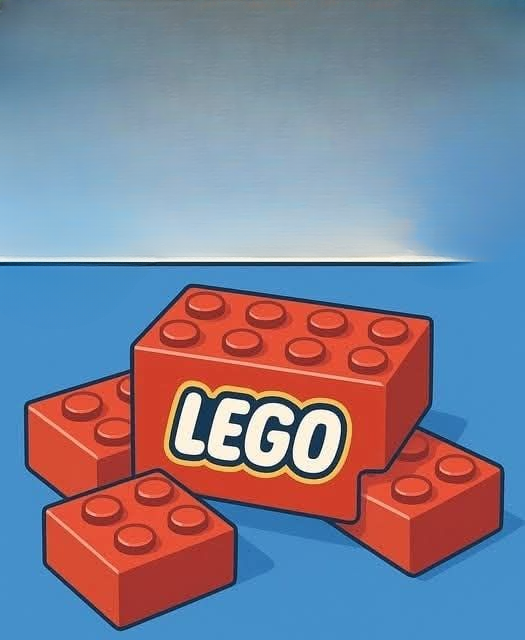
The Architecture of Imagination: Uncovering the True Meaning and Legacy of LEGO
For nearly a century, a single name has stood as a global shorthand for creativity, engineering, and the pure joy of play: LEGO. From the smallest living rooms to the largest architectural conventions, these colorful plastic bricks have transcended their status as mere toys to become a fundamental tool for human expression. But what does “LEGO” really signify? Beyond the interlocking tubes and studs lies a story of linguistic serendipity, industrial resilience, and a philosophical commitment to the idea that play is the most serious work of childhood.
In this deep dive, we explore the origins of the name, the pivotal shift from wood to plastic, and the enduring legacy of the Kristiansen family’s vision for a world built one brick at a time.
I. The Etymology of Play: “Leg Godt”
The word “LEGO” is not an ancient term or a complex acronym; it is a portmanteau born of a simple Danish phrase. In 1934, two years after founding his toy-making business, Ole Kirk Kristiansen sought a name that would encapsulate his company’s mission.
A Linguistic Miracle
Ole combined the Danish words “Leg Godt,” which translates literally to “Play Well.” It was a name that functioned as both a brand and a directive. However, there was a deeper layer of meaning that Ole was reportedly unaware of at the time: in Latin, the word “Lego” can be translated as “I put together” or “I assemble.”
This linguistic coincidence is often cited by historians as a “prophetic” moment in branding. The name “LEGO” unknowingly described exactly what the product would eventually allow millions of people to do: assemble worlds from their own imagination. This duality—the Danish command to play and the Latin verb of construction—forms the bedrock of the company’s identity.
II. The Carpenter’s Mission: 1932 and the Birth of a Vision
The story of LEGO begins not with plastic, but with the aromatic shavings of a Danish carpentry shop. In 1932, during the height of the Great Depression, Ole Kirk Kristiansen lost his primary business making stepladders and ironing boards. In an act of desperate creativity, he turned to crafting high-quality wooden toys.
The Standard of Quality
Ole’s motto was famously, “Only the best is good enough.” Even in the early days of wooden ducks and blocks, he refused to compromise on craftsmanship. He believed that children deserved toys that were as durable and well-made as a piece of fine furniture. This commitment to quality became the “North Star” of the company, ensuring that even when the material changed, the integrity of the product remained absolute.
III. The Great Transition: From Wood to the “Automatic Binding Brick”
The late 1940s represented a period of radical technological experimentation. Following the devastation of World War II, new materials were becoming available, and Ole’s son, Godtfred Kirk Christiansen, began to see the potential in a new medium: Plastic.
The 1947 Turning Point
In 1947, the company purchased a plastic injection molding machine—the first of its kind in Denmark. This was a monumental risk for a small family business. They began producing “Automatic Binding Bricks,” inspired partly by the Kiddicraft Self-Locking Building Bricks designed by Hilary Fisher Page in the UK.
It wasn’t until 1958 that the modern LEGO brick design—the one we recognize today—was patented. The innovation was the stud-and-tube coupling system. This provided the “clutch power” necessary for structures to be both sturdy and easily disassembled. This mechanical breakthrough is what transformed LEGO from a set of blocks into a “system of play.“
IV. The LEGO System: A Universal Language
Godtfred Kirk Christiansen envisioned something larger than a single toy; he wanted a system. He realized that if every brick, regardless of when it was made, could fit with every other brick, the possibilities for expansion were infinite.
The 10 Principles of LEGO Play
To ensure the company stayed true to its mission, Godtfred established ten core principles for every product:
-
Unlimited play potential.
-
For girls and for boys.
-
Fun for every age.
-
Year-round play.
-
Healthy, quiet play.
-
Long hours of play.
-
Development, imagination, and creativity.
-
Each new product multiplies the value.
-
Always relevant.
-
Quality in every detail.
This systemic approach meant that a brick purchased in 1958 remains perfectly compatible with a brick manufactured in 2026. This continuity is a hallmark of the brand’s sustainability and emotional value.
V. Sociological Impact: Play as Learning
In modern education, LEGO bricks are no longer seen as just toys; they are tools for constructionist learning. This educational theory suggests that people learn most effectively when they are actively making tangible objects.
Engineering for the Next Generation
Through “LEGO Education” and robotics lines like Mindstorms (and its successors), children learn the fundamentals of:
-
Spatial Reasoning: Understanding how objects fit in 3D space.
-
Structural Engineering: Learning about balance, weight distribution, and integrity.
-
Problem Solving: Navigating the “failure” of a collapsed build to find a stronger solution.
VI. Conclusion: The Infinite Brick
What does LEGO really signify? It signifies the unbreakable link between play and progress. It is a testament to the fact that a small idea in a Danish carpentry shop can grow into a global medium for art, science, and storytelling.
The name “Play Well” remains as relevant today as it was in 1934. Whether you are building a simple house or a complex spacecraft, the LEGO brick is a reminder that we are all architects of our own reality. By insisting on quality and believing in the power of imagination, the Kristiansen family created more than a toy—they created a legacy of infinite possibilities.