The Architecture of Perception: What Optical Illusions Reveal About the Inner Self
Introduction: The Subjectivity of the Seen
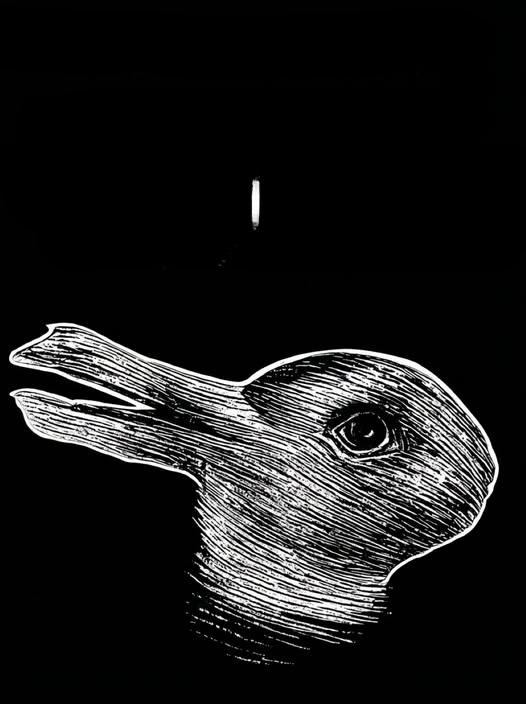
It is often said that “seeing is believing,” but in the realm of cognitive science, the opposite is frequently truer: we see what we believe. When two individuals gaze upon the same image—perhaps the famous “Duck-Rabbit” or the “Old Woman/Young Girl”—and perceive entirely different subjects, they are experiencing a fundamental truth about human consciousness.
Reality is not a static broadcast that our eyes simply receive. Instead, it is a sophisticated construction built by the brain, which uses past experiences, cultural backgrounds, and inherent personality traits to “fill in the gaps.” Optical illusions, particularly those featuring animals, serve as a window into this private workshop of the mind.
Chapter 1: The Neurobiology of Visual Processing
To understand why you might see a bird before a fish, or a lion before a zebra, we must first look at the mechanics of the human visual system.
Bottom-Up vs. Top-Down Processing
Visual perception is a two-way street. Bottom-up processing refers to the raw data—the light, shadows, and edges—hitting your retina. However, the brain rarely relies on this alone. It employs top-down processing, where it uses existing knowledge and expectations to interpret those raw shapes.
If your personality is rooted in high levels of “Need for Closure,” your brain may quickly latch onto the most obvious, structured pattern it can find to eliminate ambiguity. Conversely, if you score high in “Openness to Experience,” your neural pathways may remain flexible for longer, allowing you to see multiple interpretations of the same image simultaneously.
Chapter 2: The Logic-Seeker vs. The Symbolist
In many classic two-animal illusions, the results generally categorize viewers into two primary cognitive styles: the structuralist and the fluid thinker.
The Structuralist: Order and Planning
If you are drawn to the animal that represents the most logical or grounded interpretation of the lines, you likely possess a high degree of conscientiousness. In the Five-Factor Model of personality, this trait is associated with:
-
Organization: A preference for clear boundaries and definitions.
-
Goal-Orientation: The brain seeks the “right” answer quickly to proceed to the next task.
-
Rationality: A reliance on the physical evidence of the lines rather than the “vibe” of the image.
The Fluid Thinker: Possibility and Imagination
If you notice a secondary or more abstract animal first, your brain may be wired for divergent thinking. This is the ability to see multiple solutions to a single problem. This cognitive style is often found in:
-
Creative Professionals: Those who must constantly reinterpret existing data to create something new.
-
Empathetic Individuals: People who are used to looking “beneath the surface” of social interactions.
-
Abstract Thinkers: Those who find comfort in ambiguity rather than being threatened by it.
Chapter 3: The Psychology of Pareidolia
The phenomenon of seeing significant images (like animals) in random or ambiguous patterns is called pareidolia. While it was once considered a survival mechanism—allowing our ancestors to spot a predator (like a wolf) hidden in the tall grass—it has evolved into a tool for self-reflection.
Studies have shown that our current emotional state significantly influences pareidolia. A person experiencing high levels of stress is statistically more likely to perceive aggressive or predatory animals, whereas someone in a relaxed state might notice domestic or docile creatures. This suggests that the “first animal you see” is not just a permanent personality trait, but a snapshot of your current mental environment.
Chapter 4: Broad Context—Demographics and Perception
Interestingly, research suggests that perception is not just individual, but can be influenced by broader demographic factors.
Statistics in Perception Studies
In various psychological trials involving ambiguous figures, researchers have noted interesting trends:
-
Age Groups: Children tend to switch between the two animals in an illusion more slowly than adults, as their executive functions for “re-focusing” are still developing.
-
Cross-Cultural Data: In studies comparing Western and East Asian participants, researchers noted that Western viewers often focus on a single “salient object” (the animal), while East Asian viewers often perceive the “context” or the background first.
-
Cognitive Styles: Approximately 70% of people see the most common “primary” image first in standard tests, while only 30% identify the “hidden” or secondary animal as their initial impression.
Chapter 5: Why It Matters—Self-Awareness as a Tool
The value of these personality tests is not in “typing” ourselves into a rigid box. Rather, it is about understanding that our “default” way of seeing the world is just one of many possibilities.
Breaking the Gag of Habitual Thinking
When we realize that our brain “scripts” our reality, we gain the power to rewrite that script. If you know you instinctively seek order and logic, you can consciously practice looking for the “secondary animal” in life—the hidden possibilities in a difficult situation or the nuance in a complex conversation.
Conclusion: The Quiet Revolution of the Mind
Optical illusions remind us that our minds are private universes, each shaping the world with its own unique set of tools. Whether you see the lion or the bird, the rabbit or the duck, you are witnessing your own cognitive signature. By embracing the fluid nature of perception, we can move toward a more empathetic and open-minded way of living, acknowledging that “the truth” often depends on where you choose to look.