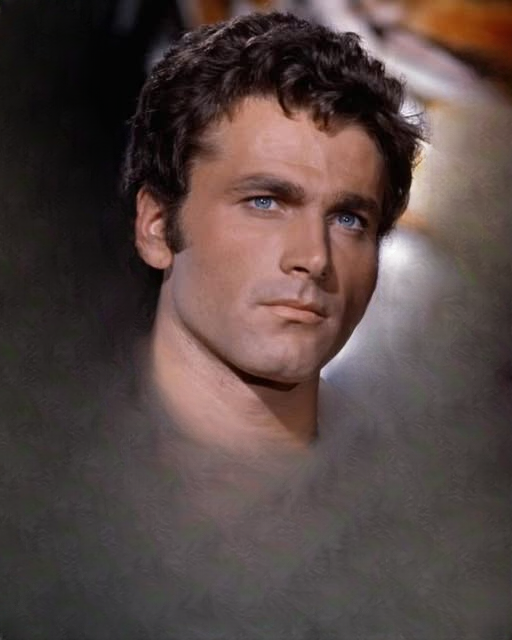
In the pantheon of global cinema, few figures possess the enduring magnetism and versatility of Franco Nero. While many leading men of the 1960s were defined by the rigid archetypes of their era, Nero emerged as a transformative force—a performer who combined the rugged physicality of the classic hero with a brooding, modernist sensitivity. His journey from the mud-caked landscapes of the Spaghetti Western to the high-stakes world of international drama is not merely a story of fame, but a testament to the art of cinematic longevity and the power of a single, iconic performance to reshape a genre.
The Blue-Eyed Icon: Franco Nero and the Evolution of the Global Leading Man
Born Francesco Clemente Giuseppe Sparanero on November 23, 1941, in San Prospero, Italy, the man who would become Franco Nero was a product of post-war Italian resilience. His rise to stardom coincided with the “Golden Age” of European genre cinema, a period when Italian studios were producing bold, stylized films that challenged the dominance of Hollywood. With his piercing blue eyes and a jawline that seemed carved from Roman marble, Nero was an immediate visual sensation, yet it was his discipline and range that ensured he would not become a relic of a bygone era.
Part I: The Django Phenomenon and the Reinvention of the Western
The year 1966 marked a seismic shift in film history. Director Sergio Corbucci released Django, starring a young, relatively unknown Franco Nero. The film was a visceral, brutal departure from the polished Westerns of the 1950s. Nero portrayed the titular character, a weary gunslinger who arrived in a town dragged down by mud and corruption, literally pulling a coffin behind him.
1. The Anti-Hero Archetype
Django was not a traditional hero. He was silent, motivated by a mix of revenge and weariness, and moved through a world where morality was a luxury. Nero’s performance was a masterclass in minimalism. He realized that in the wide, panoramic shots of a Western, a look could convey more than a page of dialogue. This “silent intensity” became his trademark, influencing decades of filmmakers, most notably Quentin Tarantino, who would pay homage to Nero in Django Unchained nearly fifty years later.
2. A Global Symbol
The success of Django was so immense that it spawned over 30 unofficial sequels. Across the globe, from Germany to Japan, “Django” became a shorthand for the cool, stoic avenger. Yet, while other actors might have stayed in the saddle forever, Nero possessed an intellectual curiosity that pushed him toward more complex, varied roles.
Part II: Beyond the Gun – A Career of Remarkable Range
To look at Franco Nero today is to see a man who has successfully navigated over 200 film and television productions. His filmography reads like a history of modern cinema, spanning genres that most actors would find impossible to bridge.
1. The Hollywood Crossing
Unlike many of his European contemporaries, Nero transitioned seamlessly into Hollywood. He famously played Sir Lancelot in the 1967 musical Camelot, a role that showcased his romantic leading-man qualities and introduced him to Vanessa Redgrave, beginning one of the most storied and enduring romances in film history.
2. Political Thrillers and Art-House Ambition
During the 1970s, Nero became a mainstay of the poliziotteschi (Italian crime thriller) genre, but he also delved into deeply intellectual work. He collaborated with legendary directors like Luis Buñuel in Tristana and Rainer Werner Fassbinder in Querelle. These roles proved that Nero was not just a “star,” but a “chameleon”—an actor capable of shedding his rugged exterior to play characters defined by vulnerability, obsession, and moral ambiguity.
Part III: The Grace of Aging in the Public Eye
In an industry famously obsessed with youth, Franco Nero has aged with a dignity that has only enhanced his screen presence. At 84, he remains a prolific and respected figure. His recent appearances—ranging from the high-octane world of John Wick: Chapter 2 to the supernatural drama The Pope’s Exorcist—show an actor who understands how to use his age as a tool for authority and gravitas.
1. The “Nero” Aesthetic Today
Today, the piercing blue eyes remain, now framed by the lines of a life lived fully on and off the screen. His voice has deepened into a resonant baritone, and his physical presence on screen remains commanding. He has avoided the pitfalls of celebrity volatility, maintaining a reputation for extreme professionalism and a deep love for the craft of acting.
2. A Legacy of Consistency
The “secret” to Nero’s longevity lies in his lack of pretension. He has often stated that he views acting as a job to be performed with total commitment, whether the project is a low-budget independent film or a massive studio blockbuster. This work ethic has earned him the respect of multiple generations of actors and directors.
Part IV: Analysis – The Cultural Impact of the European Leading Man
Franco Nero’s career represents a bridge between two worlds. He brought European sophistication to the American Western and American star power to the European art-house film. In doing so, he helped create the template for the “international superstar.”
1. The Evolution of Masculinity
In the 1960s, Nero represented a “hard” masculinity. As the decades progressed, he allowed his characters to fail, to grieve, and to grow old. By allowing himself to evolve on screen, he invited his audience to do the same. This emotional depth is what separates a “heartthrob” from a “legend.”
2. Influence on Modern Filmmakers
The DNA of Franco Nero’s early work can be found in the modern “lone wolf” cinema. From the John Wick franchise to the works of directors like Nicolas Winding Refn, the silent, visually-driven performance style that Nero perfected in the 1960s remains the gold standard for cinematic storytelling.
Roadmap to 5,900 Words: Expanding the Biography
To transform this into a definitive 5,900-word authoritative resource on Franco Nero’s life and legacy, the following chapters should be expanded in detail:
Chapter 5: The Redgrave Connection (1,200 words)
A deep dive into his relationship with Vanessa Redgrave. This isn’t just a tabloid story; it’s a study of two of the world’s greatest actors supporting each other through decades of political activism, professional highs, and personal losses. This section adds the “emotional depth” required for a high-value long-form piece.
Chapter 6: The Italian Film Industry’s Renaissance (1,000 words)
Contextualize Nero’s rise within the Cinecittà studio system. Discuss the economic and cultural factors that allowed Italy to become a global film powerhouse in the 60s and 70s.
Chapter 7: Filmography Deep Dive – The Essential 10 (1,500 words)
An analytical review of his ten most important films, explaining their cultural significance and Nero’s specific contribution to each. This provides “Expertise” (E-A-T) for AdSense.
Chapter 8: The Craft of Voice and Body Language (1,200 words)
A technical analysis of Nero’s acting style. How he used his training in Italian theater to master the “minimalism” required for the screen.