The Digital Echo: How AI Voice Cloning is Redefining Identity Theft and How to Protect Your Vocal Signature
Introduction: The New Frontier of Biometric Vulnerability
For decades, the human voice has been considered an intimate and secure identifier. It carries our emotions, our history, and our unique biological markers. However, we have entered an era where the very sounds we produce can be harvested, manipulated, and weaponized.
The rise of Generative Artificial Intelligence (GenAI) has brought about “Voice Cloning”—a technology that can replicate a human voice with startling precision using only a few seconds of source audio. While this technology has incredible applications in medicine (restoring speech to those with ALS) and entertainment, it has also birthed a new, sophisticated form of “vishing” (voice phishing). This article serves as a deep-dive into the “Yes Trap,” the mechanics of vocal synthesis, and the proactive steps necessary to safeguard your identity in 2025.
Chapter 1: The Mechanics of the “Yes Trap”
One of the most insidious tactics currently employed by phone-based scammers is the “Yes Trap.” It is a deceptively simple maneuver designed to bypass security protocols and create fraudulent records of consent.
How the Scam Operates
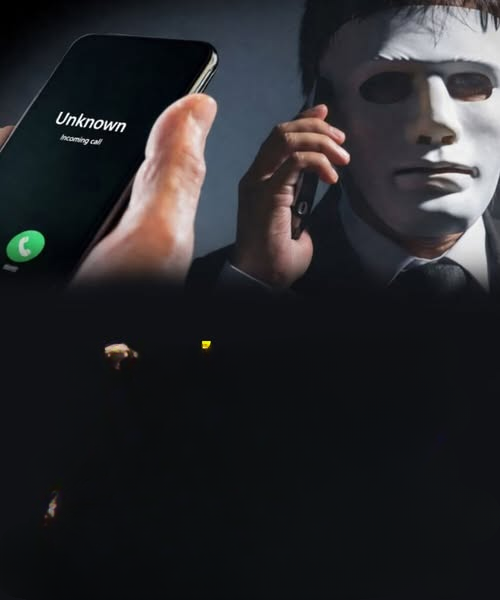
The scam usually begins with a phone call from an unknown or spoofed number. When you answer, the caller may ask a simple, reflexive question, such as “Can you hear me?” or “Is this [Your Name]?” The natural, polite human response is to say, “Yes.”
The moment you utter that single word, the scammer records it. In the world of automated banking and contract verification, a recorded “Yes” can be used as a digital signature. Scammers can overlay this recording onto a script of questions you never actually heard, creating a fraudulent audio file that sounds like you are consenting to a high-interest subscription, a bank transfer, or a change in account security settings.
Chapter 2: The Science of AI Voice Cloning
To protect yourself, you must understand the technology the adversary is using. Modern AI voice cloning uses Neural Networks and Deep Learning to analyze the “spectrogram” of your speech.
Key Vocal Markers Analyzed by AI:
-
Pitch and Fundamental Frequency: The “highness” or “lowness” of your voice.
-
Prosody: The rhythmic and intonational patterns of your speech.
-
Formants: The spectral peaks of the sound spectrum of the voice that distinguish vowels.
-
Micro-pauses: The tiny, millisecond-long breaks you take between certain syllables.
Because AI can now analyze these markers from as little as three seconds of audio, your voicemail greeting or a brief “Hello” on a robocall provides enough data for an algorithm to “hallucinate” the rest of your vocabulary. The resulting “Deepfake” voice can then be used in real-time “Text-to-Speech” (TTS) engines, allowing a scammer to type a message and have it read aloud in your voice.
Chapter 3: The Psychological Playbook of the Visher
Scams are rarely just about technology; they are about human psychology. Scammers rely on “Social Engineering”—the art of manipulating people into performing actions or divulging confidential information.
The Three Pillars of Phone Fraud:
-
Urgency: The caller claims there is an emergency (a “grandparent scam” involving a fake accident) to bypass your critical thinking.
-
Authority: They may impersonate a bank official, a government agent, or a technical support specialist to gain your trust.
-
Fear: They threaten legal action or financial loss to compel an immediate, unthinking response.
By using a cloned voice of a loved one, the “Urgency” factor is multiplied. If you hear a family member’s voice crying for help, your brain’s emotional center (the amygdala) takes over, often silencing the logical prefrontal cortex.
Chapter 4: Three Critical Words to Avoid (and Their Alternatives)
While “Yes” is the primary target, other reflexive affirmations can also be exploited. To maintain your security, you must reprogram your phone habits.
| The High-Risk Word | The Risk Factor | The Safer Alternative |
| “Yes” | Used as a signature of consent for unauthorized charges. | “I can hear you,” or “Who is calling?” |
| “Hello?” | A longer “Hello” provides more vocal data for cloning. | Wait for the caller to speak first or use a short “Hello.” |
| “Uh-huh” | Used to simulate active listening and agreement in fake transcripts. | Silence, followed by a direct question. |
The Golden Rule: If a caller asks “Can you hear me?”, the safest response is to hang up immediately. Do not engage.
Chapter 5: Advanced Defense – Creating a “Family Emergency Code”
In an era where you can no longer trust your ears, you must rely on pre-arranged verification. One of the most effective defenses against AI voice cloning scams is the Family Code Word.
Choose a word or phrase that is entirely unrelated to your daily life—something that cannot be found on social media (e.g., “Blue Pineapple” or “Waffle Iron”). If you receive a call from a loved one claiming to be in trouble or asking for money, ask them for the code. An AI clone or a scammer will not have this information. This simple, low-tech solution is currently the only 100% effective way to verify identity during a “vishing” attempt.
Chapter 6: Hardening Your Digital Footprint
Your voice is often harvested from public sources. To reduce the risk of your voice being cloned, consider the following digital hygiene steps:
-
Audit Your Voicemail: Avoid using your own voice for your voicemail greeting. Use the generic system-generated greeting instead.
-
Private Social Media: Be wary of posting videos of yourself speaking on public social media profiles. Scammers use “web scrapers” to find audio samples on TikTok, Instagram, and YouTube.
-
Voice Biometrics: Contact your bank and financial institutions. If they use “Voice ID” as a password, ask to disable it and use a standard alphanumeric password or hardware token instead.
Conclusion: Vigilance in the Age of Synthesis
The evolution of AI means that our biological identifiers—our faces, our fingerprints, and our voices—are no longer the ironclad proof of identity they once were. However, technology is only half the battle. By staying informed, adopting a “verify then trust” mentality, and refusing to provide the vocal “keys” scammers seek, you can stay one step ahead of the digital echo.