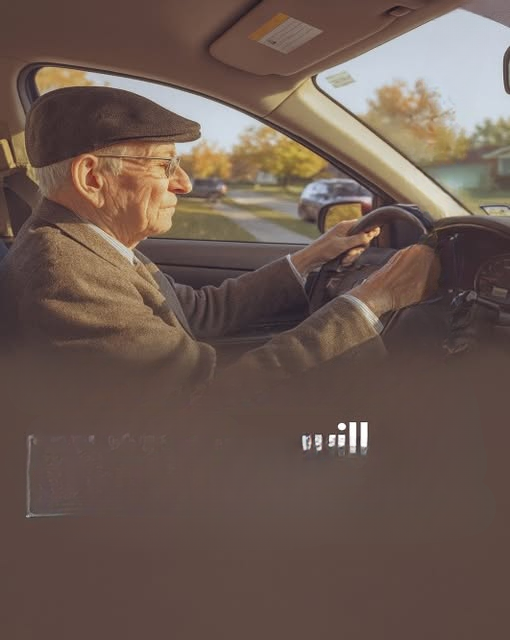
The End of the Open Road? Navigating the Future of Senior Driving in 2026
Introduction: The Day the Music Stopped in La Rochelle
It was a bright Wednesday morning in June 2024 when the coastal city of La Rochelle, France, was transformed from a scenic tourist haven into the center of a national tragedy. A group of twelve children, vibrant and eager for a day at the park, were pedaling their bicycles as part of a supervised leisure center outing. In a split second, the hum of bicycle tires was replaced by the screech of brakes and the unthinkable sound of a head-on collision.
An 83-year-old driver, reportedly confused and traveling in the wrong direction, had struck the group. The aftermath was a harrowing scene of tangled metal, fluorescent vests, and discarded helmets. Seven children were hospitalized; one ten-year-old girl would never return home.
This single, devastating event acted as a lightning rod for a debate that had been simmering across Europe for decades: At what point does the right to individual mobility infringe upon the right to public safety? As we enter 2026, the answers to that question are finally taking the form of binding law, signaling a significant shift for drivers over the age of 70.
Chapter 1: The Anatomy of a Debate—Safety vs. Autonomy
The conversation surrounding senior driving is rarely about “bad” drivers. Instead, it is about the inevitable biological reality of aging. For many seniors, a driver’s license is more than a plastic card; it is a symbol of independence, especially in rural areas where public transport is a distant dream.
The Statistical Reality
Data from France’s Road Safety Authority and the European Commission reveals a stark “U-shaped” curve in accident rates.
-
The High-Risk Groups: Drivers over 75 are involved in fatal accidents at a rate nearly identical to those aged 18 to 24.
-
Vulnerability: Seniors are not just more likely to be involved in accidents; they are significantly more likely to die from their injuries due to increased physical fragility.
-
Relative Risk: While seniors often drive fewer miles and avoid night driving (a practice called “self-regulation”), their crash rate per kilometer driven rises sharply after the age of 70.
Chapter 2: The New Legislative Landscape of 2026
For years, France was a “lifetime license” exception in Europe. Unlike its neighbors, France did not require medical check-ups to keep a standard B-class license. However, the La Rochelle incident, combined with a broader European Union safety initiative called “Vision Zero,” has brought that era to an end.
The EU Driving License Directive
Beginning in 2026, new rules are being transposed into national laws across the EU. The primary changes for drivers over 70 include:
-
Mandatory Renewals: Licenses for passenger cars, which previously remained valid for 15 years, may now see shortened validity periods for those over 65 or 70.
-
Fitness-to-Drive Assessments: Member states are now empowered to require medical examinations or self-assessment forms during renewal. These tests focus on eyesight, cardiovascular health, and cognitive function.
-
The End of the “Lifetime” License: In countries like France, the transition toward a digital license system is being used to phase out older, permanent paper licenses in favor of documents that require periodic re-validation.
Chapter 3: The Science of Aging and the Driver’s Seat
The decline in driving ability is rarely sudden; it is a gradual erosion of the complex cognitive and motor skills required to navigate a 1.5-ton vehicle.
Cognitive and Sensory Changes
-
Visual Perception: The amount of light reaching the retina decreases with age. Seniors often struggle with “glare recovery” and “contrast sensitivity,” making left-hand turns across traffic—the most common site of senior accidents—extremely dangerous.
-
Processing Speed: Driving requires “split-second” decision-making. Research shows that as we age, the time it takes to process a hazard and move a foot to the brake pedal increases.
-
Executive Function: Early-stage dementia or Mild Cognitive Impairment (MCI) can impair a driver’s ability to interpret road signs or remember the rules of a roundabout, as was tragically seen in the La Rochelle incident.
Chapter 4: The Emotional Toll of “Hanging Up the Keys”
For a 75-year-old who has driven safely for five decades, being told they can no longer drive feels like a personal failure or an act of ageism. This emotional weight often leads to family conflict.
The Family Intervention
Many children of senior drivers find themselves in the “sandwich generation” role—trying to protect their parents while ensuring the safety of their own children on the road.
-
The Warning Signs: Dents on the car, getting lost in familiar areas, and “near misses” are often the first indicators that it’s time for a conversation.
-
The Social Isolation Risk: Studies show that when seniors stop driving, their risk of depression and social isolation increases. The “death of the license” can often feel like the beginning of a loss of purpose.
Chapter 5: Looking Forward—Solutions Beyond the Ban
If the future involves fewer senior drivers, society must provide an infrastructure that supports their mobility.
The Rise of Assisted Technology
-
ADAS Systems: Advanced Driver Assistance Systems, such as automatic emergency braking and lane-keep assist, are being tailored to help seniors compensate for slower reaction times.
-
Autonomous Shuttles: In cities like La Rochelle, trials of autonomous electric shuttles are providing a glimpse into a future where “not driving” doesn’t mean “not moving.”
-
Senior-Specific Training: Some European countries are introducing “Refresher Courses” instead of outright bans, allowing seniors to sharpen their skills and learn new road rules in a non-punitive environment.
Conclusion: A Shared Responsibility
The “sad news” for drivers over 70 is not about an arbitrary loss of rights, but a collective move toward a safer community. The tragedy in La Rochelle was a wake-up call that road safety is a shared responsibility. While the transition away from lifetime licenses is difficult, it is a necessary evolution in a world where we are living longer than ever before.
As we move through 2026, the goal is not to ground our elders, but to ensure that every journey—whether taken by a child on a bike or a grandfather in a sedan—ends safely at home.