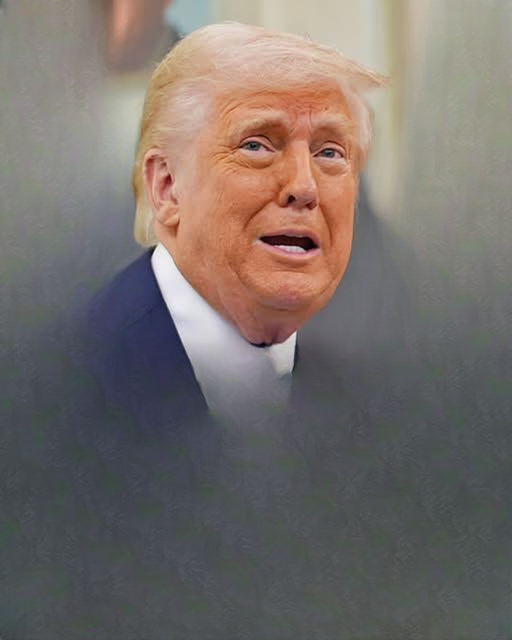
The Fourth Estate Under Scrutiny: Presidential Rhetoric and the Constitutional Shield
The relationship between the American Presidency and the press has reached a historic inflection point. While tension between the White House and the media is as old as the Republic itself, recent televised warnings directed at news organizations have sparked a national dialogue regarding the limits of executive influence and the durability of the First Amendment. When a leader suggests that “changes are coming” for the media following critical coverage of military or foreign policy matters, it necessitates a deep examination of our legal safeguards and the role of information in a democracy.
A Historical Legacy of Friction
To understand the gravity of current events, one must look back at the friction that has defined the American executive-press dynamic. From the earliest days of the nation, the press has been both a tool for and a thorn in the side of those in power.
-
The Sedition Act of 1798: John Adams famously signed the Alien and Sedition Acts, which made it a crime to publish “false, scandalous, and malicious writing” against the government. This was the first major test of the First Amendment, and the public backlash eventually helped Thomas Jefferson win the presidency.
-
The Nixon Era and the Pentagon Papers: Perhaps the most famous clash occurred during the Vietnam War. The Nixon administration attempted to use “prior restraint” to stop the New York Times from publishing classified documents. The Supreme Court eventually ruled in favor of the press, establishing that the government carries a heavy burden to justify such censorship.
In each of these historical instances, the rhetoric was heated, but the institutional checks and balances—specifically the judiciary—upheld the right of the press to operate independently of government approval.
The Power of the Bully Pulpit vs. The First Amendment
The “Bully Pulpit,” a term coined by Theodore Roosevelt, describes the president’s unique ability to influence public opinion through their platform. However, when this platform is used to target specific media outlets or hint at regulatory retaliation, it creates a “chilling effect.“
Defining the Chilling Effect
In legal and journalistic terms, a chilling effect occurs when the threat of legal action, loss of credentials, or public vilification leads journalists to self-censor. If a newsroom fears that a specific report on a failed military strike or a policy error will lead to government retaliation, they may hesitate to publish, even if the information is accurate and in the public interest. This undermines the primary function of the press: to act as a watchdog for the citizenry.
The Role of Advocacy Groups
The Committee to Protect Journalists (CPJ) and other press freedom advocates argue that televised warnings from the highest level of government move beyond simple critique. They argue that such rhetoric can be interpreted by supporters as a mandate to harass journalists or by government agencies as a signal to tighten access. The concern is that if the rhetoric is normalized, the transition from “words” to “policy” becomes a shorter leap.
The Legal Bulwark: Why “Changes” are Difficult to Implement
Despite the intensity of the rhetoric, the United States has some of the strongest legal protections for journalists in the world. For any administration to enact substantive “changes” to how the media operates, they would have to overcome significant legal hurdles.
1. The Strict Scrutiny Standard
Any government action that infringes upon speech is subject to “strict scrutiny” by the courts. The government must prove that the restriction is necessary to achieve a “compelling government interest” and that the restriction is the least restrictive means possible. Criticism of a failed military strike rarely meets this high bar.
2. Libel Law and ‘Actual Malice’
There is often talk of “opening up” libel laws to make it easier to sue news organizations. However, the landmark case New York Times Co. v. Sullivan (1964) protects the media from lawsuits brought by public officials unless “actual malice” can be proven—meaning the outlet knew the information was false or acted with reckless disregard for the truth. This standard ensures that the press can debate public issues robustly without the constant fear of bankrupting lawsuits.
3. The Decentralization of Media
In the modern era, the media is no longer a monolith of three major networks. The rise of independent digital platforms, international news agencies, and social media makes it nearly impossible for any single government to “control” the flow of information. Even if access is restricted at the White House, information finds a way to the public.
The Social and Global Implications
The impact of executive hostility toward the press extends far beyond the borders of the United States.
The Global Beacon of Freedom
For decades, the U.S. has used its commitment to a free press as a diplomatic tool, encouraging developing democracies to allow dissent and transparency. When the U.S. executive branch adopts a combative stance toward the media, it weakens this diplomatic leverage. Authoritarian leaders in other nations often echo the rhetoric of “out of control” media to justify their own crackdowns on dissent.
Public Trust in Institutions
Perhaps the most lasting impact is on public trust. When the press is framed as an “enemy” or “out of control,” the public becomes polarized not just in their opinions, but in their perception of facts. This fragmentation makes it difficult for a society to reach a consensus on critical issues, from national security to economic policy.
The Path Forward: Defense of the Fourth Estate
As the tension between power and the press continues to play out on live camera, the responsibility for defending the First Amendment falls on multiple actors:
-
The Judiciary: Courts must remain independent and steadfast in upholding precedent.
-
The Press: Journalists must double down on ethical standards, fact-checking, and transparency to maintain public credibility.
-
The Public: Citizens must value a diverse media landscape, recognizing that a press that challenges the government is a sign of a healthy, not a failing, democracy.
In conclusion, while the sight of a president issuing warnings to the media on live television is a jarring departure from historical norms, the architecture of American democracy was designed for exactly this kind of stress test. The First Amendment was not written for comfortable times; it was written to ensure that even—and especially—when power turns hostile, the truth remains accessible to the people.