The Invisible Shield: Understanding the Science and Safety of Nature’s Perfect Package
Most people crack an egg without a second thought, but that simple action hides a surprising truth. Beneath the calcium carbonate shell lies a built-in defense system refined by nature long before refrigerators, chemical disinfectants, or food safety labels existed. What looks fragile is actually a marvel of biological engineering—and many everyday kitchen habits unknowingly strip away that protection.
The Architecture of an Egg: More Than Just a Shell
To understand why we handle eggs the way we do, we must first look at their construction. An egg is not a static object; it is a living, breathing vessel designed to protect and nourish.
The shell itself is composed primarily of calcium carbonate, honeycombed with thousands of microscopic pores. These pores allow for gas exchange—essentially letting the egg “breathe.” However, these same openings could serve as doorways for bacteria like Salmonella.
The Miracle of the “Bloom”
Nature’s solution to this vulnerability is the cuticle, or “bloom.” This is an ultra-thin, invisible protein layer applied to the shell just moments before the egg is laid. The bloom acts as a sealant, plugging the pores to:
-
Prevent moisture loss: Keeping the internal contents from drying out.
-
Block pathogens: Creating a physical and chemical barrier against environmental bacteria.
As long as this bloom remains intact, the egg is remarkably resilient. This natural shield explains why, in many parts of the world—including much of Europe and South America—eggs are sold unwashed and stored at room temperature without issue.
The Great Divide: To Wash or Not to Wash?
The global approach to egg safety is divided into two distinct philosophies, largely dictated by how different nations manage the cuticle.
The North American and Japanese Approach
In the United States, Australia, and Japan, commercial eggs are washed and sanitized before they reach the consumer. This process is designed to eliminate any surface bacteria or contaminants from the farm.
-
The Consequence: Washing removes the bloom.
-
The Result: Without its natural sealant, the egg becomes porous and vulnerable. Therefore, these eggs must be refrigerated to prevent bacterial growth.
The European Approach
In contrast, many European nations prohibit the washing of “Class A” eggs. The philosophy is to keep the natural defense system (the bloom) intact while focusing on vaccinating poultry flocks to prevent Salmonella at the source.
-
The Result: Because the bloom is preserved, these eggs can safely sit on a room-temperature shelf for weeks.
The Hidden Risk of Home Washing
For those who raise backyard chickens or buy from local farmers, the urge to “clean up” a dirty egg is strong. However, washing eggs at home can be counterproductive.
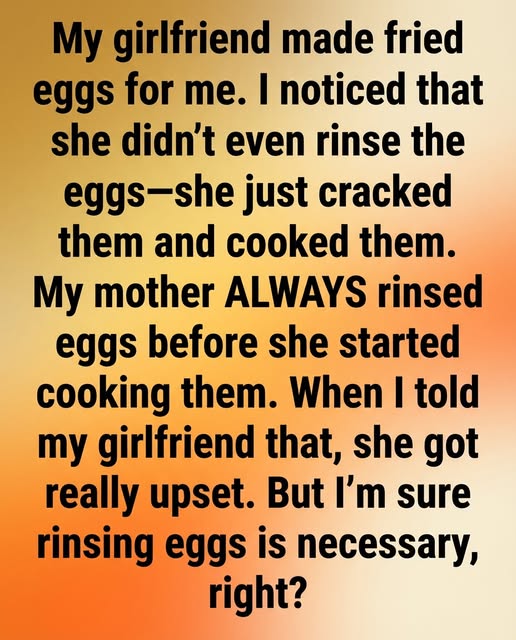
When you rinse an egg in cool water, it can cause the internal contents of the egg to contract. This creates a vacuum effect that can actually pull surface bacteria inward through the pores of the shell. What feels like an act of cleanliness can quietly undo the egg’s built-in defenses. If an egg is truly dirty, it is often better to use a dry abrasive (like a sanding sponge) or wait to wash it until immediately before use.
Culinary Versatility and Emotional Resonance
Beyond the science, eggs hold a unique place in our cultural and emotional lives. They are the universal symbol of new beginnings and the backbone of global cuisine. From the delicate structure of a French soufflé to the comforting simplicity of a soft-boiled egg, they provide essential proteins, fats, and vitamins (like B12 and Choline).
Understanding the egg isn’t about fear; it’s about respecting a delicate balance. Proper cooking—ensuring whites are set and yolks are cooked to your preference—remains the gold standard for safety.
Final Thoughts
The egg shell isn’t just packaging; it’s a sophisticated biological barrier. Sometimes the safest approach isn’t adding more steps or chemical cleaners, but knowing when to leave nature’s design intact. By respecting the “bloom,” we respect the science of food safety at its most fundamental level.