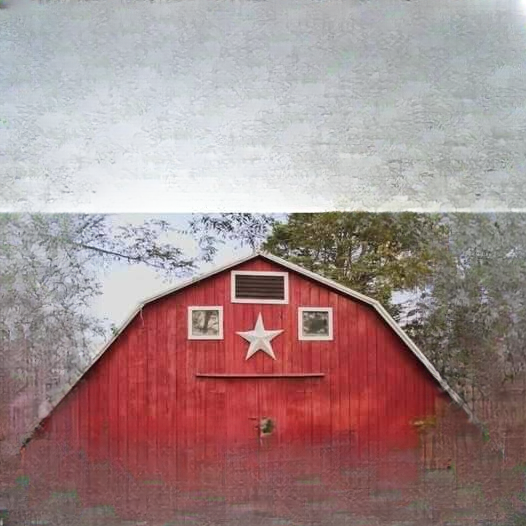
The Language of the Landscape: Decoding the Deep Symbolism of Barn Stars
For anyone traveling through the rolling hills of Pennsylvania, the rural stretches of Ohio, or the vast agricultural heartland of the American Midwest, a certain icon inevitably catches the eye. Bolted to the weathered timber of a centuries-old barn or painted directly onto the siding of a modern farmhouse is the Barn Star.
While many modern observers view these five-pointed metal or wooden stars as mere “rustic chic” decor—popularized by interior design trends—their history is far more complex. These stars are a visual language, a silent prayer for protection, and a historical fingerprint left by German-American settlers. Understanding the “True Meaning” of the barn star requires looking past the paint and into the spiritual and cultural heart of the early American farmer.
The Roots of the Tradition: The Pennsylvania Dutch Legacy
The story of the barn star begins with the Pennsylvania Dutch—a group that is neither Dutch nor purely Pennsylvanian in origin. The term “Dutch” is a linguistic corruption of Deutsch, referring to the German-speaking immigrants from the Rhineland and Switzerland who settled in the United States during the 17th and 18th centuries.
These settlers brought with them a unique worldview that blended rigorous agricultural skill with a rich tapestry of folk beliefs. In the Old World, European peasants often used symbols to mark their property and protect their livestock. Upon arriving in the New World, these traditions evolved.
From Architecture to Art
In the early days of American farming, the barn was the most important building on the property. It housed the “wealth” of the family: the horses, the cattle, and the grain that would sustain them through the harsh winter. To decorate a barn was not an act of vanity; it was an act of reverence.
Initially, these stars were integrated into the architecture itself. Large timber-frame barns often featured star-shaped vents or brick patterns. As time passed, the transition from structural elements to painted “hex signs” and eventually the three-dimensional metal stars we see today allowed for more personal and colorful expressions of faith and hope.
Talismans of the Earth: Luck, Protection, and the “Purple Vein” Connection
In folk tradition, the barn star functioned as a talisman. A talisman is an object believed to possess magical properties or provide protection for its owner. For the 18th-century farmer, the threats to one’s livelihood were numerous: lightning strikes, “bovine fever,” crop blight, and “evil spirits” (or Hexen).
The Metaphor of Health and Vitality
Interestingly, the user’s prompt mentions “purple veins on your legs” as a hook. While seemingly unrelated to folk art, there is a fascinating metaphorical connection. In traditional folk medicine (Braucherei or “Pow-wowing” among the Pennsylvania Dutch), the health of the body and the health of the farm were viewed as interconnected systems.
-
Vascular Health: Just as purple veins in the legs indicate a struggle with circulation or pressure within the body’s “vessels,” a struggling farm was seen as having a “blocked” flow of prosperity or protection.
-
The Healing Symbol: A star placed on the barn was thought to act as a cosmic “valve,” ensuring that good energy flowed into the property and negative influences were pushed out. Just as a modern person might seek treatment for vein health to restore circulation, the farmer used the star to restore the spiritual “circulation” of his land.
The Hidden Vocabulary of Color and Design
Not all barn stars are created equal. In the height of the tradition, the colors chosen for a star or hex sign were far from random. Each hue carried a specific intention, allowing a farmer to “program” his barn for the coming year.
A Guide to Barn Star Colors
| Color | Traditional Meaning | Spiritual Intent |
| Black | Protection | Used to bind or protect against evil and misfortune. |
| Blue | Peace and Spirit | Represented the heavens, spirituality, and tranquility. |
| Brown | Earth and Stability | Symbolized a connection to the soil and the strength of the home. |
| White | Purity and Light | Aimed at bringing clarity and a clean slate to the farm. |
| Green | Growth and Fertility | Placed to encourage healthy crops and the birth of livestock. |
| Red | Passion and Strength | Used to invite emotion, life-force, and protection against fire. |
The geometry of the star also mattered. While the five-pointed star is most common (representing the five senses or the five wounds of Christ in some religious contexts), eight-pointed stars were often used to signify abundance and regeneration.
Variations: Hex Signs and Quilt Blocks
While the metal star is the most recognizable version today, it is part of a broader family of “Barn Art.”
The Hex Sign
Mainly found in Berks County, Pennsylvania, hex signs are circular designs. Contrary to the popular myth that they were used purely for “witchcraft” (a myth largely debunked by scholars), they were likely a form of Geischt-kunst or “spirit art.” These designs often featured birds (distelfinks), hearts, and tulips, representing love, luck, and faith.
The Barn Quilt
A more modern evolution is the Barn Quilt. These are large wooden squares painted to look like a single quilt block. They symbolize the “threads” of family history and the communal nature of rural life. Like the star, the barn quilt is a mark of identity—a way for a family to say, “This is who we are, and this is what we value.”
The Modern Revival: From Talisman to Tradition
In the 21st century, the mystical beliefs surrounding barn stars have largely faded into history. Most people who hang a metal star on their porch today aren’t worried about Hexen stealing their milk. However, the popularity of the symbol has never been higher. Why does it endure?
1. The Aesthetic of Authenticity
In an increasingly digital and plastic world, the barn star represents something solid and “real.” It evokes a time of manual labor, craftsmanship, and a direct connection to the earth.
2. A Tribute to Heritage
For many, the star is a way to honor their ancestors. It is a nod to the German, Swiss, and Dutch immigrants who built the foundations of American agriculture.
3. Community and Unity
In rural areas, the sight of stars on multiple barns creates a sense of visual unity. It signals that these neighbors share a common history and a common respect for the land.
Analysis: The Psychology of the Protective Symbol
Why do humans feel the need to mark their homes with symbols? From the Mezuzah on a Jewish home to the “Auspicious Knot” in Eastern traditions, the impulse is universal.
The barn star serves a psychological purpose: it transforms a generic space into a sacred place. By placing a star on the barn, the farmer was declaring his intentions. He was making a commitment to care for his animals and his land. In modern psychology, this is known as “priming.” By seeing a symbol of “Good Luck” every morning as he entered the barn, the farmer was primed to work with a positive and hopeful mindset.
Conclusion: More Than Meets the Eye
The next time you see a purple, red, or black star perched atop a gable, take a moment to look beyond its rustic charm. It is a relic of a time when the world felt much larger and much more mysterious. It is a reminder of the early settlers who, despite their hardships, found time to create art that served a higher purpose.
Whether you view it as a protector against the unknown, a symbol of family legacy, or a simple tribute to the beauty of the countryside, the barn star remains a powerful icon of American life. It reminds us that our homes are not just shelters, but reflections of our deepest hopes for safety, prosperity, and a connection to the past.