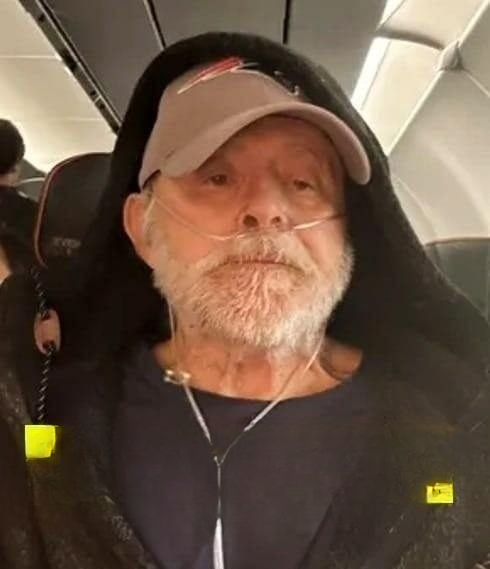
The professional wrestling industry is built on a foundation of larger-than-life characters, intricate storytelling, and a deep respect for the veterans who paved the way. In August 2024, the community lost one of its most enigmatic and brilliant minds. Kevin Sullivan, known to millions as “The Taskmaster” and the “Prince of Darkness,” passed away at the age of 74.
His departure marks the end of an era for a generation of fans who grew up watching his psychological warfare and for the peers who worked alongside him behind the curtain. Sullivan was more than just a performer; he was a visionary booker whose ideas helped drive the industry toward the massive cultural boom of the late 1990s.
The Legacy of Kevin Sullivan: A Visionary in the Squared Circle
Kevin Sullivan’s career spanned over six decades, a testament to his adaptability and enduring passion for the sport. Born in Cambridge, Massachusetts, in 1949, Sullivan didn’t just enter the wrestling business; he studied it. He was a “student of the game” who understood that while athleticism was necessary, the truly immortal stars were those who could manipulate the audience’s emotions.
The Evolution of “The Taskmaster”
Sullivan began his journey in the 1970s, working as a clean-cut babyface (hero) in various territories. However, it was his transformation in Championship Wrestling from Florida (CWF) that cemented his place in history. He leaned into a dark, occult-inspired persona that was decades ahead of its time.
As the leader of the Army of Darkness, Sullivan utilized psychological horror to captivate audiences. He understood the “Satanic Panic” of the 1980s and used that cultural backdrop to create a character that felt genuinely dangerous. Unlike the cartoonish villains of the era, Sullivan’s “Prince of Darkness” was grounded in a mysterious, cult-like realism that blurred the lines of reality for fans.
A Creative Force Behind the Scenes
While his in-ring work earned him fame, Sullivan’s contributions as a “booker” (writer/producer) were arguably more significant. He was a primary architect for World Championship Wrestling (WCW) during its most successful years.
-
The nWo Saga: Sullivan was instrumental in the creative process during the Monday Night Wars, specifically in the buildup to Hulk Hogan’s legendary heel turn at Bash at the Beach 1996.
-
The Dungeon of Doom: In the mid-90s, he created the “Dungeon of Doom,” a faction designed to be the ultimate foil to Hogan. While campy by today’s standards, it was a pivotal part of the era’s storytelling.
-
Psychological Storytelling: Sullivan was a proponent of “heat”—the ability to make an audience truly despise a villain. He believed that the stronger the villain, the more valuable the hero became.
The Final Chapter: A Brave Fight
The news of Sullivan’s passing followed a difficult period of declining health. In May 2024, while in Florida for autograph signings, he suffered a devastating accident that necessitated emergency surgery. Although the surgery was initially successful in saving his life and leg, complications soon followed.
Sullivan battled severe infections, including sepsis and encephalitis, and spent months in and out of consciousness in the ICU. The wrestling community showed its immense respect by rallying behind him; a GoFundMe organized by his family saw contributions from legends and fans alike, proving that the man who played a villain for so long was deeply loved in real life.
He ultimately passed away on August 9, 2024, surrounded by family and the legacy of a career that changed the face of sports entertainment.
Tributes from the Wrestling Fraternity
Following the news, the outpouring of grief was a “Who’s Who” of wrestling history.
-
WWE released a formal statement honoring his contributions.
-
Ric Flair and Eric Bischoff spoke of his genius in the booking room.
-
Mick Foley credited Sullivan with helping shape his early career as “Cactus Jack.”
-
Fenway Park (the home of his beloved Boston Red Sox) even featured a tribute on their scoreboard, acknowledging his status as a hometown hero.
Analysis: Sullivan’s Lasting Impact on Modern Wrestling
Modern wrestling fans see his influence every time a character uses psychological manipulation or supernatural elements. Without Kevin Sullivan, there might not have been an Undertaker, a Bray Wyatt, or the long-form storytelling that defines today’s product.
He taught the industry that the “match” is only 50% of the job—the other 50% is the story you tell before you ever step through the ropes. Sullivan’s life was a masterclass in creativity, and though “The Taskmaster” has taken his final bow, his blueprints remain in the hands of every storyteller in the business today.