Few parenting moments create instant concern quite like spotting a tiny insect moving through your child’s hair.
It often happens during everyday routines. You might be brushing your child’s hair after a bath, helping them get ready for school in the morning, or relaxing together on the couch while fixing a loose braid. Suddenly, something small catches your attention. A speck moves where nothing should be moving.
For a brief moment, many parents feel a rush of worry. Questions quickly appear:
-
What kind of bug is it?
-
Could it be lice?
-
Is it something dangerous?
-
Do I need to act immediately?
These reactions are completely normal. When it comes to our children’s well-being, our instincts naturally encourage us to respond quickly.
However, in most situations, discovering a small insect in a child’s hair is not an emergency. With a calm approach and the right information, parents can handle the situation safely and effectively.
Understanding what you are seeing—and how to respond—can turn a stressful moment into a manageable task.
Staying Calm: The First and Most Important Step
The first reaction many parents have is panic. Some immediately think about rushing to a pharmacy or using strong treatments without first identifying the problem.
But the most valuable step is simple observation.
Take a moment to carefully look at the insect and the scalp. The human scalp is a sensitive area, and any unfamiliar presence can feel alarming. Yet most cases involving insects in hair are common and manageable.
By staying calm and assessing the situation carefully, you can determine the best course of action.
Think of it as a small investigation rather than a crisis.
In fact, many pediatric health professionals recommend approaching the situation the same way you would approach a simple grooming task or science lesson. A calm parent helps a child feel safe and prevents unnecessary anxiety.
The Most Common Possibilities
When an insect appears in a child’s hair, it typically falls into one of three main categories. Identifying which one you are dealing with will guide your next steps.
These possibilities include:
-
Head lice
-
Ticks
-
Accidental outdoor insects
Each has different characteristics and requires a slightly different response.
Head Lice: The Most Frequent Visitor
Head lice are the most common insects found in children’s hair, especially among school-aged kids.
Although discovering lice can feel overwhelming at first, they are a well-known and manageable issue that many families experience at some point.
What Head Lice Look Like
Head lice are small insects, usually about the size of a sesame seed. Their color may range from light brown to grayish.
Unlike many other insects, lice do not fly or jump. Instead, they crawl quickly along hair strands and move from one head to another through close contact.
Because children often play closely together—sharing spaces, hugging, or leaning heads together—lice can spread easily in schools or daycare settings.
Understanding Nits
One of the clearest signs of lice is not always the insect itself but the eggs they leave behind.
These eggs are called nits.
Nits are tiny oval shapes attached firmly to the hair shaft. They are often located close to the scalp and cannot be brushed away like dandruff.
Parents usually find them in specific areas of the head, including:
-
Behind the ears
-
Near the crown of the head
-
Along the neckline at the back of the head
Because nits are attached with a natural adhesive substance, they remain fixed in place until they hatch or are manually removed.
Ticks: Less Common but Important to Recognize
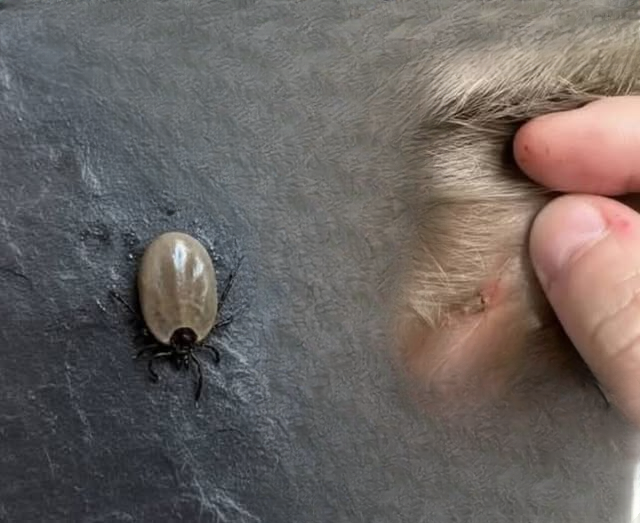
Another possibility is a tick.
Ticks behave very differently from lice. Instead of crawling through the hair, they attach directly to the skin and remain in one place while feeding.
How to Recognize a Tick
Ticks usually have:
-
A small oval shape
-
Eight legs
-
A flat body that may become swollen after feeding
If you notice a bug that appears firmly attached to the scalp and does not move easily when touched, it could be a tick.
Ticks are often encountered during outdoor activities such as hiking, playing in grassy areas, or spending time near wooded environments.
Why Proper Removal Matters
Most tick bites do not cause serious problems. However, in some regions ticks can carry certain infections.
Because of this possibility, removing the tick properly is important.
Using careful technique helps reduce the chance of irritation or incomplete removal.
The Occasional Outdoor Visitor
Not every insect found in hair is a parasite.
Children spend time exploring the outdoors, playing in grass, climbing trees, and interacting with pets or carpets. During these activities, small insects can occasionally land in hair temporarily.
Common harmless visitors might include:
-
Ants
-
Small beetles
-
Tiny spiders
-
Other garden insects
If you find a single insect and see no signs of eggs, scalp irritation, or additional bugs, it may simply be a temporary visitor that wandered into the hair.
In many cases, gently removing the insect or washing the hair resolves the situation completely.
A Common Misunderstanding: The Itching Myth
Many parents believe that lice always cause immediate itching.
In reality, itching does not always appear right away.
The sensation usually occurs because of a mild allergic reaction to substances produced when lice feed on the scalp.
However, this reaction may take several weeks to develop.
As a result, a child could have a small number of lice for some time without showing obvious symptoms.
Because of this, regular hair checks can be helpful—especially during times when lice outbreaks occur in schools or daycare environments.
What to Do When You Spot a Bug
Once you notice an insect, the best response is calm, organized action.
Children often react based on their parents’ emotional cues. If a parent appears frightened or upset, the child may become worried as well.
Instead, treat the situation calmly.
You might explain that you are simply checking their hair to make sure everything is clean and healthy.
This keeps the atmosphere relaxed and prevents unnecessary fear.
Removing Free-Moving Insects
If the insect is crawling freely in the hair and not attached to the scalp, removal is usually simple.
You can:
-
Use a tissue or tweezers to gently pick up the insect.
-
Place it in a small sealed bag or container.
-
Wash your hands afterward.
Saving the insect in a container can be helpful if you want a doctor or school nurse to identify it.
Often, however, simple observation will reveal that it is a harmless insect that accidentally found its way into the hair.
Safe Tick Removal
If you determine that the insect is a tick, careful removal is recommended.
The safest method generally involves using fine-tipped tweezers.
Steps typically include:
-
Grasp the tick close to the skin surface.
-
Pull upward slowly with steady pressure.
-
Avoid twisting or jerking the tick.
After removal, clean the skin with soap and water or an alcohol wipe.
Monitoring the area for a few days can help ensure that the skin heals normally.
If you have concerns about symptoms or exposure, consulting a healthcare professional can provide additional reassurance.
Modern Approaches to Managing Lice
Over the years, approaches to lice treatment have evolved.
In the past, many people relied heavily on chemical treatments. While these products are still available, some lice populations have developed resistance to certain ingredients.
Because of this, many experts now recommend a physical removal method as a reliable and safe option.
One of the most widely recommended techniques is called wet combing.
The Wet Combing Method
Wet combing is a simple yet effective approach for removing lice and nits.
The process involves several steps:
-
Start with damp hair.
-
Apply a generous amount of conditioner.
-
Use a fine metal lice comb.
-
Comb through small sections of hair from scalp to tip.
The conditioner helps slow down the insects, making them easier to remove.
After each comb stroke, wipe the comb onto a white tissue or paper towel so you can check for lice or eggs.
This method allows parents to remove insects manually without relying entirely on chemical treatments.
Consistency Is Key
For wet combing to work effectively, it must be repeated several times.
Most experts suggest combing every three to four days for about two weeks.
This schedule is important because it matches the life cycle of lice.
By repeating the process, parents can remove newly hatched lice before they have the chance to grow and lay additional eggs.
With patience and careful combing, infestations can be resolved successfully.
Preventing Future Problems
While lice and other insects are common in childhood, a few habits can help reduce the chances of them spreading.
Helpful practices include:
-
Encouraging children not to share hats, hairbrushes, or hair accessories
-
Checking hair occasionally during school outbreaks
-
Keeping long hair tied back during group activities
-
Washing bedding and brushes if lice are discovered
These simple steps can help maintain a healthy scalp environment.
Supporting Your Child Emotionally
One important aspect of handling situations like this is how children feel about it.
Some children may feel embarrassed if they learn they have lice or another scalp insect.
Parents can help by explaining that this happens to many children and does not mean anyone did something wrong.
Maintaining a calm, supportive attitude helps children understand that the situation is normal and manageable.
When to Seek Professional Advice
Most situations involving insects in hair can be handled at home.
However, you may want to consult a healthcare professional if:
-
You are unsure what type of insect you found
-
The scalp becomes irritated or infected
-
The infestation does not improve after treatment
-
Your child experiences unusual symptoms
Medical professionals can provide guidance and confirm the best next steps.
A Normal Part of Childhood
Finding a bug in your child’s hair may feel unsettling at first, but it is a surprisingly common experience for families.
Children spend time exploring the world—playing outside, interacting with friends, and engaging in active environments.
Occasionally, that curiosity leads to small surprises like insects in hair.
Rather than viewing the situation as a problem, it can be seen as a normal part of growing up.
Turning the Moment Into a Learning Opportunity
Moments like this can even become learning experiences.
Parents can explain basic hygiene, the importance of checking hair, and how to stay calm when unexpected things happen.
By showing patience and problem-solving skills, parents teach children valuable lessons about handling everyday challenges.
Peace of Mind for Parents
The key takeaway for parents is reassurance.
Most insects found in children’s hair are harmless or easily managed. With calm observation, proper identification, and simple care, the situation can usually be resolved quickly.
Knowledge replaces fear.
And when parents approach the situation confidently, children learn that even unexpected surprises can be handled calmly and safely.