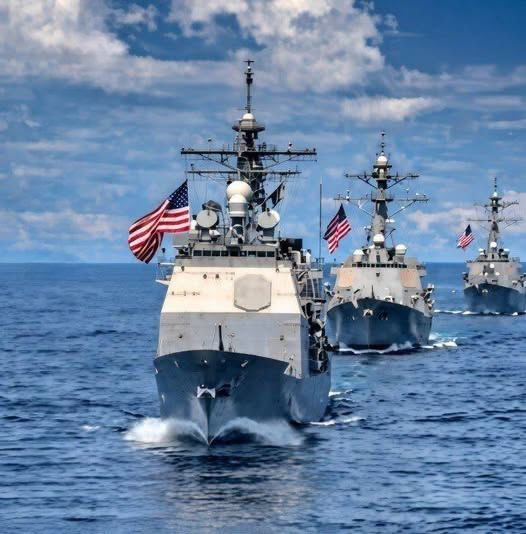
In the final days of February 2026, the Middle East entered a period of unprecedented turmoil. A sudden military escalation, spearheaded by the United States and Israel, shattered the already fragile stability of the region. On February 28, coordinated airstrikes, collectively referred to by the Pentagon as Operation Epic Fury, targeted multiple strategic locations within Iran, including Tehran, Isfahan, and Qom. The strikes were aimed at key military facilities, command centers, and critical air defense systems, signaling a decisive step in the intensifying conflict between the West and Tehran.
Initial reports of the operation carried shocking implications: rumors circulated that Iran’s Supreme Leader, Ayatollah Ali Khamenei, may have been killed during the strikes. While confirmation remains murky, the mere possibility transformed these targeted attacks from tactical operations into a geopolitical earthquake, raising concerns about a multi-front war with far-reaching global consequences.
Roots of the 2026 Conflict: Decades of Escalation
The origins of this conflict cannot be traced to a single moment. Instead, it is the result of decades of mounting tensions. During 2024 and 2025, hostilities between Tehran, Jerusalem, and Washington had escalated steadily, moving from covert operations and proxy conflicts into increasingly visible confrontations. Drone attacks, missile exchanges, and Iranian-aligned Houthi interference in the Red Sea disrupted commercial shipping lanes, compelling the United States to deploy naval assets for defense.
These provocations, combined with ongoing international sanctions, created a highly pressurized environment in which a major military escalation became almost inevitable. U.S. and Israeli officials have publicly defended the strikes as preemptive, arguing that Iran’s expanding missile and drone programs represented an imminent threat to regional allies, global trade routes, and overall stability. Diplomacy and sanctions, they argued, were no longer sufficient.
Military Developments: Precision Strikes and Retaliation
The pace of military developments following the February strikes has been rapid. The joint U.S.-Israeli operation relied heavily on advanced airpower. Long-range bombers, carrier-based aircraft from the USS Abraham Lincoln, and precision-guided munitions such as Tomahawk cruise missiles and HIMARS-launched missiles were employed to neutralize Iran’s missile infrastructure and drone manufacturing facilities, many of which were concealed underground.
Iran responded with immediate retaliatory measures, launching ballistic missiles and UAV swarms targeting both Israel and U.S. military bases in Kuwait, Bahrain, Saudi Arabia, Qatar, and the United Arab Emirates. While allied air defense systems intercepted a large portion of these attacks, several strikes successfully hit both military and civilian targets, causing casualties and widespread disruption across the region.
Humanitarian Toll: Civilians and Military Losses
The human cost of this conflict has been staggering. Urban airstrikes in Iran have resulted in thousands of civilian casualties and extensive damage to essential infrastructure, including hospitals, schools, and utilities. Meanwhile, U.S. forces have also reported casualties following missile attacks on regional bases, prompting President Trump to lead formal memorial services for fallen service members.
The conflict has reignited dormant battlefronts. Hezbollah in Lebanon has engaged in cross-border exchanges with Israel, while U.S. troops in Iraq face renewed combat against Iranian-aligned militias in volatile regions such as Jurf al-Sakhar and al-Qaim. These developments demonstrate how local conflicts are quickly expanding into broader regional hostilities, creating a complex and highly unstable environment.
Economic Shockwaves: Global Markets in Turmoil
Beyond the battlefield, the economic impact of the 2026 Middle East conflict has been profound. The Strait of Hormuz, a critical artery for global oil transport, has become a focal point of tension. Oil prices have surged past $100 per barrel, and global financial markets have experienced extreme volatility as investors respond to the uncertainty surrounding energy supplies and trade disruptions.
Europe has struggled to maintain a unified diplomatic approach. Internal disagreements over defense coordination and humanitarian responsibilities have hindered a cohesive response, while China and other global powers have called for an immediate ceasefire to prevent further destabilization of the international economy. The global financial system now faces heightened risk, with trade, energy, and supply chains all vulnerable to ongoing hostilities.
Strategic Objectives: Goals and Diplomatic Complexity
The U.S.-led campaign’s strategic goals are a subject of intense international scrutiny. President Trump and senior military leaders have emphasized the aim of altering Iran’s strategic calculus by degrading its ability to launch missiles and drones. References to “unconditional surrender” have added a layer of diplomatic ambiguity, leaving questions about the endgame and terms for conflict cessation unresolved.
While U.S. officials have indicated a preference for air and missile campaigns over ground operations, the possibility of deploying troops remains a contingency. This uncertainty places regional actors, particularly Gulf states, in a precarious position as they attempt to balance security alliances, domestic stability, and the prevention of wider regional escalation.
Humanitarian Crisis: Refugees and Aid Challenges
The humanitarian consequences are mounting rapidly. Displaced populations are fleeing combat zones, often facing disrupted transportation and closed airspaces that hinder relief operations. Energy and infrastructure damage, particularly to hospitals and transport hubs, complicates the delivery of food, water, and medical care. Humanitarian agencies warn that without immediate intervention, the refugee crisis could become one of the most severe in the Middle East in recent decades.
The combined human suffering in Iran, Iraq, and surrounding Gulf states underscores the urgent need for international diplomatic engagement. Yet, the chaos of active warfare makes delivering assistance a formidable challenge.
Media Narratives and Global Perception
Coverage of the 2026 conflict varies widely, reflecting the polarized global media landscape. Some outlets emphasize the necessity of deterring a nuclear-capable Iran, framing U.S. and Israeli actions as defensive and strategic. Others focus on the humanitarian toll, questioning the legality and morality of preemptive strikes.
Digital platforms have amplified these competing narratives, creating an information battle alongside the physical conflict. Propaganda, disinformation, and selective reporting further complicate public understanding, making it difficult for citizens and policymakers to discern verified facts from speculation.
Regional and Global Security Implications
The escalation in the Middle East has redefined the region’s security architecture. Long-standing alliances, such as those within NATO and the Gulf Cooperation Council, are being tested under unprecedented strain. Neighboring countries must weigh military support, humanitarian obligations, and internal political stability against the risk of being drawn into broader hostilities.
Moreover, the conflict underscores the fragility of global interdependence. Energy markets, trade routes, and international diplomacy are all vulnerable to disruption, highlighting how regional conflicts can quickly transform into global crises.
Potential Pathways to Resolution
Despite the intensity of combat operations, diplomatic channels remain active, albeit under immense pressure. International mediators are calling for immediate ceasefires, while regional leaders seek to de-escalate tensions without compromising security interests. The complexity of overlapping military, economic, and humanitarian factors, however, means that any resolution will require careful negotiation and sustained international commitment.
The world now watches closely as decisions made in the coming weeks could shape the trajectory of Middle East politics, global energy stability, and international security for years, if not decades, to come.
Conclusion: A Historical Turning Point
The February 2026 escalation marks a significant turning point in Middle East history. What began as targeted precision strikes has evolved into a multi-front conflict with profound consequences for the region and the world. Civilians continue to bear the brunt of the war, while nations grapple with economic and security disruptions.
This conflict highlights the delicate balance of international relations, the unpredictability of modern warfare, and the human cost of geopolitical decisions. As military operations continue, global observers must remain vigilant, analyzing developments carefully while advocating for solutions that prioritize peace, stability, and the protection of civilian populations.
The 2026 Middle East crisis serves as a stark reminder: in today’s interconnected world, no nation or citizen is isolated from the consequences of regional conflict. The coming weeks and months will define not only the fate of the Middle East but also the resilience and adaptability of the international community.