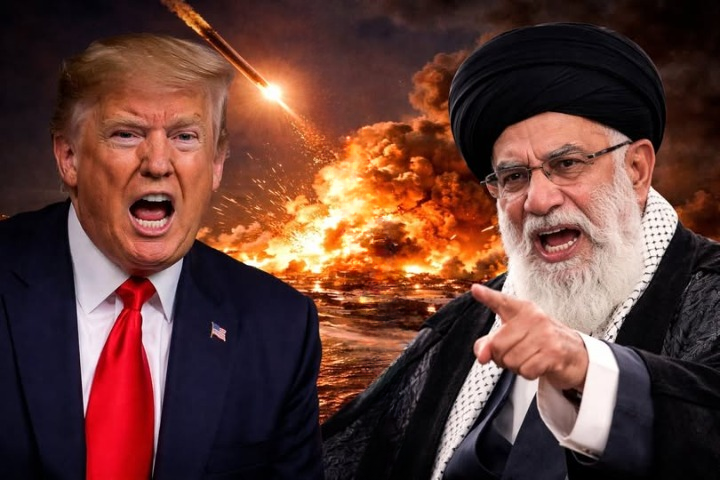
The world has always balanced on fragile axes of power, but on March 1, 2026, one of the globe’s most sensitive maritime chokepoints—the Strait of Hormuz—almost became the stage for an outright international confrontation. What began as a routine transit of U.S. naval vessels through the narrow waterway escalated within minutes into a tense sequence of missile launches, countermeasures, and retaliatory strikes that captured the attention of military strategists, political analysts, and global markets alike. The sudden surge of activity left observers asking a chilling question: how close had the world come to a broader war?
The Strait of Hormuz, a narrow corridor connecting the Persian Gulf to the Arabian Sea, has long been a critical artery of global energy supply. Approximately one-fifth of the world’s petroleum flows through this strategic waterway, making it both a vital economic lifeline and a potential flashpoint for international conflict. The region has been historically tense, with occasional skirmishes, sanctions, and military posturing keeping global observers vigilant. Yet, the events of that day demonstrated just how quickly the familiar rhythms of patrols and warnings can be replaced by the raw mechanics of warfare.
The Sequence of Escalation
According to military sources and regional observers, the sequence began with what appeared to be routine operations: U.S. naval vessels conducting transit and surveillance missions through international waters. Within moments, however, radar systems detected the launch of anti-ship missiles originating from positions along the Iranian coastline. The missiles, designed to challenge maritime freedom of navigation, were met by U.S. interceptors, electronic warfare countermeasures, and rapid maneuvering intended to neutralize the threat.
The confrontation unfolded within minutes, yet the stakes were monumental. Each decision—whether to intercept, to launch electronic countermeasures, or to respond with precision strikes on suspected launch sites—was calculated in real time. The military leadership faced the dual imperative of protecting assets while preventing escalation into full-scale conflict. The tension between tactical necessity and strategic caution was palpable, and it highlighted the razor-thin margin separating restraint from catastrophe.
Immediate Global Repercussions
The immediate response from the global financial and political community was swift and unequivocal. Stock markets, sensitive to instability in oil supply and the prospect of regional conflict, reacted sharply. Oil futures spiked as traders recalculated risk premiums, and analysts warned of potential disruptions to energy flows that could ripple through economies dependent on Gulf exports. War rooms from Washington to London, Tokyo to Berlin, were activated, with military advisors, diplomats, and intelligence analysts working around the clock to assess the situation, anticipate next moves, and craft messaging to avert panic.
International media coverage was intense, with headlines framing the event as “a brush with war” and “near-catastrophe in the Gulf.” Analysts dissected radar footage, satellite imagery, and eyewitness accounts, seeking to understand the triggers, the chain of command, and the implications for international law and norms governing maritime security. Social media amplified the coverage, with speculation, analysis, and even misinformation spreading rapidly, reflecting the digital age’s capacity to both inform and inflame public perception.
Military Mechanics and Strategic Calculations
At the operational level, the incident illuminated the complexity and lethality of modern maritime warfare. Anti-ship missiles arced through the sky, their trajectory calculated to strike vital points on naval vessels. U.S. interceptors launched in seconds, designed to neutralize incoming threats, while electronic warfare systems sought to disrupt radar guidance and navigation. Each action, though executed with precision, carried inherent risk. Miscalculations, sensor failures, or delays in command could have transformed a tactical exchange into a broader confrontation.
The subsequent American counterstrikes on suspected launch sites further underscored both capability and peril. Precision-guided munitions targeted radar installations, missile batteries, and command structures, effectively neutralizing immediate threats. Yet with every site hit, the specter of escalation grew. In the Strait of Hormuz, a corridor mere miles wide in certain stretches, proximity magnifies danger; one misfired weapon or misinterpreted maneuver can trigger responses with exponential consequences.
Lessons in Modern Brinkmanship
Military scholars and policy experts have already begun analyzing the incident as a case study in modern brinkmanship. Unlike Cold War-era standoffs, where strategic signaling often involved nuclear deterrence and static posturing, the confrontation in the Strait of Hormuz was kinetic, immediate, and highly visible. The engagement illustrated the vulnerability of even well-equipped forces in confined, geopolitically tense environments.
Experts emphasize that such incidents are rarely isolated. They occur within broader regional dynamics, where longstanding rivalries, historical grievances, and strategic imperatives converge. The confrontation serves as a reminder that routine military operations are inherently fraught with risk, and that the rules of engagement—often assumed but seldom codified in crises of this nature—can quickly fracture under pressure.
Regional and Global Implications
The incident’s implications extend beyond immediate military considerations. The Strait of Hormuz is central to regional stability, energy security, and global commerce. A disruption, whether through conflict, accident, or miscalculation, could have far-reaching consequences. Nations dependent on Gulf oil would face supply chain disruptions, price volatility, and economic uncertainty. Simultaneously, heightened tensions could catalyze arms races, military build-ups, and political realignments in the region.
Diplomatic channels have already been activated, with foreign ministries seeking clarification, assurances, and frameworks to prevent repetition. International organizations, including the United Nations and the International Maritime Organization, are likely to convene discussions on maritime security protocols, emphasizing the need for transparency, communication, and de-escalation mechanisms in contested waters.
Historical Context of Strait Conflicts
While the events of March 1, 2026, were unprecedented in intensity, the Strait of Hormuz has a long history as a flashpoint. Past incidents—ranging from tanker seizures to naval skirmishes—have underscored the strategic importance of the corridor. Each confrontation, though distinct, shares common elements: the interplay of strategic interest, technological capability, and human judgment.
Historians note that narrow maritime chokepoints like the Strait of Hormuz magnify geopolitical tension. With limited maneuvering space, the consequences of action or inaction are immediate. This historical perspective contextualizes the 2026 confrontation, framing it not as an anomaly but as an expected, albeit dangerous, feature of regional security dynamics.
The Role of Media and Public Perception
The rapid dissemination of information—accurate and otherwise—has shaped both domestic and international responses. Media coverage emphasized both the dramatic visuals and the strategic stakes, while analysts parsed details of military capability, rules of engagement, and potential escalation pathways.
Public perception, influenced by social media, can have tangible consequences. In democratic societies, citizen awareness shapes political pressure, which in turn affects policy decisions. Misinformation or sensationalized reporting can inflame tensions, while transparent, responsible communication can promote measured responses. The incident thus highlights the interconnectedness of military action, media framing, and public understanding in contemporary conflict scenarios.
Reflections on Risk Management
For military planners, the incident underscores the critical importance of risk management, situational awareness, and rapid decision-making. Every action, from missile interception to retaliatory strikes, involves a calculus of risk versus reward. The thin margin for error emphasizes the need for advanced training, robust communication channels, and contingency planning.
The episode also raises questions about command structures, engagement protocols, and the integration of intelligence with operational execution. How decisions are made under pressure, who holds authority, and how information flows all influence outcomes in high-stakes confrontations. Lessons from this incident will likely inform naval doctrine, strategic planning, and training exercises for years to come.
The Human Element
Beyond technical and strategic considerations, the human dimension remains central. Sailors, officers, and support personnel operate under extreme stress, aware that every choice carries potential life-or-death consequences. The psychological burden of operating in a high-risk, politically sensitive environment cannot be understated. Leadership, resilience, and training all converge in moments like these, shaping both immediate outcomes and long-term operational culture.
Conclusion: A Cautionary Tale for Global Leadership
The events in the Strait of Hormuz on March 1, 2026, serve as a stark reminder of how quickly routine operations can escalate into near-catastrophe. In a corridor where narrow geography intersects with global strategic interest, the balance between restraint and escalation is delicate.
This incident will be studied extensively, not just as a military engagement, but as a case study in diplomacy, risk management, media influence, and global security. It challenges leaders to consider how decisions—taken in seconds—can resonate for years, shaping political dynamics, regional stability,