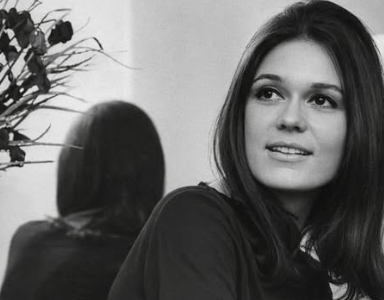
Born on March 25, 1934, in Toledo, Ohio, Gloria Steinem has spent more than six decades shaping modern conversations about gender equality, civil rights, and social justice. As a journalist, activist, and organizer, her work has influenced generations, helping to redefine the role of women in public life and expand opportunities across multiple sectors of society.
At 92 years old, Steinem remains a powerful voice in global discussions about equality, demonstrating that advocacy and leadership do not fade with time but evolve with experience.
Early Life and Formative Experiences
Steinem’s early years were marked by instability and responsibility beyond her age. After her parents’ divorce, she spent much of her childhood caring for her mother, who struggled with chronic depression. Frequent relocations due to her father’s work as a traveling salesman meant an inconsistent education, but these experiences also shaped her awareness of social and economic challenges.
Despite these obstacles, she developed a strong intellectual curiosity. Reading and writing became essential outlets, allowing her to explore ideas and understand the broader world. These early habits would later form the foundation of her career as a writer and thinker.
Education and Global Perspective
After completing high school, Steinem attended Smith College, where she studied government and graduated magna cum laude in 1956. Her academic success reflected both discipline and a growing interest in political systems and social structures.
Following graduation, she received the Chester Bowles Fellowship, which took her to India for two years. There, she studied grassroots activism and nonviolent protest movements, gaining firsthand insight into how collective action can drive societal change.
Her time abroad proved transformative. Observing activism in a global context broadened her perspective and deeply influenced her later work in the United States.
Journalism and Early Career Breakthrough
Returning to New York City in 1960, Steinem began working as a freelance writer. She quickly established herself as a journalist known for sharp analysis and compelling storytelling.
One of her most notable early works came in 1963 with her undercover article, “I Was a Playboy Bunny.” In this piece, she documented her experience working at the Playboy Club, exposing the challenges and inequalities faced by women in that environment.
The article received widespread attention and marked a turning point in her career, positioning her as both a journalist and an emerging voice in the fight for gender equality.
Rise in the Feminist Movement
By the late 1960s, Steinem’s work had become increasingly political. Writing for New York magazine, she addressed issues connected to civil rights, gender equality, and social reform.
In 1971, she co-founded the National Women’s Political Caucus alongside leaders such as Betty Friedan, Shirley Chisholm, and Bella Abzug. The organization focused on increasing women’s participation in politics by supporting candidates and leadership development.
That same year, she helped launch Ms. magazine, which became a groundbreaking platform for feminist thought. The publication addressed issues that were often overlooked in mainstream media, including workplace discrimination, reproductive rights, and domestic violence.
Expanding Influence and Advocacy
Throughout the 1970s and 1980s, Steinem traveled extensively, speaking at universities, conferences, and public events. Her efforts helped build grassroots support for gender equality and brought national attention to the Equal Rights Amendment.
During this time, she also helped establish organizations such as the Women’s Action Alliance and the Ms. Foundation for Women, both of which aimed to support and amplify women’s voices.
Her ability to connect personal experiences with broader social issues made her an influential public figure, though not without controversy. Debates over gender roles and feminism often placed her at the center of national conversations.
Contributions to Media and Culture
In later decades, Steinem continued to expand her impact. In the 1990s, she helped launch “Take Our Daughters to Work Day,” encouraging young girls to explore career opportunities and envision broader futures.
She also co-founded the Women’s Media Center with Jane Fonda and Robin Morgan, focusing on increasing women’s representation in media.
As an author, Steinem produced several influential books, including Outrageous Acts and Everyday Rebellions, Revolution from Within, and My Life on the Road. These works explore themes of identity, activism, and personal growth.
Recognition and Personal Life
In 2013, Steinem was awarded the Presidential Medal of Freedom, recognizing her contributions to civil rights and social progress.
In her personal life, she married entrepreneur David Bale in 2000; he passed away in 2003. Steinem has often spoken about personal choice and independence, reflecting broader themes in her advocacy.
Continuing Influence at 92
Even in her nineties, Steinem remains active. She continues to speak publicly, mentor younger activists, and engage in discussions about democracy, equality, and justice. Reports of a new memoir highlight her ongoing commitment to sharing her experiences and insights.
Her ability to remain relevant across decades speaks to the enduring importance of her work. She has consistently adapted to changing cultural landscapes while maintaining a clear commitment to her core values.
Legacy and Impact
Gloria Steinem’s legacy is deeply woven into the fabric of modern social movements. Her work has helped:
- Expand public conversations about gender equality
- Increase representation of women in politics and media
- Inspire grassroots activism across generations
- Influence cultural and legal frameworks related to women’s rights
While her methods and perspectives have occasionally been debated, her impact is widely acknowledged by historians, scholars, and activists.
Conclusion
At 92, Gloria Steinem remains a symbol of perseverance and progress. Her life demonstrates that meaningful change often requires sustained effort, collaboration, and a willingness to challenge established norms.
Her story is not only a reflection of past achievements but also a reminder that the pursuit of equality is ongoing. For many, she represents both a historical figure and a continuing source of inspiration—proof that individual commitment, combined with collective action, can shape a more inclusive and just society.