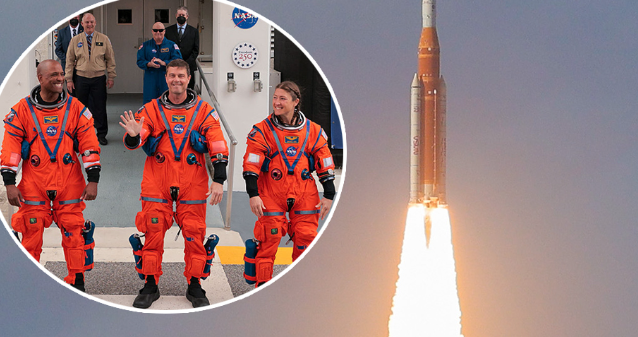
On April 1, 2026, history was made at Kennedy Space Center as NASA successfully launched Artemis II, marking the first crewed lunar mission in more than fifty years. Aboard the Orion spacecraft were four astronauts—Reid Wiseman, Victor Glover, Christina Koch, and Jeremy Hansen—embarking on a 10-day journey around the Moon. The mission represents the next giant leap in NASA’s long-term vision to return humans to the lunar surface and eventually to Mars.
The launch itself was flawless, a testament to decades of technological development, rigorous testing, and human determination. Yet, just hours into the mission, the crew faced an unexpected and very human complication—a reminder that even in the era of advanced space exploration, astronauts are not immune to everyday problems.
A Small Problem With Big Implications
Early into the flight, the astronauts identified a malfunction in one of the spacecraft’s most essential systems: the onboard toilet.
While this might sound trivial compared to the complexities of navigating lunar orbit, waste management in space is no minor detail. On missions lasting over a week, a fully operational sanitation system is vital for crew comfort, health, and overall mission stability.
A NASA spokesperson offered a humorous perspective on the situation:
“It’s not their No. 1 problem, but it may be a problem for going number one.”
This tongue-in-cheek acknowledgment captures the very human side of space exploration. Astronauts may train for months on orbital mechanics, robotics, and extravehicular activity, yet something as mundane as a toilet malfunction can briefly dominate mission priorities.
The Orion Capsule: Modern Technology Meets Reality
The Orion spacecraft was designed with systems far more advanced than those used during the Apollo era. Its life-support and sanitation systems aim to maximize astronaut comfort during long-duration missions while minimizing the risk of malfunctions.
However, space is an unforgiving environment. Even with meticulous engineering, systems can behave unpredictably once removed from Earth’s gravity and exposed to microgravity conditions.
The incident reminded the world that spaceflight remains deeply human, defined not only by cutting-edge technology but by adaptability, problem-solving, and teamwork under pressure.
Teamwork to the Rescue
Resolving the toilet malfunction required coordination between the astronauts onboard and engineers at NASA’s Mission Control in Houston.
Christina Koch, known for her calm demeanor and technical skill, took the lead. Following step-by-step instructions from ground control, she carefully disassembled components, made necessary adjustments, and worked alongside her fellow crew members to ensure the system functioned properly.
Mission control later issued a lighthearted update:
“Happy to report that the toilet is good for use. We do recommend letting the system get up to operating speed before donating fluid and then letting it run a little bit after donation.”
Koch’s response:
“We are cheers all around.”
This moment became a rare instance of levity during an otherwise historic and intense mission, offering the public a glimpse into the human side of space travel.
Why Waste Management Matters in Space
To understand why this incident was significant, it’s worth noting the challenges of life support in orbit.
In microgravity, liquids and solids do not behave as they do on Earth. A malfunction in the waste management system can lead to discomfort, hygiene issues, and potential contamination within the capsule.
NASA invests considerable resources into designing systems that are both compact and reliable, yet they remain mechanical systems operated by humans—meaning small errors or malfunctions can occur.
In Artemis II, the problem was identified and resolved quickly, ensuring minimal disruption to the mission schedule. Still, it serves as a reminder that even with the most sophisticated technology, spaceflight is as much about human ingenuity and adaptability as it is about rockets and computers.
Humor in the Midst of History
Despite the technical nature of space missions, moments like these underscore the relatable, human side of astronauts. Social media and news outlets quickly picked up on the story, highlighting the lighthearted exchange between Koch and mission control.
This blend of humor and professionalism illustrates a key aspect of space exploration: astronauts must maintain composure under pressure while also navigating the quirks of life in orbit.
The incident has also sparked public curiosity about space hygiene, often a less glamorous but essential aspect of long-duration missions. NASA has historically embraced this curiosity, using educational opportunities to explain how astronauts eat, sleep, and, yes, manage waste in microgravity.
Artemis II: A Milestone Mission
While the toilet issue briefly captured headlines, the broader mission continues to be groundbreaking. Artemis II’s objectives include:
- Testing the Orion spacecraft in lunar orbit with a full crew.
- Evaluating life support systems for future missions, including Artemis III, which aims to return humans to the Moon.
- Conducting scientific experiments to improve understanding of space conditions and human physiology in microgravity.
The mission demonstrates NASA’s commitment to long-term lunar exploration and is a crucial stepping stone toward eventual crewed missions to Mars.
Looking Ahead
With the toilet fixed, the Artemis II crew has resumed its planned trajectory around the Moon. Engineers continue to monitor every system onboard, from navigation to life support, ensuring that the historic mission proceeds safely and successfully.
Public attention, however, has shifted back to the broader narrative: humans orbiting the Moon for the first time in decades, marking a new era in space exploration.
NASA’s approach emphasizes both safety and scientific discovery, balancing rigorous technical oversight with the reality that astronauts are living, thinking, and problem-solving beings. The toilet incident is a perfect example of that balance in action.
Lessons From Artemis II
The early hiccup aboard Artemis II offers several takeaways for the public and aspiring astronauts:
- Space is unpredictable – Even with advanced systems, unexpected challenges arise, requiring quick thinking.
- Teamwork is essential – Ground control and astronauts must work in perfect coordination to solve problems efficiently.
- Humanity remains central – Space missions are technological marvels, but the crew’s adaptability and composure are just as critical.
- Curiosity engages the public – Stories like these humanize astronauts, sparking interest in STEM and space exploration.
As NASA continues to push the boundaries of human spaceflight, incidents like this highlight the real-world challenges and the resilience of astronauts navigating them.
Final Thoughts
Artemis II represents more than just a mission around the Moon—it symbolizes human curiosity, persistence, and collaboration. While toilets may not be glamorous, the way astronauts handle such obstacles reminds the world that space exploration is as much about people as it is about rockets.
As the mission progresses, all eyes remain on the crew’s journey, celebrating both the triumphs and the relatable, human moments that make history in real time.
In the words of NASA: even when exploring the heavens, we are reminded that sometimes the smallest systems demand the greatest attention.