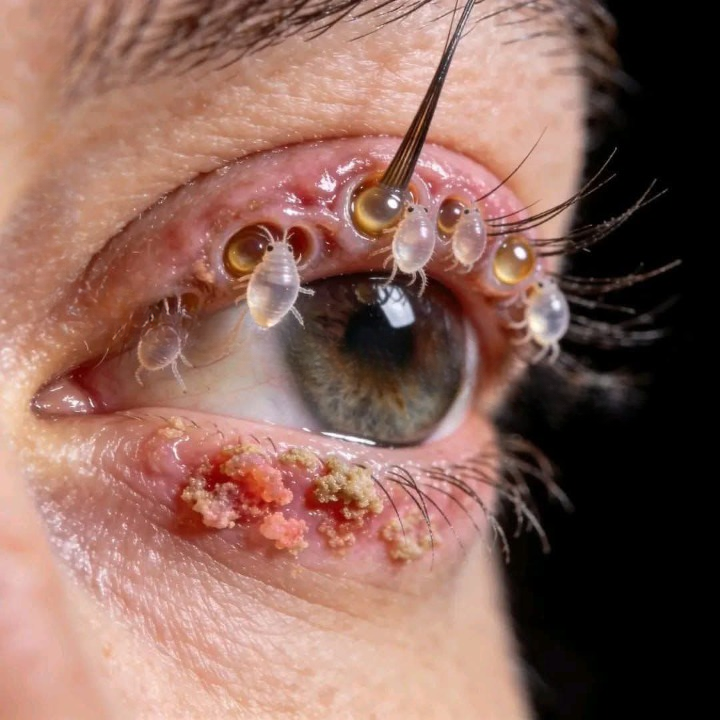
In recent weeks, a striking and somewhat alarming image has been circulating widely across social media platforms. The photo appears to show a human eye affected by a severe infection, accompanied by discharge and what look like tiny organisms clustered around the eyelashes.
Many viewers reacted with shock, quickly labeling these organisms as “worms.” The image sparked fear, confusion, and a flood of misinformation. However, medical experts have clarified that these are not worms at all. Instead, they are microscopic organisms known as Demodex mites—tiny parasites that naturally live on human skin.
While the idea of microscopic mites living on our bodies may sound unsettling, the reality is far less alarming when properly understood. In fact, most people have these mites without ever experiencing symptoms. Problems only arise when their population grows out of balance.
Understanding what Demodex mites are, how they affect the body, and how to prevent complications is essential for maintaining good eye and skin health.
What Are Demodex Mites?
Demodex mites are microscopic organisms that belong to a group of parasites commonly found on mammals, including humans. They are so small that they are invisible to the naked eye and can only be seen under a microscope.
These mites typically live in:
- Hair follicles
- Oil (sebaceous) glands
- The base of eyelashes
- Facial skin, especially around the nose, cheeks, and forehead
There are two primary types of Demodex mites that affect humans:
- Demodex folliculorum – commonly found in hair follicles, especially eyelashes
- Demodex brevis – typically lives deeper in oil glands
Despite their classification as parasites, Demodex mites are generally harmless in small numbers. They feed on:
- Dead skin cells
- Natural oils (sebum) produced by the skin
In a balanced environment, they are simply part of the skin’s natural ecosystem.
When Do Demodex Mites Become a Problem?
Under normal circumstances, these mites coexist with humans without causing harm. However, problems can arise when their population increases significantly.
This overgrowth can lead to a condition known as demodicosis, which may affect the skin or the eyes.
When Demodex mites multiply excessively around the eyes, they can contribute to inflammation and irritation of the eyelids, commonly referred to as blepharitis.
Common Symptoms of an Overgrowth
When Demodex mites become too numerous, they can trigger a range of uncomfortable symptoms, particularly around the eyes.
These may include:
- Persistent itching, especially around the eyelids
- Burning or stinging sensations
- Redness of the eyes or eyelid margins
- Crusting or debris at the base of the eyelashes
- A gritty or “sand-like” feeling in the eyes
- Swollen eyelids
- Increased sensitivity to light
In some cases, individuals may also notice that their eyes feel dry or irritated throughout the day.
These symptoms can easily be mistaken for other eye conditions, which is why proper diagnosis is important.
Why the Eyelashes Are Affected
The eyelashes provide an ideal environment for Demodex mites. The combination of hair follicles and oil glands creates a perfect habitat where these organisms can live and reproduce.
The mites tend to gather at the base of eyelashes, where they:
- Lay eggs
- Feed on oils and dead cells
- Move more actively during the night
Because of their nocturnal activity, symptoms may feel worse in the morning.
The Role of Hygiene and Daily Habits
One of the most important factors influencing the growth of Demodex mites is hygiene—particularly facial and eyelid cleanliness.
Sleeping Without Washing Your Face
Going to bed without washing your face can create an ideal environment for mites to thrive. Throughout the day, the skin accumulates:
- Oil (sebum)
- Sweat
- Dirt and environmental pollutants
- Makeup residue
When these substances remain on the skin overnight, they provide a rich food source for mites and bacteria.
Makeup and Eye Products
Eye makeup, especially mascara and eyeliner, can trap debris along the lash line. If not removed properly, it can:
- Block hair follicles
- Encourage bacterial growth
- Increase mite populations
Old or contaminated makeup products can further worsen the problem.
Pillowcases and Bedding
Your pillowcase comes into direct contact with your face for several hours each night. If not cleaned regularly, it can accumulate:
- Dead skin cells
- Oil and sweat
- Bacteria and microorganisms
This creates a cycle where mites and bacteria are repeatedly transferred back onto the skin.
What Happens If Left Untreated?
If an overgrowth of Demodex mites is not addressed, symptoms may worsen over time.
Potential complications include:
Chronic Blepharitis
Long-term inflammation of the eyelids can lead to persistent discomfort and irritation.
Eyelash Loss
Inflammation around hair follicles can weaken lashes, causing them to fall out.
Eye Surface Damage
In severe cases, prolonged irritation may affect the surface of the eye, potentially leading to vision disturbances.
Increased Risk of Infection
Damaged or inflamed skin becomes more vulnerable to bacterial infections.
How Is It Diagnosed?
An eye care professional, such as an ophthalmologist or optometrist, can diagnose Demodex-related conditions through:
- A detailed eye examination
- Microscopic analysis of eyelashes
- Evaluation of symptoms and medical history
Proper diagnosis is essential because symptoms can overlap with other eye conditions like dry eye syndrome or allergic reactions.
Effective Prevention Strategies
The good news is that Demodex-related problems are largely preventable with simple daily habits.
1. Clean Your Face Every Night
Washing your face before bed removes oil, dirt, and makeup that can feed mites.
Use a gentle cleanser suitable for your skin type and avoid harsh scrubbing.
2. Remove Eye Makeup Thoroughly
Always remove mascara, eyeliner, and eyeshadow before sleeping.
Consider using:
- Micellar water
- Gentle makeup removers
- Eyelid-specific cleansing products
3. Maintain Clean Bedding
Change pillowcases and bedsheets regularly—ideally at least twice a week.
Use clean towels and avoid sharing personal items.
4. Avoid Touching Your Eyes
Hands carry bacteria and dirt that can worsen irritation.
Try to avoid rubbing your eyes, especially if your hands are not clean.
5. Practice Eyelid Hygiene
For those prone to irritation, gently cleaning the eyelids can help reduce buildup.
This may include:
- Warm compresses
- Eyelid scrubs
- Specialized cleansing wipes
6. Replace Old Makeup Products
Cosmetics can harbor bacteria over time.
As a general rule:
- Replace mascara every 3 months
- Avoid using expired products
- Do not share makeup
7. Seek Professional Advice When Needed
If symptoms persist, it’s important to consult an eye care professional.
They may recommend:
- Medicated cleansers
- Prescription treatments
- Specific hygiene routines
Debunking Common Myths
Myth 1: These Are “Worms”
This is incorrect. Demodex mites are microscopic and naturally occurring, not visible parasites like worms.
Myth 2: Only People With Poor Hygiene Get Them
Not true. Almost everyone has Demodex mites. Problems arise from imbalance, not simply hygiene.
Myth 3: They Are Always Dangerous
In most cases, they are harmless and go unnoticed.
Why Awareness Matters
Social media can spread awareness quickly—but it can also spread misinformation just as fast.
Images like the one described can be alarming, but without proper context, they may lead to unnecessary fear.
Understanding the science behind these conditions helps people:
- Stay informed
- Avoid panic
- Take appropriate preventive measures
The Bigger Picture: Skin Ecosystems
The human body is home to countless microorganisms, many of which are beneficial or harmless.
Demodex mites are part of this natural ecosystem. Like many biological systems, balance is key.
When that balance is disrupted—due to factors like poor hygiene, stress, or skin conditions—issues can arise.
Final Thoughts
The viral image of an infected eye may be shocking, but the explanation behind it is rooted in everyday biology.
Demodex mites are not unusual, nor are they inherently dangerous. They are a normal part of human skin. However, when their population grows unchecked, they can contribute to irritation and eye-related conditions.
The good news is that prevention is simple and effective. Basic hygiene practices—such as washing your face, removing makeup, and keeping bedding clean—can significantly reduce the risk of complications.
Key Takeaways
- Demodex mites are microscopic organisms naturally found on human skin
- They usually cause no harm unless they multiply excessively
- Poor hygiene and buildup of oils can նպ to their overgrowth
- Symptoms include itching, redness, and eyelid irritation
- Simple daily habits can prevent most problems
Conclusion
What appears frightening at first glance is often less alarming when understood through a scientific lens.
Rather than fearing these microscopic organisms, the focus should be on maintaining healthy habits that keep the skin and eyes in balance.
A simple routine—like washing your face before bed—can go a long way in protecting your eye health for years to come.