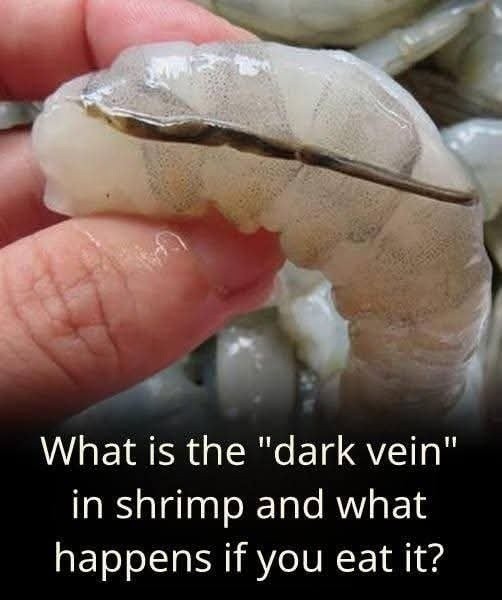
If you’ve ever cleaned shrimp at home, you’ve probably noticed a thin dark line running along the back of the body. Many people casually call this the “shrimp vein,” but the name is actually misleading.
In reality, it isn’t a vein at all.
This visible line is the shrimp’s digestive tract, and understanding what it is can help you decide whether or not to remove it when cooking.
What the “Shrimp Vein” Really Is
The so-called shrimp vein is a small intestinal tube that runs along the length of the shrimp’s body, from head to tail.
Its function is simple:
- It processes food the shrimp eats
- It carries waste through the body
- It may sometimes contain leftover particles from its natural diet
Because of its location and appearance, it often shows up as a dark, brown, or sometimes greenish line beneath the shell or just under the surface of the meat.
Although the term “vein” is widely used in kitchens and recipes, it does not refer to the circulatory system.
Why It Looks Dark
The color of the digestive tract depends on what the shrimp has recently consumed.
In many cases, the dark line you see is simply:
- Digested food
- Organic material from the ocean floor
- Fine sand or particles
In smaller shrimp, this line may be barely visible. In larger shrimp, it tends to be more noticeable and can sometimes affect texture if left intact.
Is It Safe to Eat?
From a food safety perspective, the shrimp digestive tract is not harmful when the shrimp is properly cooked.
However, there are a few reasons why people choose to remove it:
- It can have a slightly gritty texture
- It may affect the appearance of the dish
- Some people prefer a cleaner taste
In most cases, eating it will not cause any health issues. The decision is usually based on quality and personal preference rather than safety concerns.
Why Chefs Remove It
Many professional chefs and seafood restaurants remove the “vein” before serving shrimp. This process is known as deveining.
The main reasons include:
1. Better Texture
Removing the digestive tract helps ensure a smoother, more enjoyable bite.
2. Improved Appearance
Cleaned shrimp looks more refined, especially in dishes where presentation matters.
3. Consistent Flavor
Deveining helps avoid any slight bitterness or grit in certain shrimp.
For these reasons, many pre-packaged shrimp sold in stores are already deveined.
How Shrimp Is Deveined
If you’re preparing shrimp at home, the process is simple and quick.
Here’s how it’s typically done:
- Use a small knife or kitchen scissors
- Make a shallow cut along the back of the shrimp
- Gently lift out the dark line
- Rinse lightly if needed
It takes only a few seconds per shrimp and can significantly improve the final dish.
Do All Shrimp Need to Be Deveined?
Not necessarily.
Whether you remove the digestive tract depends on:
- The size of the shrimp
- The type of recipe
- Personal preference
When you should devein:
- Large shrimp
- Grilled or fried dishes
- Recipes where appearance matters
When it’s optional:
- Small shrimp
- Soups or stews
- Finely chopped dishes
In many casual recipes, skipping this step is completely fine.
Why the Term “Vein” Is Misleading
The word “vein” has been used for generations in cooking, even though it is not technically correct.
This confusion likely comes from:
- Its thin, thread-like appearance
- Its position along the back
- Its dark coloration in many shrimp species
However, biologically speaking, shrimp do not have veins in that location. What people see is strictly part of the digestive system.
Understanding this helps clear up one of the most common kitchen misconceptions about seafood.
Final Thoughts
The “shrimp vein” is simply the shrimp’s digestive tract — a natural part of its anatomy that is harmless but often removed for culinary reasons.
While it is safe to eat in most cases, many cooks prefer to take it out for better texture, cleaner presentation, and improved taste.
Whether you choose to devein shrimp or not depends entirely on your recipe and personal preference.
Either way, knowing what it actually is gives you more confidence in the kitchen and helps you prepare seafood with better understanding and control.