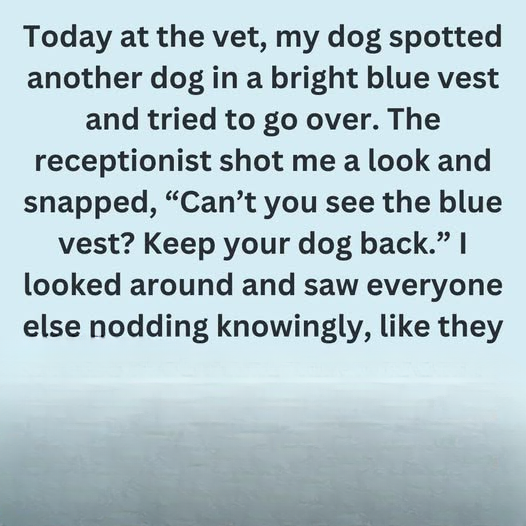
You may have noticed a dog wearing a bright blue vest, leash, or bandana while walking in a park, along a busy street, or even inside a public space. At first glance, it might seem like a simple fashion choice. After all, many pet owners enjoy accessorizing their dogs.
However, in many situations, that blue gear carries a deeper meaning.
For some dogs and their handlers, color-coded accessories act as a subtle form of communication. These visual signals can indicate that a dog has a specific role, is undergoing training, or has certain needs. Understanding these cues—and knowing how to respond—can help create a safer and more respectful environment for both people and animals.
The Meaning Behind Color-Coded Dog Gear
Dogs cannot communicate verbally, so humans have developed visual systems to share important information about them, especially in public settings. One of these systems involves the use of color on items like vests, harnesses, leashes, and bandanas.
Blue is one of the most commonly used colors in this informal system.
Although there is no strict universal rule defining what each color represents, general patterns have developed over time. These patterns help people quickly recognize whether a dog may be working, in training, or simply out for a walk.
A dog wearing blue gear could be:
- A service dog
- A therapy dog
- A dog in training
- Or simply a pet wearing a stylish accessory
Because the meaning is not always obvious, it’s important to observe the dog’s behavior and the context.
Blue Gear and Service Dogs
Blue is often associated with service dogs—highly trained animals that assist individuals with disabilities. These dogs perform essential tasks that support their handler’s independence and safety.
Their responsibilities may include:
- Guiding individuals with vision impairments
- Alerting those with hearing loss
- Detecting medical conditions such as blood sugar changes
- Providing mobility support
- Assisting with certain mental health needs
Because their work is so important, service dogs are often equipped with identifiable gear. Blue is a popular choice due to its visibility and its association with calmness and reliability.
Why It Matters
When a service dog is working, maintaining focus is critical. Even small distractions—such as calling the dog, making noises, or attempting to pet it—can interfere with its ability to perform tasks.
For the handler, this could have serious consequences.
How to Respond
If you see a dog wearing blue gear that appears to be working:
- Do not pet the dog without permission
- Avoid trying to get its attention
- Give the dog and handler space
- Speak to the handler—not the dog—if needed
These simple actions show respect and awareness.
Therapy Dogs and Blue Accessories
Not all dogs in blue are service animals. Some may be therapy dogs, which are trained to provide comfort and emotional support in group settings.
Unlike service dogs, therapy dogs typically interact with many people in places such as:
- Hospitals
- Schools
- Nursing homes
- Community centers
- Crisis response environments
Their goal is to help reduce stress and promote a sense of calm.
How They Differ
Therapy dogs are often more open to interaction than service dogs. They may approach people gently and are usually part of supervised visits.
Even so, it’s always best to ask the handler before interacting.
Dogs in Training
Another possibility is that the dog is still in training.
Dogs learning to become service or therapy animals must practice in real-world environments. This includes exposure to:
- Crowded areas
- Loud sounds
- Unexpected distractions
- New surfaces and surroundings
During this stage, they may wear blue gear to signal that they are working and learning.
Why Your Behavior Matters
Training requires focus and consistency. Interruptions can slow progress or confuse the dog.
If you encounter a dog in training:
- Avoid distracting it
- Keep a respectful distance
- Follow the handler’s lead
Your cooperation can help the dog succeed.
When Blue Is Just a Fashion Choice
Of course, not every dog wearing blue gear has a special role.
Sometimes, the choice is purely aesthetic. Owners may choose blue because:
- It complements their dog’s appearance
- It represents calmness and trust
- It is widely available
- It matches personal style
In these cases, the accessory has no specific meaning beyond appearance.
How to Tell the Difference
Since color alone doesn’t provide a definite answer, observing behavior can help.
A Working Dog May:
- Stay focused on its handler
- Ignore distractions
- Move with purpose
- Wear structured or labeled gear
A Pet Dog May:
- Show curiosity toward people
- Be more playful or relaxed
- Seek attention
- Wear decorative accessories
If you’re unsure, it’s always best to politely ask the handler.
Why Blue Is Commonly Used
The popularity of blue is not random. In color psychology, blue is associated with:
- Calmness
- Trust
- Stability
- Reliability
These qualities align with the roles many working dogs fulfill, which may explain why the color is widely used.
Other Colors and Their General Meanings
While blue is common, other colors are sometimes used to communicate different messages:
- Yellow: Often signals that a dog needs space
- Red: May indicate caution or limited interaction
- Green: Can suggest a friendly and approachable dog
These meanings are not standardized, but awareness of them is growing.
Encouraging Respectful Interactions
Understanding these signals helps build a more considerate and informed community.
When people recognize what dog gear might represent, they are more likely to:
- Respect working animals
- Support individuals who rely on them
- Avoid unnecessary distractions
- Promote safer interactions in public spaces
Even small actions can make a meaningful difference.
Tips for Dog Owners
If you own a dog and are considering using color-coded gear, keep the following in mind:
- Choose colors thoughtfully
- Be aware of how others might interpret them
- Use clear labels if your dog has a specific role
- Communicate openly when needed
These steps can help prevent confusion and improve interactions.
A Chance to Educate Others
Dogs wearing blue gear often attract attention and curiosity. People may ask questions about what the color means or whether the dog is working.
These moments can be a great opportunity to share information and increase awareness about the roles dogs play in society.
Always Lead with Respect
Regardless of the situation, one rule always applies: respect.
Before approaching any dog:
- Observe its behavior
- Ask for permission
- Respect boundaries
This ensures a positive experience for both the dog and its handler.
Why Awareness Matters
As service and therapy dogs become more common in public spaces, understanding their roles is increasingly important.
Greater awareness helps:
- Protect working dogs
- Support their handlers
- Encourage responsible behavior
- Create safer shared environments
An informed community benefits everyone.
The next time you see a dog wearing a blue vest, leash, or bandana, take a moment to consider what it might represent.
It could be:
- A dedicated service dog
- A therapy companion offering comfort
- A trainee learning essential skills
- Or simply a pet with a stylish accessory
Every dog has its own story, and sometimes that story is quietly communicated through something as simple as color.
By staying aware and responding thoughtfully, you contribute to a more respectful and understanding environment—one that supports both people and the animals who assist them.
Common Misunderstandings About Blue Dog Gear
Even though awareness around color-coded dog accessories is growing, misunderstandings are still very common. One of the biggest misconceptions is assuming that every dog wearing blue is a service dog. In reality, while blue is often associated with working dogs, it is not an official or regulated indicator.
This means that relying solely on color can lead to confusion. Some pet owners simply prefer blue for aesthetic reasons, while others may use it without knowing the associations it can carry. That’s why behavior and context are always more reliable indicators than color alone.
Another misunderstanding is believing that all working dogs will clearly identify themselves through gear. While many do wear vests or harnesses, some service dogs may have minimal or no visible identification, depending on local regulations and personal preference.
The Importance of Asking First
If you are ever unsure about a dog’s role, the best approach is simple: ask the handler politely. A respectful question can prevent misunderstandings and ensures that you are acting appropriately.
For example, instead of approaching the dog directly, you might ask:
- “Is your dog working?”
- “Is it okay to say hello?”
This gives the handler the opportunity to guide the interaction and protects the dog from unnecessary distractions.
Teaching Children How to Respond
Children are naturally curious and often eager to approach dogs, especially those wearing bright or interesting accessories. Teaching them how to behave around unfamiliar dogs is essential.
Encourage children to:
- Always ask before approaching
- Avoid sudden movements or loud noises
- Respect when the answer is “no”
- Stay calm and gentle
These habits not only protect working dogs but also help children build safe and respectful relationships with animals.
Creating a More Aware Community
Understanding the possible meaning behind blue dog gear is a small but meaningful step toward building a more considerate society. When people take the time to observe, ask, and respect boundaries, it reduces stress for both dogs and their handlers.
Awareness also helps normalize the presence of working and therapy animals in public spaces. The more people understand their roles, the easier it becomes for these dogs to perform their tasks without interruption.
Final Addition
In the end, blue dog gear is more than just a visual detail—it can be a quiet signal carrying important meaning. By staying attentive and respectful, you help ensure that every dog, whether working or simply enjoying a walk, can move through the world safely and comfortably.