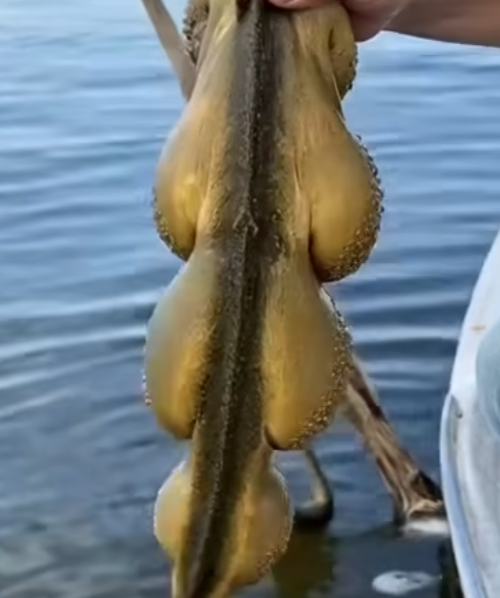
Residents across several lakes in Oklahoma have recently been doing double takes while peering into the water. What initially appeared to be strange, jelly-like “egg pods” clinging to submerged branches quickly sparked curiosity—and in some cases, concern.
Photos and videos began circulating online, showing soft, rounded clusters drifting just below the surface or attached to underwater structures. Their unusual appearance led many to wonder: What exactly are these mysterious formations?
Some even jokingly referred to them as “alien eggs.” But according to experts, the reality is far more fascinating—and entirely natural.
A Viral Mystery Beneath the Surface
The discovery started innocently enough. Lake visitors noticed translucent, gelatinous masses grouped together in clusters. Their smooth, almost brain-like texture made them stand out sharply against the darker tones of water and wood.
As more sightings were reported, social media amplified the mystery. Videos showing the strange formations drew thousands of reactions, with viewers expressing everything from amazement to unease.
At first glance, it’s easy to understand why. These formations don’t resemble anything most people expect to see in freshwater lakes. But despite their unusual look, scientists were quick to step in with a clear explanation.
The Scientific Answer: What Are They?
Wildlife experts have identified these formations as bryozoans, small aquatic organisms that live together in colonies.
Bryozoans are not new, rare, or dangerous. In fact, they’ve been part of freshwater ecosystems for hundreds of millions of years.
Each visible cluster is actually made up of thousands of tiny individual organisms called zooids. These zooids are microscopic, but when they group together, they form larger structures that become visible to the human eye.
While a single zooid measures just a few millimeters, entire colonies can grow into rounded masses that look like gelatinous blobs attached to underwater surfaces.
Why They Look So Strange
One of the main reasons bryozoans attract attention is their unusual texture and shape.
Underwater, they appear:
- Soft and jelly-like
- Slightly translucent
- Rounded or brain-shaped
- Gently moving with the current
When removed from the water, their texture can change, becoming firmer or even shrinking slightly. This transformation often adds to the confusion, making them seem like something artificial or unfamiliar.
Their appearance can easily be mistaken for:
- Egg clusters
- Gelatinous algae
- Floating debris
- Even synthetic materials
But in reality, they are simply colonies of living organisms working together as one.
Are They Dangerous?
Despite initial reactions, experts emphasize that bryozoans are completely harmless.
They pose no threat to:
- Humans
- Pets
- Fish
- Water quality
In fact, their presence is often considered a positive sign.
Bryozoans thrive in relatively clean water, meaning lakes where they appear are typically healthy enough to support diverse aquatic life.
So rather than signaling danger, these formations can actually indicate a balanced and functioning ecosystem.
Their Role in the Ecosystem
Far from being a nuisance, bryozoans play an important role in maintaining freshwater environments.
They are filter feeders, meaning they consume:
- Microscopic plankton
- Organic particles
- Debris suspended in the water
By filtering these materials, they help:
- Improve water clarity
- Maintain ecological balance
- Support other aquatic species
This natural filtration process contributes to a healthier lake environment overall.
An Ancient Survivor
One of the most fascinating aspects of bryozoans is their history.
These organisms have existed for hundreds of millions of years, dating back to ancient geological periods. They’ve survived massive environmental changes, adapting to both freshwater and marine ecosystems.
Despite this long history, they often go unnoticed because of their microscopic size—until colonies grow large enough to catch attention.
Their presence in modern lakes serves as a reminder of just how ancient and resilient life on Earth can be.
How They Grow and Spread
Bryozoan colonies expand through two main processes:
- Sexual reproduction
- Asexual budding, where new zooids grow from existing ones
As they grow, colonies attach themselves to stable underwater surfaces such as:
- Branches
- Rocks
- Docks
- Aquatic plants
They prefer calm or slow-moving water, which allows them to develop their distinctive rounded shapes.
During warmer months, growth accelerates due to increased temperature and nutrient availability.
Seasonal Life Cycle
Bryozoans follow a seasonal pattern.
In warmer seasons:
- Colonies grow rapidly
- Structures become larger and more visible
In colder conditions:
- Colonies break down
- They release statoblasts—tiny survival units
These statoblasts can withstand harsh conditions like winter or drought. When conditions improve, they regenerate into new colonies, continuing the cycle.
Why People Mistake Them
The reaction to bryozoans highlights how unfamiliar natural phenomena can be misunderstood.
Common reactions include:
- Curiosity
- Confusion
- Mild fear
- Humor (“alien eggs”)
Because they’re rarely discussed outside scientific contexts, many people encounter them for the first time without any frame of reference.
Social media only amplifies this effect, turning local discoveries into viral mysteries.
Not Just in Oklahoma
Although recent sightings gained attention in Oklahoma, bryozoans are found worldwide.
They exist in:
- North America
- Europe
- Asia
They are absent only in extreme environments like Antarctica, where conditions are too harsh for their survival.
Their spread occurs naturally through water systems, but also through wildlife. Birds and other animals can carry microscopic stages of bryozoans between lakes, helping them colonize new areas.
A Lesson in Nature’s Hidden Complexity
The discovery of these jelly-like clusters serves as a reminder of how much remains unseen in everyday environments.
Freshwater ecosystems are filled with life forms that:
- Are rarely noticed
- Play essential roles
- Appear unusual when finally observed
Increased awareness can help people better understand and appreciate these natural systems instead of fearing them.
Final Thoughts
What first appeared to be something strange—even unsettling—turns out to be a completely natural and beneficial part of the environment.
Bryozoans may look unusual, but they are:
- Harmless
- Ancient
- Ecologically important
Their presence in lakes is not a warning sign—it’s a sign of life quietly thriving beneath the surface.
Sometimes, the most mysterious discoveries aren’t alien at all—they’re simply nature, revealing a side we don’t often see.