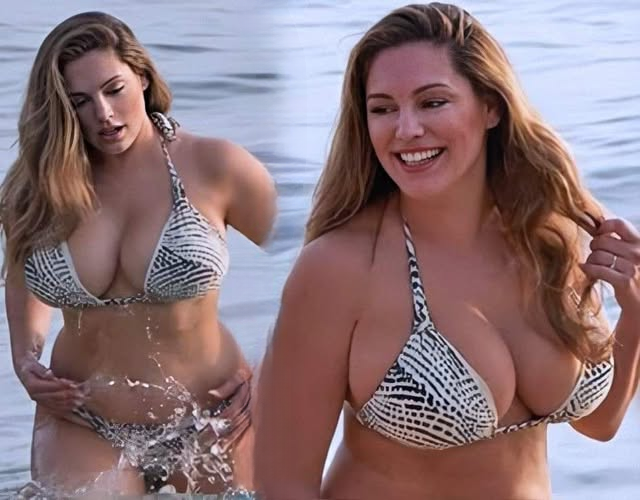
In recent years, headlines have circulated online claiming that “science has declared Kelly Brook’s body perfect.”
At first glance, it sounds authoritative—almost like a final verdict from researchers. But how much truth is actually behind this statement?
The reality is far more nuanced.
🧪 What Science Actually Says
Despite the bold claims, there is no officially recognized scientific study that names any individual as having the “perfect body.”
Scientific research doesn’t work that way.
Instead of identifying a single “ideal person,” studies in areas like human biology, psychology, and health tend to focus on:
- General body proportions
- Indicators of physical health
- Patterns of attractiveness across populations
These findings are about trends—not individuals.
So while certain features may be studied, no credible scientific authority has declared Kelly Brook—or anyone else—the universal standard of perfection.
📊 Where the Claim Comes From
The idea likely stems from older discussions around body proportions, such as the waist-to-hip ratio, which some studies have linked to perceptions of attractiveness.
Over time, media outlets and social platforms simplified these concepts into catchy headlines like:
- “Scientifically perfect body”
- “Ideal female proportions”
But these headlines often blur the line between research findings and entertainment content.
What starts as a general observation can quickly turn into a viral claim that sounds far more definitive than it really is.
🌍 Beauty Isn’t Universal
One of the most important things science actually tells us is this:
There is no single standard of beauty.
Preferences vary widely depending on:
- Culture
- Time period
- Personal experiences
- Social influences
What one group considers attractive, another may not.
Even within the same society, ideals shift over time. What was celebrated decades ago may look completely different from today’s trends.
🩺 Health vs. Appearance
Another key distinction is the difference between health and appearance.
Scientific and medical communities focus on:
- Physical well-being
- Strength and mobility
- Mental health
- Balanced nutrition
These factors matter far more than fitting into any visual “ideal.”
A body that looks a certain way isn’t automatically healthier—and a healthy body doesn’t have to look like any specific model or celebrity.
📱 The Role of Media and Viral Headlines
Sensational headlines are designed to capture attention.
Phrases like “science says” or “proven perfect” create a sense of authority—even when the underlying claim is exaggerated or misleading.
In reality, these stories often:
- Oversimplify complex research
- Blend opinion with data
- Use familiar names to boost engagement
That’s why it’s important to approach such claims with a critical mindset.
💡 A Healthier Perspective
Rather than chasing a single idea of “perfection,” experts encourage a more realistic and positive approach:
- Focus on how your body feels and functions
- Appreciate natural diversity in shape and size
- Prioritize long-term health over short-term appearance
Confidence, comfort, and well-being are far more meaningful than trying to match an unrealistic standard.
❤️ Final Thoughts
The claim that Kelly Brook has the “perfect body according to science” makes for an eye-catching headline—but it doesn’t reflect how science actually works.
There is no universal formula for perfection.
Human bodies are diverse, complex, and constantly changing—and that’s exactly what makes them unique.
In the end, the most important standard isn’t what trends or headlines say…
It’s how you define health, confidence, and self-worth for yourself.