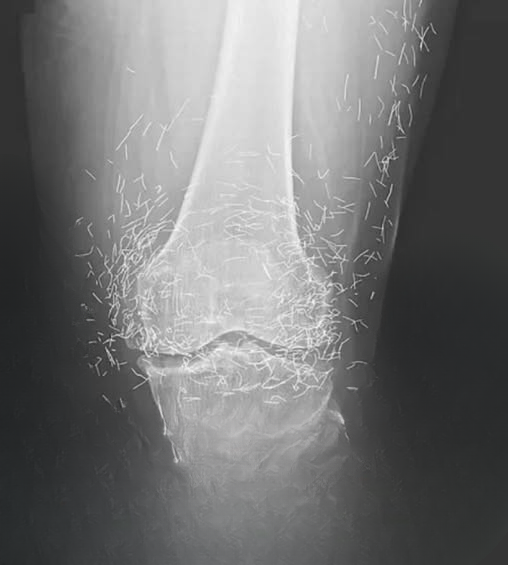
When a 65-year-old woman visited a medical clinic in South Korea due to long-standing knee pain, doctors initially expected a routine diagnosis. Her symptoms pointed toward a common condition seen in older adults—Osteoarthritis—a disorder caused by the gradual breakdown of cartilage in the joints.
However, what appeared on her X-ray was far from typical.
Instead of only the expected signs of joint degeneration, medical staff observed something highly unusual: numerous thin, needle-like objects embedded throughout the soft tissue around her knee. These objects, later identified as gold threads, had been placed there many years earlier as part of an alternative treatment approach.
Understanding the Condition
Osteoarthritis affects millions of people worldwide. It develops when the protective cartilage between bones wears down over time, leading to stiffness, swelling, and pain. Everyday movements—walking, bending, or even standing—can become increasingly difficult as the condition progresses.
Like many patients, the woman had tried conventional treatments, including pain relief medications and anti-inflammatory drugs. While these provided temporary comfort, they also caused unwanted side effects, particularly digestive issues. Over time, managing those side effects became as challenging as dealing with the joint pain itself.
Seeking another option, she turned to a traditional therapy widely practiced in parts of Asia: Acupuncture.
An Alternative Approach
Standard acupuncture involves inserting thin needles into specific points on the body to stimulate nerves and promote pain relief. Typically, these needles are removed after a short session.
However, the method used in this case was different.
In a less common variation sometimes referred to as gold thread implantation, small pieces of gold are intentionally left inside the body. The idea behind this practice is that the metal may provide ongoing stimulation to targeted areas, potentially offering longer-lasting relief.
While some individuals report benefits, this approach remains controversial and is not widely supported by modern medical research.
Medical Concerns and Risks
From a clinical perspective, leaving foreign materials inside the body raises several concerns.
The human immune system is designed to recognize and respond to anything that doesn’t naturally belong. When a foreign object is present, the body may trigger what’s known as a foreign body reaction. This process can lead to chronic inflammation and the formation of scar tissue around the material.
In some cases, these reactions can result in discomfort, infection, or the need for surgical removal.
Another issue involves diagnostic imaging. Metallic objects can interfere with medical scans, especially X-rays and other imaging techniques. They may create visual distortions that make it harder for doctors to clearly assess surrounding tissues, bones, or potential injuries.
This becomes particularly important when monitoring conditions like osteoarthritis, where accurate imaging is essential for tracking progression.
Challenges With Advanced Imaging
One of the most significant concerns involves procedures like Magnetic Resonance Imaging.
MRI machines use strong magnetic fields to generate detailed images of the body. If metal is present inside a patient, it can pose risks depending on the material and placement. Movement or heating of metallic objects, while rare, is a consideration that medical professionals must evaluate carefully before conducting such scans.
For this reason, patients with any implanted material are typically screened thoroughly before undergoing advanced imaging.
Balancing Tradition and Modern Medicine
The case highlights a broader conversation about the relationship between traditional therapies and modern healthcare.
In many cultures, acupuncture is a respected and widely used practice. In countries like South Korea, it is often integrated into healthcare systems and trusted by patients seeking non-pharmaceutical options.
At the same time, medical experts emphasize the importance of safety, regulation, and evidence-based practices—especially when treatments involve permanent changes to the body.
While temporary acupuncture is generally considered safe when performed by trained professionals, more invasive or permanent methods require careful consideration.
Growing Interest Worldwide
Interest in alternative therapies has expanded globally in recent years. In places like the United States, acupuncture is increasingly used to help manage chronic pain, reduce stress, and support overall wellness.
However, most licensed practitioners follow strict guidelines. Needles are used only temporarily and are removed after each session. Permanent implantation techniques are not part of standard practice in regulated medical environments.
This distinction is important, as it separates widely accepted therapeutic methods from less-studied or higher-risk procedures.
A Valuable Learning Case
The woman’s case, later documented in a respected medical journal, has become an important example for both healthcare providers and patients. It illustrates how treatment decisions made years earlier can continue to affect health in unexpected ways.
While the gold threads may have been intended to provide long-term relief, they also introduced complexities that made diagnosis and monitoring more challenging.
Key Takeaways
This situation serves as a reminder that all medical treatments—traditional or modern—should be approached with a clear understanding of both benefits and risks.
For individuals managing chronic conditions like osteoarthritis, exploring different treatment options is entirely reasonable. However, it’s essential to rely on qualified professionals, ask questions, and consider long-term outcomes.
The goal of any treatment should not only be to reduce pain but also to maintain overall health and function over time.
Final Thoughts
The human body is remarkably complex, and even well-intentioned interventions can have lasting effects. This case underscores the importance of informed decision-making and open communication between patients and healthcare providers.
By combining the strengths of traditional knowledge with modern medical standards, patients can make safer, more effective choices for their long-term well-being.
In the end, managing health is not just about finding immediate relief—it’s about protecting the body for the future.