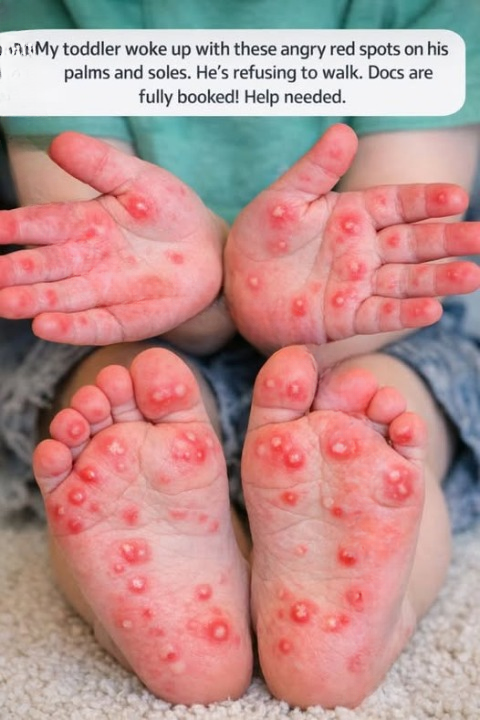
Seeing your toddler wake up with bright red spots—especially on sensitive areas like the palms of their hands and the soles of their feet—can be alarming. When those spots are paired with discomfort or even refusal to walk, it’s natural to feel worried, especially if you can’t immediately get a doctor’s appointment.
While this situation can look serious, many causes are common and manageable. Understanding what might be going on—and how to safely respond at home—can help you stay calm and support your child until you’re able to speak with a healthcare professional.
This guide walks you through the most likely causes, how to ease your child’s discomfort, and the warning signs that require urgent medical care.
The Most Common Cause: Hand, Foot, and Mouth Disease
One of the most frequent reasons toddlers develop red spots on their palms and soles is Hand, Foot, and Mouth Disease (often shortened to HFMD).
What is it?
HFMD is a common viral infection, especially in children under five. It is usually caused by a group of viruses known as enteroviruses, most commonly Coxsackievirus.
What it looks like:
- Small red spots or bumps on:
- Palms of the hands
- Soles of the feet
- These spots may turn into blisters
- Rash may also appear on:
- Knees
- Elbows
- Buttocks
Other early symptoms:
- Mild fever
- Sore throat
- Low energy
- Reduced appetite
In most cases, HFMD is mild and clears up on its own within 7–10 days.
Why Your Toddler May Refuse to Walk
If your child suddenly doesn’t want to stand or walk, it can be scary—but in many cases, it’s due to pain rather than a more serious issue.
Common reason:
- Blisters on the soles of the feet can be tender
- Pressure from standing or walking increases discomfort
What this means:
- Temporary refusal to walk is common with painful foot rashes
- It usually improves as the rash heals
However, keep observing your child’s overall condition (more on warning signs below).
Other Symptoms to Watch For
HFMD often includes additional symptoms beyond the rash.
Mouth sores:
- Small red spots or ulcers inside:
- Cheeks
- Tongue
- Gums
- These can make eating and drinking painful
Behavioral changes:
- Irritability
- Clinginess
- Fatigue
Appetite changes:
- Eating less due to mouth discomfort
- Drinking less if swallowing hurts
Other Possible Causes (Less Common)
While HFMD is the most likely explanation, other conditions can cause similar symptoms.
1. Allergic reactions
- Usually appear on more areas of the body
- Often linked to new foods, soaps, or detergents
2. Contact dermatitis
- Caused by direct contact with an irritant
- Rash may be localized rather than widespread
3. Kawasaki disease (rare but serious)
- High fever lasting several days
- Red eyes
- Swelling of hands and feet
- Requires immediate medical attention
4. Scabies
- Intense itching
- Often affects finger webs and wrists
- Usually spreads gradually
5. Shingles (very rare in toddlers)
- Painful rash in a specific area
- Usually not symmetrical like HFMD
What You Can Do at Home Right Now
While waiting for a doctor’s appointment, there are several safe steps you can take to help your child feel more comfortable.
1. Monitor temperature
- Check for fever regularly
- Keep track of changes
2. Encourage hydration
This is very important, especially if mouth sores are present.
Offer:
- Water
- Milk
- Cool, diluted juices
Watch for signs of dehydration:
- Dry lips
- Fewer wet diapers
- No tears when crying
Comfort Measures That Actually Help
For itchy or painful skin:
- Apply cool compresses to hands and feet
- Keep nails short to prevent scratching
- Dress your child in loose, soft clothing
For mouth pain:
- Offer cold foods like:
- Yogurt
- Applesauce
- Smoothies
- Avoid:
- Citrus
- Spicy foods
- Salty snacks
Pain Relief: What’s Safe to Use
Over-the-counter medications can help reduce discomfort.
Common options:
- Acetaminophen
- Ibuprofen
Important tips:
- Always follow dosing instructions based on your child’s weight
- Never give aspirin to children
If unsure, consult a pharmacist or healthcare provider.
Is It Contagious?
If this is HFMD, it is contagious.
How it spreads:
- Coughing or sneezing
- Contact with blisters
- Contaminated surfaces
- Diaper changes
What to do:
- Keep your child home from daycare or school
- Wash hands frequently
- Disinfect commonly touched surfaces
When to Seek Urgent Medical Care
While most cases are mild, some symptoms require immediate attention.
Go to urgent care or ER if you notice:
- Fever lasting more than 3 days
- Signs of dehydration
- Difficulty breathing
- Extreme lethargy or confusion
- Rapidly spreading rash
- Swelling of hands, feet, or face
When It’s Okay to Monitor at Home
You can usually manage symptoms at home if:
- Fever is mild and short-lived
- Your child is still drinking fluids
- Rash is stable and not worsening rapidly
- Behavior is mostly normal aside from discomfort
How to Prepare for a Doctor (or Telehealth) Visit
If appointments are full, consider telehealth or a nurse hotline.
Be ready to share:
- When symptoms started
- Fever history
- Description of the rash
- Eating and drinking habits
- Any medications given
Taking photos of the rash can also help doctors assess the situation remotely.
How Long Does It Last?
For most viral causes like HFMD:
- Symptoms improve within 7–10 days
- Blisters dry up and heal
- Energy levels return to normal
Peeling skin on hands and feet may occur during healing—this is normal.
Protecting Your Family
To reduce spread at home:
- Wash hands often (especially after diaper changes)
- Avoid sharing utensils or cups
- Clean toys and surfaces regularly
Final Thoughts: Stay Calm, Stay Observant
Seeing your toddler uncomfortable is never easy, but the good news is that the most common cause of these symptoms—Hand, Foot, and Mouth Disease—is usually mild and temporary.
Focus on:
- Keeping your child comfortable
- Encouraging fluids
- Monitoring symptoms
And remember: even if doctor appointments are delayed, most cases can be safely managed at home with proper care and attention.