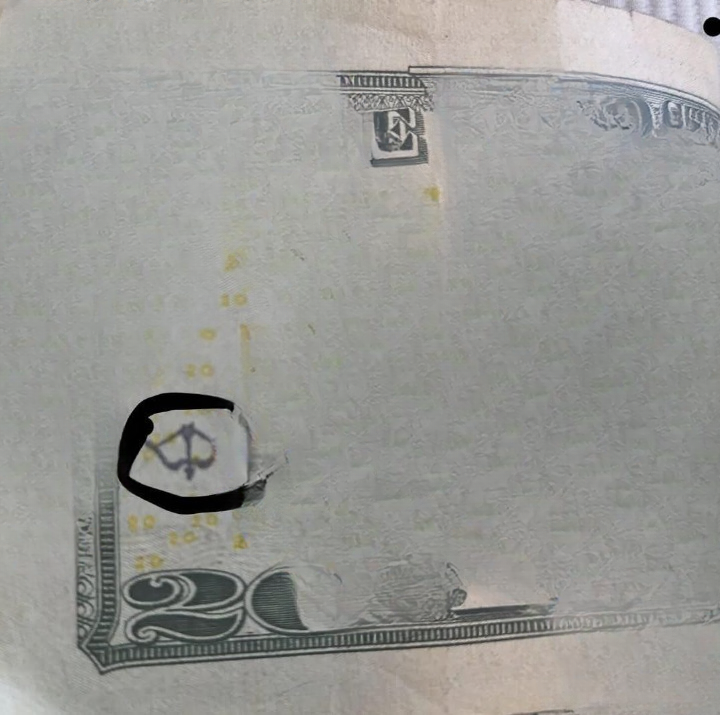
If you’ve ever handled U.S. currency, you may have noticed something unusual: a tiny symbol, initials, or even what looks like a bow and arrow stamped on a bill. These small marks, known as chop marks, are more than decorative curiosities—they tell a story about international trade, currency verification, and trust across borders.
Although U.S. bills circulate widely within the United States, many travel far beyond. Certain bills carry these unique markings as proof of verification, particularly in regions where counterfeiting is a serious concern. So, what exactly are these chop marks, where did they originate, and why do they appear on some U.S. bills? Let’s explore the intriguing history of these little symbols and uncover their global significance.
What Are Chop Marks?
Chop marks are small stamps or imprints applied to U.S. bills by money changers, merchants, or currency handlers in foreign markets. They are especially common in regions like Southeast Asia, Africa, and parts of Latin America, where verifying the authenticity of cash is crucial.
These marks serve as a form of authentication, signaling that the bill has been carefully inspected and confirmed as genuine. In areas where counterfeit bills are prevalent or banking infrastructure is limited, chop marks provide reassurance for both sellers and buyers during everyday transactions.
One of the most recognizable chop marks is the bow and arrow symbol, often found on U.S. $20 bills. This seemingly simple stamp carries a deeper story of global commerce and currency trust.
The Origins of Chop Marks
The word “chop” and the practice of stamping currency originates from ancient China. Centuries ago, Chinese merchants would stamp silver coins with their personal or business mark to confirm the weight and authenticity of the coins. These stamps acted as a guarantee, ensuring that buyers and other merchants could trust the coins they were handling.
As global trade expanded, the practice of stamping currency extended beyond coins and eventually applied to paper money, including U.S. bills. With the U.S. dollar becoming the world’s primary reserve currency, bills traveled far beyond American borders. In countries where counterfeiting was a concern or banking systems were less centralized, money changers adopted chop marks to authenticate U.S. bills and maintain trust in international trade.
By marking the bills, money changers assured anyone handling them that these were real, verified notes—a small stamp with a big purpose.
Why Are Chop Marks Used?
Money changers and merchants apply chop marks for several key reasons:
1. Authenticating the Bill
Even with advanced security features like watermarks, microprinting, and embedded security threads, U.S. bills can still be counterfeited. In markets with higher counterfeiting risks, chop marks indicate that a bill has been carefully inspected and verified.
2. Tracking Circulation
Chop marks also help track the movement of currency. In many regions, bills pass through numerous hands—small shops, street vendors, and informal traders. A chop mark acts as a record that the bill has been verified along its journey.
3. Building Trust in Transactions
In countries with weaker banking systems, chop marks serve as a confidence booster. Seeing a familiar or reputable mark on a bill signals that it is trusted, making transactions smoother and more secure.
What Do Chop Marks Look Like?
Chop marks are generally small, unobtrusive, and stamped in ink—often blue, red, or black. The symbols vary by region and the personal preference of the money changer. Some common designs include:
-
Arrows, stars, or birds
-
Geometric patterns
-
Stylized letters or initials
-
The bow and arrow symbol, particularly on U.S. $20 bills
Despite their variety, the purpose of all chop marks remains consistent: verifying authenticity and facilitating trust in currency exchanges.
Are Chop Marks Legal?
While U.S. law prohibits mutilating currency to the point where it loses its value as legal tender, chop marks are generally considered acceptable. As long as the mark does not interfere with the bill’s key security features or legal value, the note remains valid for transactions.
However, bills with excessive or large markings may occasionally be refused by banks or automated machines, particularly those that rely on optical recognition to read currency. In most cases, small chop marks are tolerated and remain a silent testament to the bill’s journey.
The Global Journey of a U.S. Bill
A single U.S. bill can travel thousands of miles from its point of origin. Many bills, particularly higher-denomination notes, circulate in international markets where U.S. currency is often more trusted than local money.
Each chop mark represents a story of travel, trust, and verification. A bow and arrow symbol on a $20 bill, for example, may signify that the note was inspected by a money changer in Southeast Asia and deemed genuine before being passed on to the next merchant.
By observing these marks, you’re essentially looking at a map of global commerce written in symbols.
Chop Marks and the U.S. Dollar’s Global Significance
The U.S. dollar is the world’s primary reserve currency, widely accepted in international trade and often preferred in economies with unstable local currencies. In such regions, chop marks are an extra layer of security that allows people to transact confidently.
A chop-marked dollar demonstrates:
-
That U.S. currency is trusted worldwide
-
The lengths people go to verify authenticity
-
The role of currency in bridging global markets
These tiny symbols, often overlooked, are proof of the dollar’s global influence.
Chop Marks as a Cultural Artifact
Beyond their practical use, chop marks have become a historical curiosity. Collectors, numismatists, and currency enthusiasts find these stamped bills fascinating because each mark tells a story.
-
They reveal trading patterns in foreign markets.
-
They reflect local customs and merchant practices.
-
They document the movement of currency over time.
In some cases, bills with multiple chop marks are highly prized as collectibles, representing both the dollar’s global reach and the intricate human stories that accompany it.
The Bow and Arrow Symbol
Among the various chop marks, the bow and arrow stands out. It is a recognizable, iconic symbol applied to U.S. $20 bills. The precise origins of this symbol are debated, but it is widely believed to represent verification and trustworthiness by money changers.
Some historians suggest that the bow and arrow could also have cultural significance, reflecting the personal touch of the merchant who stamped it. Regardless of its origin, this mark has become a symbol of the bill’s journey through international markets.
How to Spot a Chop Mark
If you want to explore the hidden history in your own wallet, here’s what to look for:
-
Examine the bill under a bright light
-
Look for tiny stamps in the margins
-
Common colors: blue, red, black
-
Symbols: arrows, stars, initials, or the bow and arrow
Chances are, many bills you handle daily have already traveled across borders and been authenticated through chop marks without you ever noticing.
Chop Marks in Modern Times
Although the practice has declined with the rise of digital payment systems and stricter anti-counterfeiting measures, chop marks still appear in some markets. They remain a reminder of the ingenuity of merchants, the global circulation of U.S. currency, and the universal need for trust in trade.
Even today, discovering a chop-marked bill can spark curiosity and connection to the wider world, turning a simple note into a mini time capsule of commerce.
Why Chop Marks Matter
Chop marks may seem small and insignificant, but they reveal a lot about:
-
Global finance: How U.S. currency is trusted far beyond its borders.
-
Trade history: The informal networks of money changers and merchants.
-
Cultural exchange: The symbols reflect local traditions, customs, and practices.
-
Trust mechanisms: How people protect themselves in economies with high counterfeiting risk.
Next time you spot a mark on your dollar bill, remember that it’s more than a stamp—it’s a story, a journey, and a connection to people across the world.
Chop Marks as a Window Into Global Trade
Each chop mark tells a story not only of authenticity but of the bustling networks of merchants, money changers, and travelers who rely on cash in regions where banking systems may be limited. Imagine a street market in Hong Kong or Singapore decades ago, with vendors inspecting each U.S. bill before accepting it as payment. A small bow and arrow stamp could instantly signal to a merchant that the currency was verified, allowing trade to flow smoothly. These marks were practical tools but also a kind of silent communication between traders, a shared code of trust that transcended language and borders.
Collecting Chop-Marked Bills
For numismatists and currency enthusiasts, chop-marked bills are more than legal tender—they are collectible artifacts. Each mark can provide insight into historical trade routes, regional customs, and the movement of U.S. currency across continents. Some collectors specifically seek bills with multiple marks, viewing them as evidence of a long, interesting journey. Others focus on rare designs, like the bow and arrow, which can sometimes increase a bill’s value in collector markets.
Even in today’s digital age, finding a chop-marked dollar in your wallet can feel like discovering a hidden story in plain sight. It’s a reminder that money is not just a tool for transactions but a living artifact that reflects human connections, commerce, and culture across time and space.
Conclusion
Chop marks on U.S. bills are fascinating relics of international trade and currency verification. From the origins in ancient Chinese coin stamping to the now-iconic bow and arrow on $20 bills, these tiny symbols are proof of the U.S. dollar’s global reach and trusted status.
They demonstrate the ingenuity of merchants, the importance of verification in markets worldwide, and the incredible journey each bill can take. So next time you notice a chop mark, pause for a moment—it’s a reminder that every bill is more than currency; it’s a piece of history that connects economies, cultures, and people around the world.