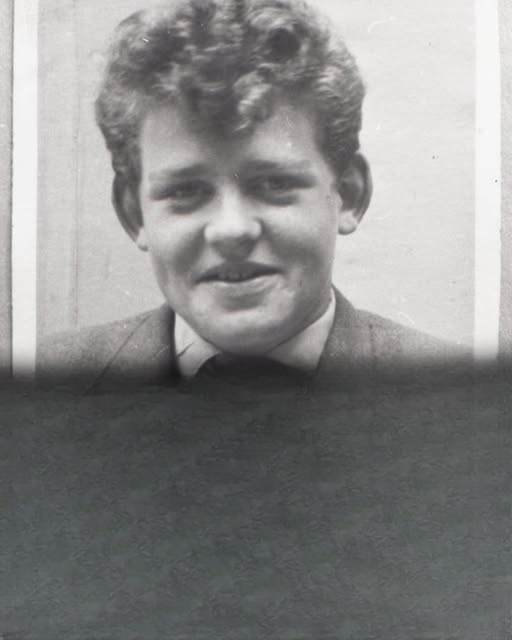
He was never the obvious choice for stardom. In an era that often rewarded polish, control, and carefully crafted public images, Joe Cocker stood apart almost immediately. His voice was rough around the edges, his movements unpredictable, and his presence unlike anything audiences were used to seeing on stage. Yet it was precisely these qualities that made him unforgettable.
Joe Cocker did not rise through perfection. He rose through emotion. Through imperfection. Through something far more difficult to define but instantly recognizable when heard.
He didn’t just perform music. He embodied it.
Early Life in a City of Steel and Smoke
Born John Robert Cocker in 1944 in Sheffield, England, his earliest environment was shaped by industry rather than glamour. Sheffield was a working-class city defined by steel production, heavy labor, and the constant rhythm of factories. It was not a place associated with artistic opportunity, but it left a lasting impression on him.
Like many young people of his generation, Cocker did not initially pursue music as a career. He trained and worked as a gas fitter, a stable and practical profession that reflected the expectations of the time. However, even during those early years, music remained present in his life in a quieter, persistent way.
He began performing in small local venues, singing cover songs inspired by artists such as Ray Charles and early rock and roll groups. These performances were not polished or calculated. Instead, they were raw expressions of someone still discovering his own voice.
What set him apart even then was not technical skill, but emotional honesty. His singing carried a sense of vulnerability that made listeners pay attention.
The Moment That Changed Everything
Joe Cocker’s life changed dramatically in 1969 at the Woodstock Festival in the United States. It was here that he performed a reinterpretation of “With a Little Help from My Friends,” originally written by The Beatles.
The performance was unlike anything audiences had experienced before.
It was not smooth or restrained. It was physical, expressive, and deeply emotional. His body moved with the music in an almost uncontrolled way, while his voice pushed through cracks, growls, and powerful rises that transformed the song into something entirely new.
Some observers were initially confused by his style. Others were captivated immediately. But one thing was certain: no one forgot it.
That single performance became a defining moment not only in Cocker’s career but in music history. It introduced him to a global audience and established him as a uniquely expressive performer who approached music in a deeply personal way.
The Weight of Fame and Its Challenges
While Woodstock brought recognition, it also marked the beginning of a more complicated chapter in Cocker’s life. The music industry of the time was fast-moving, demanding, and often unforgiving. Touring schedules were intense, expectations were high, and support systems for artists were limited compared to modern standards.
As his fame grew, so did the pressures surrounding him.
Over time, Cocker began to struggle with substance use. Alcohol and drugs became part of his life, not as a path he intended to follow, but as a way of coping with the emotional and physical demands placed upon him. The same intensity that made his performances powerful also made him vulnerable away from the stage.
His career became marked by instability. There were moments of brilliance on stage followed by periods of personal difficulty. At times, he was unable to perform consistently. Financial challenges emerged, and his public image became increasingly associated with unpredictability.
It was a difficult and often painful period, and for a time, it seemed uncertain whether his career would continue at all.
A Turning Point and Musical Return
Despite these challenges, Joe Cocker’s story did not end there.
In the early 1980s, he experienced a major professional resurgence. One of the most significant moments of this period was his duet with Jennifer Warnes on the song “Up Where We Belong,” featured in the film An Officer and a Gentleman.
The song became a major international success. It reached wide audiences, won awards, and reintroduced Cocker to listeners who may not have been familiar with his earlier work.
What made this return notable was not a change in his voice or style, but a sense of regained stability. His performance carried the same emotional depth, but with a more grounded presence. It reflected a man who had endured difficulty but continued to express himself through music.
Finding Balance in Personal Life
Behind the scenes, one of the most important influences in Cocker’s later life was his relationship with Pam Baker. This relationship provided him with a sense of personal stability that had been missing during earlier years of fame.
Together, they built a quieter life away from the constant pressures of the entertainment industry. This period allowed him to focus more on his health, reduce destructive habits, and maintain a more sustainable approach to his career.
While his past struggles were never completely erased, his later years reflected greater balance and consistency.
He continued to perform and record music, but with a more measured approach that allowed him to remain active without the same level of personal turmoil.
A Style That Redefined Vocal Performance
Joe Cocker’s voice was never about technical perfection. In fact, by traditional standards, it often broke many of the rules of classical singing. However, what he offered instead was something different and equally powerful: authenticity.
His vocal style was marked by texture, emotion, and unpredictability. He could shift from soft vulnerability to powerful intensity within a single phrase. Every performance felt unique because it was shaped by feeling rather than strict control.
Songs such as “You Are So Beautiful” and “Unchain My Heart” became closely associated with him, not because they were technically flawless, but because they carried emotional weight that listeners could connect with.
His interpretations often transformed familiar songs into something entirely new, revealing different emotional layers within them.
Final Years and Passing
Joe Cocker passed away in 2014 at the age of 70 after a battle with lung cancer.
His death marked the end of a long and complex life, one that included extraordinary success, significant personal struggles, and eventual stability. While his journey was far from smooth, it left behind a musical legacy that continues to be appreciated across generations.
Why His Legacy Still Resonates
Joe Cocker’s story continues to matter because it reflects themes that extend beyond music alone.
His life speaks to:
- The unpredictable nature of talent and success
- The pressures that often accompany fame
- The challenges of addiction and recovery
- The importance of emotional expression in art
- The possibility of rebuilding and finding stability
He demonstrated that artistic impact is not dependent on perfection. Instead, it often comes from honesty, vulnerability, and lived experience.
A Voice That Continues to Echo
Even years after his passing, Joe Cocker’s music remains widely recognized. His performances still carry emotional weight, whether it is the raw energy of his Woodstock-era recordings or the more reflective tone of his later work.
What makes his legacy enduring is not just the songs themselves, but the way he performed them. Each one felt lived rather than simply sung.
Joe Cocker did not aim to be flawless. He aimed to be real.
And in doing so, he created something that continues to resonate long after his voice has fallen silent.
Joe Cocker’s legacy endures because he transformed imperfection into art. His voice—raw, emotional, and unmistakably human—gave familiar songs new depth and meaning. From his unforgettable Woodstock performance to his later global hits, he proved that music does not need to be flawless to be powerful. It only needs to be honest.
His journey from Sheffield’s industrial streets to international stages reflects a life shaped by struggle, resilience, and reinvention. Despite personal battles and setbacks, he continued to return to music, reconnecting with audiences across generations.
Today, Joe Cocker is remembered not for perfection, but for feeling—for turning every lyric into something lived, real, and enduring.