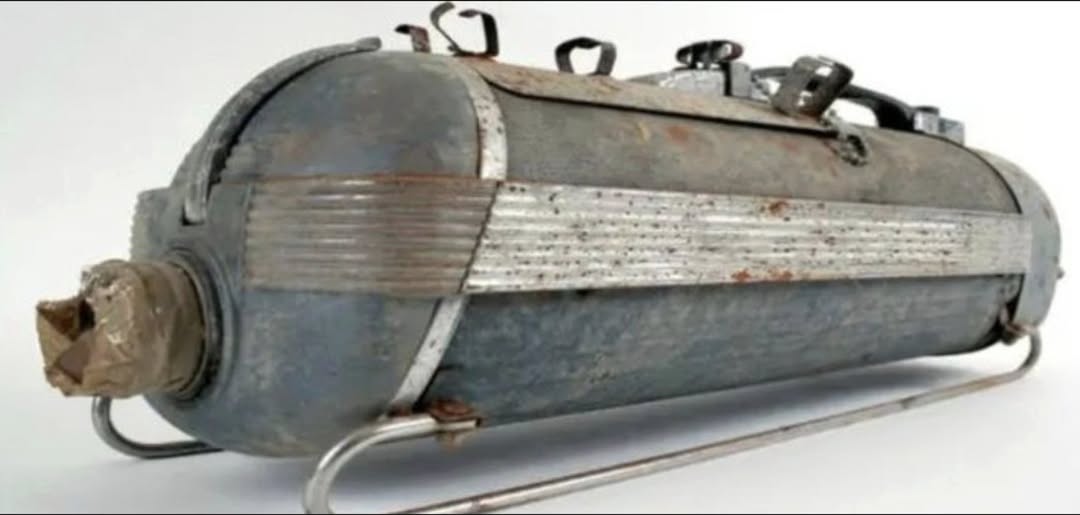
At first glance, it may look like an odd, outdated tool—something heavy, metallic, and difficult to understand. Many people who come across early cleaning devices are often left wondering what they were used for and how they even worked. But once you uncover the story behind these machines, you begin to see that they played a crucial role in shaping one of the most essential household appliances we rely on today.
Long before sleek, lightweight machines became a standard part of modern homes, cleaning floors was a far more demanding task. Dust, dirt, and debris had to be swept manually, often leaving particles behind. There was no efficient way to truly remove fine dust from carpets or hard-to-reach corners. That began to change during the 19th century, when inventors started experimenting with ways to create suction and improve cleanliness inside homes.
One of the earliest breakthroughs came in 1869, when Ives W. McGaffey introduced a device known as the Whirlwind vacuum cleaner. This invention may seem primitive by today’s standards, but at the time, it represented a major leap forward in cleaning technology.
The “Whirlwind” was a hand-powered machine that relied entirely on human effort. Instead of electricity, it used a system of cranks and bellows to generate suction. The user would turn a handle repeatedly, which activated internal components designed to pull in dust and debris. While this might sound simple, it required significant physical effort to operate, making cleaning a time-consuming and tiring process.
Despite its limitations, the Whirlwind introduced a powerful idea: that suction could be used to clean more effectively than sweeping alone. This concept laid the foundation for everything that came after.
Early machines like this were often large, bulky, and not particularly convenient. They were typically made of metal and wood, with complex internal mechanisms that were not easy to maintain. Because of their size and cost, they were not widely adopted in everyday households. Still, they marked an important stage in technological evolution.
Inventors across different regions continued experimenting with similar concepts, trying to improve efficiency and reduce the effort required. The real turning point came with the introduction of electricity.
In 1901, Hubert Cecil Booth developed one of the first successful electric vacuum cleaning systems. Unlike earlier hand-powered devices, Booth’s machine used an electric motor to create suction, eliminating the need for manual cranking. This innovation transformed the cleaning process and opened the door for more practical and accessible designs.
Booth’s early machines were still quite large and were not the compact household tools we know today. In fact, some of them were so big that they had to be operated outside buildings, with hoses running through windows to clean interiors. Even so, they demonstrated the potential of electric-powered cleaning and set the stage for future advancements.
As technology continued to evolve throughout the 20th century, vacuum cleaners became smaller, more efficient, and easier to use. Engineers refined motor designs, improved filtration systems, and introduced new features that made cleaning faster and more effective. What started as a heavy, hand-cranked machine eventually transformed into a compact appliance found in nearly every home.
Looking back, it’s easy to underestimate the importance of those early devices. They may seem crude or impractical now, but they represent the beginning of a journey toward modern convenience. Without inventions like the Whirlwind, the idea of suction-based cleaning might have taken much longer to develop.
There is also something fascinating about the ingenuity behind these early machines. Inventors were working without the advanced materials and technologies we have today. They relied on mechanical principles, creativity, and persistence to solve everyday problems. Each improvement built on previous ideas, gradually leading to the efficient systems we now take for granted.
The next time you use a modern vacuum cleaner, it’s worth remembering how far the technology has come. What now takes minutes once required significant effort and time. The quiet hum of an electric motor has replaced the physical strain of turning a crank, and lightweight designs have replaced heavy metal frames.
This evolution is a reminder of how innovation often begins with simple ideas. A problem is identified—in this case, the challenge of removing dust more effectively—and over time, solutions are refined through experimentation and persistence.
So, if you ever come across one of these mysterious old cleaning devices, don’t dismiss it as just an outdated object. It is a piece of history, a stepping stone in the development of modern living. It tells the story of how human ingenuity turned a labor-intensive chore into a quick and manageable task.
What once required strength, patience, and time has become something we barely think about. And that transformation all started with inventions like the Whirlwind vacuum cleaner and the groundbreaking work of innovators like Hubert Cecil Booth.
In the end, this “mysterious” cleaning item is not so mysterious after all. It is simply an early chapter in the story of progress—one that continues to shape the way we live today.