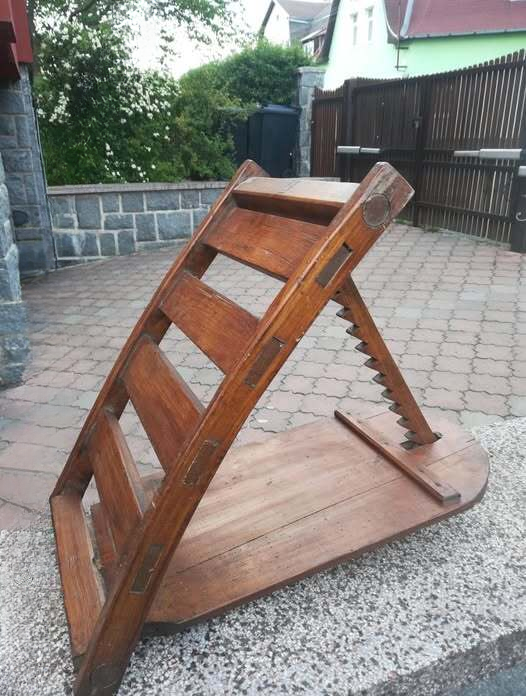
Exploring an old farmhouse, a quiet countryside home, or even a long-forgotten attic can feel like opening a window into another era. Among dusty shelves and tucked-away corners, you may come across tools and objects that once played an essential role in daily life. Some are easy to recognize—pots, pans, or basic farming tools—while others seem mysterious at first glance.
One such object is the traditional wooden cheese press. At first, it might appear to be a simple wooden structure with no obvious purpose. Yet behind its modest design lies a rich story of tradition, craftsmanship, and self-reliance.
Far more than just an old kitchen tool, the wooden cheese press represents a time when food preparation was deeply rooted in everyday routines. It reflects how people once worked closely with natural ingredients, relied on their own skills, and passed down knowledge through generations.
What Is a Traditional Wooden Cheese Press?
A wooden cheese press is a device used in the process of making cheese, specifically designed to shape and firm freshly formed curds. Curds are the solid parts of milk that separate during the cheese-making process. While they begin soft and moist, they need to be transformed into a more stable form to become the cheese we recognize.
This is where the press comes in.
By applying steady, controlled pressure, the cheese press helps remove excess liquid—known as whey—from the curds. As the whey is expelled, the curds bind together, forming a denser and more uniform structure.
The result is cheese that is:
- Firmer in texture
- Easier to cut and store
- More suitable for aging
Although designs can vary depending on region and tradition, the core principle remains the same: consistent pressure over time creates a better final product.
Why Pressing Cheese Is an Essential Step
Pressing is not just an optional stage—it is a critical part of traditional cheese-making. Without this step, the curds would retain too much moisture, resulting in cheese that is overly soft and prone to spoilage.
Removing excess whey serves several important purposes:
- Improves texture: Pressing helps create a smooth, consistent structure
- Enhances durability: Firmer cheese lasts longer and is easier to handle
- Supports aging: Lower moisture levels allow cheese to develop complex flavors over time
- Prevents spoilage: Reduced moisture makes it harder for unwanted bacteria to grow
Different types of cheese require different levels of pressure. Soft cheeses may only need light pressing, while harder varieties require stronger and longer-lasting pressure.
This adaptability made wooden cheese presses highly practical tools in traditional settings.
A Tool Shaped by Daily Life
Before the invention of refrigeration and modern food storage systems, preserving food was a daily challenge. For many rural households, making cheese was one of the most effective ways to extend the shelf life of milk.
Fresh milk spoils quickly, but when transformed into cheese, it becomes a more stable and transportable food source. This made cheese an important part of survival, especially in agricultural communities.
In these settings, the wooden cheese press was not a luxury—it was a necessity.
Families often relied on their own livestock for milk, and cheese-making became part of a regular routine that included:
- Milking animals
- Preparing and separating curds
- Pressing the cheese
- Storing and aging the final product
The press was used frequently, sometimes daily, as part of this cycle.
Regional Traditions and Unique Designs
Cheese-making traditions differ greatly across regions, and this diversity is reflected in the design of wooden cheese presses.
In Europe, for example, cheese-making has been a long-standing cultural practice. Countries such as France, Italy, and Switzerland developed distinct techniques and styles over centuries.
These regional differences influenced how cheese presses were built and used:
- Some presses were designed for delicate, soft cheeses requiring minimal pressure
- Others were constructed to handle dense, hard cheeses that needed prolonged pressing
- Materials varied depending on local resources, with different types of wood chosen for durability and availability
These variations show how a simple tool could be adapted to meet different needs, climates, and traditions.
The Art of Craftsmanship
One of the most fascinating aspects of traditional wooden cheese presses is the level of craftsmanship involved in their creation.
Unlike modern equipment produced in factories, these presses were often handmade. Skilled artisans—or sometimes the farmers themselves—carefully designed and constructed each piece.
Key elements of craftsmanship included:
- Selecting strong, durable wood
- Ensuring structural stability
- Designing mechanisms for consistent pressure
- Creating joints and fittings that could withstand repeated use
A well-made cheese press was built to last. Many were used for years, even decades, and some were passed down from one generation to the next.
This durability reflects not only the quality of materials but also the knowledge and care invested in their construction.
Understanding the Traditional Cheese-Making Process
To fully appreciate the role of the cheese press, it helps to understand the entire cheese-making process.
Traditionally, this process involved several key steps:
1. Milking
Fresh milk was collected from cows, goats, or sheep. The quality of the milk played a major role in the final product.
2. Curdling
Natural enzymes or cultures were added to separate the milk into curds and whey.
3. Cutting and Heating
The curds were cut into smaller pieces and gently heated to release more liquid.
4. Pressing
The curds were placed into molds and pressed to remove remaining whey and shape the cheese.
5. Aging
The cheese was stored under controlled conditions to develop its flavor and texture.
The pressing stage acted as a bridge between preparation and maturation. Without it, the cheese would not achieve the structure needed for aging.
The Role of Time and Patience
Traditional cheese-making was not a fast process. It required patience, attention, and consistency.
Pressing alone could take several hours or even days, depending on the type of cheese being made. During this time, maintaining steady pressure was essential to ensure even results.
This slower pace allowed:
- Flavors to develop naturally
- Textures to form gradually
- Quality to take priority over speed
Rather than being seen as inefficient, this approach was valued for the depth and richness it brought to the final product.
A Shared Community Practice
In many rural communities, cheese-making was not just an individual task—it was a collective activity.
Families often worked together, each person contributing to different stages of the process. Children might help with simple tasks, while experienced members handled more complex steps like curdling and pressing.
This collaboration had several benefits:
- Knowledge was passed down through generations
- Work was shared, making the process more efficient
- Social bonds were strengthened through shared effort
The wooden cheese press, as a central tool, often became a familiar and important part of these gatherings.
From Everyday Tool to Historical Artifact
With the advancement of modern technology, traditional wooden cheese presses are no longer widely used in everyday kitchens. Stainless steel equipment and automated systems have largely replaced them in commercial production.
However, these wooden tools have not been forgotten.
Today, they are valued as:
- Historical artifacts
- Collectible items
- Symbols of traditional craftsmanship
Museums, collectors, and history enthusiasts often preserve these presses as examples of how people once lived and worked.
In some cases, they are still used by artisans who prefer traditional methods and aim to preserve heritage techniques.
Why Traditional Tools Still Matter Today
In a world dominated by convenience and mass production, there is growing interest in traditional practices. Many people are curious about how food was made in the past and what lessons can be learned from those methods.
The wooden cheese press represents several important ideas:
- Self-sufficiency: The ability to produce and preserve food independently
- Sustainability: Using natural materials and low-tech solutions
- Craftsmanship: The value of skill, precision, and attention to detail
- Cultural heritage: A connection to traditions passed down over time
These qualities resonate with modern movements that emphasize mindful living and appreciation for handmade goods.
Lessons from the Past
Looking at tools like the wooden cheese press offers more than historical insight—it provides perspective.
It reminds us that:
- Food production once required time and effort
- Skills were learned and shared across generations
- Everyday objects were built with care and purpose
Understanding this can deepen our appreciation for the foods we consume today and the processes behind them.
Final Thoughts
At first glance, a wooden cheese press may seem like a simple or even outdated object. But when you look closer, it tells a much larger story—one of tradition, resourcefulness, and human ingenuity.
It reflects a time when people worked closely with nature, relied on their own hands, and valued the process as much as the result.
Whether displayed as a historical piece or used in traditional cheese-making, the wooden cheese press continues to represent a meaningful connection to the past.
By exploring tools like this, we not only learn about history—we gain a deeper appreciation for the everyday items that shaped it.