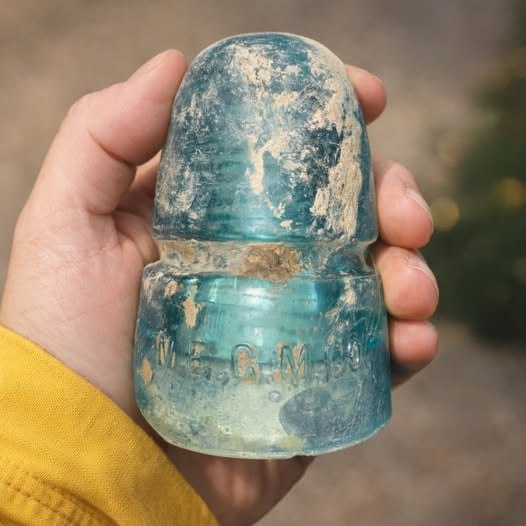
Finding an unfamiliar object during a nighttime walk can turn an ordinary moment into something memorable. Streetlights, shadows, and the surprise of seeing something unexpected on the ground often make everyday items seem far more mysterious than they really are. What first appears strange or confusing sometimes turns out to be a piece of common infrastructure that most people simply never notice.
That is exactly what happens with many old electrical components, especially insulators.
At first glance, these objects can look unusual. Some resemble glass ornaments. Others look like ceramic caps, stacked disks, or decorative pieces from another era. Because they are often found detached from their original setting, it is easy to mistake them for something rare, antique, or completely unknown.
In reality, many of these strange-looking finds are electrical insulators—important devices that helped build modern communication and power systems.
What Is an Electrical Insulator?
An electrical insulator is a material or component designed to stop electricity from flowing where it should not go. Its job is to support energized wires while preventing current from escaping into poles, towers, buildings, or the ground.
Without insulation, electrical systems would be unreliable and dangerous. Power could leak away, signals could weaken, and equipment could fail.
That means these quiet objects played a much bigger role in everyday life than their simple appearance suggests.
Why They Were Made From Glass or Porcelain
Many older insulators were made from glass or porcelain because those materials resist electrical flow well and can survive years outdoors. They also handle heat, rain, wind, and sunlight better than many early alternatives.
Glass versions often have a distinctive color or shine, which is one reason collectors and curious finders notice them. Porcelain models may appear heavier and more industrial, often with a glazed finish.
Even though they can look decorative today, every curve and surface had a practical purpose.
Why the Shapes Look So Unusual
The ribbed edges, stacked layers, and umbrella-like designs were not created for style. They were engineered to increase the path electricity would need to travel across the surface.
This made it harder for moisture, dirt, or rainwater to create an unintended electrical path. In simple terms, the unusual shape helped keep electricity where it belonged.
The design also improved durability in harsh outdoor environments.
How They Helped Build Communication Networks
Long before wireless communication became common, telegraph and telephone systems relied on wires stretched across long distances. Those wires needed reliable support while staying electrically separated from poles and structures.
Insulators made that possible.
Without them, signals could weaken or fail before reaching their destination. Messages that once changed business, travel, and daily life depended on small components most people never thought about.
In that sense, insulators helped connect communities long before smartphones and internet networks existed.
Their Role in Power Systems
As electric grids expanded, insulators became just as important for power delivery. They allowed lines carrying electricity to remain safely attached to poles and towers while reducing the risk of dangerous discharge.
Even today, modern versions are still used worldwide. Materials have improved, but the purpose remains the same: safe separation between electrical energy and surrounding structures.
Why People Find Them on Walks
Old insulators sometimes appear in surprising places because infrastructure changes over time. Utility lines are upgraded, poles replaced, railways removed, and older components discarded or left behind.
They may also turn up in sheds, fields, roadsides, barns, or antique collections. Since many people have never handled one before, the first reaction is often confusion.
What looked like a weird mystery object may simply be a piece of engineering history.
Why Collectors Appreciate Them
Some people actively collect vintage insulators because of their colors, markings, materials, and historical value. Certain models are linked to early utility companies, railroads, or communication eras.
Collectors enjoy them for several reasons:
- Unique shapes
- Historic manufacturing marks
- Attractive glass colors
- Industrial design history
- Connection to early technology
- Decorative display potential
What was once a practical tool can become a fascinating collectible.
A Reminder About Hidden Infrastructure
Modern life depends on countless components people rarely notice. We tend to focus on visible things like lights, devices, and buildings, while the small parts that make systems work stay in the background.
Insulators are a perfect example. They do not generate power or send messages on their own. They simply allow everything else to function safely and reliably.
That quiet role is what makes them so interesting once you know what they are.
Final Thought
If you found a strange glass or ceramic object while walking your dog, it may not be mysterious at all—it could be an electrical insulator, a small but important part of technological history.
Sometimes the weirdest things we discover are not strange because they are rare or dangerous. They seem strange because they were doing an important job in plain sight all along, unnoticed by most of us.