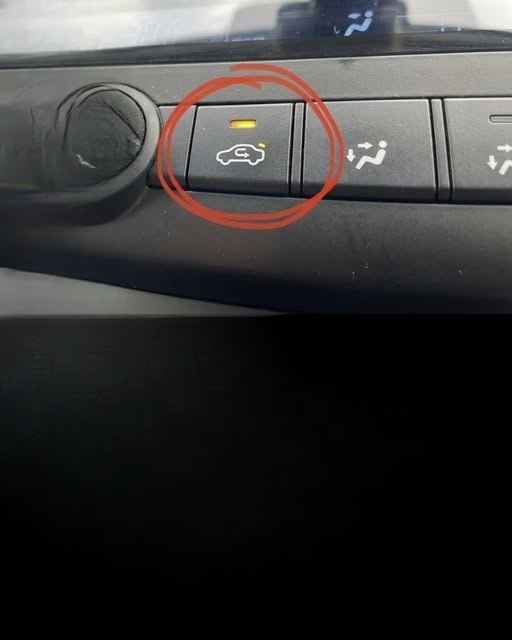
Most drivers press it without thinking. It’s that small button on your dashboard showing a car with a curved arrow inside it. It looks simple, almost insignificant. But behind that tiny symbol is a surprisingly important system that directly affects your comfort, air quality, fuel efficiency, and even your alertness while driving.
Many people either ignore it completely or use it incorrectly. Some leave it on all the time without realizing the side effects. Others never touch it at all. Understanding how it works can make your driving experience noticeably better in different weather and traffic conditions.
Understanding the Air Recirculation System
Your car’s ventilation system has two main ways of bringing air into the cabin:
1. Fresh Air Mode (Default Setting)
When the recirculation button is OFF, your vehicle pulls air from outside. This air enters through vents usually located near the windshield base. Before it reaches you, it is filtered and then either cooled or heated depending on your climate control settings.
This mode constantly replaces cabin air with fresh outdoor air, which helps maintain oxygen levels and reduces stale air buildup.
2. Recirculation Mode (Button ON)
When you activate the recirculation button, the system closes the external air intake. Instead of bringing in new air from outside, it reuses the air already inside the cabin.
In simple terms, it creates a closed loop:
- Air inside the car is cooled or heated
- It is circulated again and again
- Very little outside air enters the system
This small adjustment changes how your entire cabin environment behaves.
Why Cars Even Have This Feature
At first, it might seem unnecessary. Why not always use fresh air?
The reason is simple: outside air is not always clean, comfortable, or efficient to use.
Depending on your environment, outside air may contain:
- Heat waves in summer
- Cold air in winter
- Exhaust fumes in traffic
- Dust and pollen
- Smoke or industrial pollution
- Unpleasant odors from nearby vehicles or surroundings
Recirculation mode gives you control over what enters your car. Instead of constantly fighting unpredictable outside conditions, your car temporarily “isolates” the cabin environment.
Key Benefits of Using Air Recirculation Mode
When used correctly, this feature can significantly improve comfort and driving quality.
1. Faster Cooling in Hot Weather
One of the biggest advantages is how quickly it cools your car during summer.
If your car has been sitting under the sun, the inside temperature can be extremely high. If fresh air mode is active, your air conditioner keeps pulling in hot outside air, forcing it to work harder.
When you switch to recirculation:
- The system re-cools already-cooled air
- The cabin temperature drops faster
- The air conditioner works more efficiently
This is why many drivers use recirculation for the first few minutes after starting the car on a hot day.
2. Protection from Traffic Pollution
If you have ever been stuck behind a truck or in heavy traffic, you’ve probably noticed exhaust fumes entering your car.
Recirculation mode helps prevent that by closing external vents. This is especially useful:
- In tunnels
- In congested cities
- Near construction zones
- When driving behind diesel vehicles
It acts like a temporary shield between you and polluted air.
3. Helpful for Allergy Sufferers
For people sensitive to pollen, dust, or seasonal allergies, recirculation can provide relief.
By reducing the amount of outside air entering the cabin, it limits exposure to:
- Pollen
- Dust particles
- Mold spores
- Outdoor allergens
When combined with a clean cabin air filter, the effect is even stronger. Many drivers notice fewer symptoms like sneezing or itchy eyes when using this mode during allergy season.
4. More Efficient Air Conditioning Performance
Your air conditioning system works more efficiently when it is cooling already-conditioned air instead of constantly cooling hot outdoor air.
This means:
- Less strain on the AC system
- Faster temperature control
- Slight improvement in fuel efficiency
While the fuel savings are usually small, the comfort improvement is noticeable.
5. Improved Comfort in Extreme Conditions
In both very hot and very cold environments, recirculation helps stabilize cabin temperature faster.
Instead of continuously adjusting to outside air changes, your car maintains a more controlled environment inside.
When You Should NOT Use Recirculation Mode
Even though it is useful, leaving it on all the time can cause problems.
1. Foggy Windows
One of the most common issues is window fogging.
When air is recirculated:
- Moisture from your breath builds up
- Humidity inside the car increases
- Cold glass surfaces attract condensation
This leads to fog forming on windows, especially in rainy or cold weather.
If this happens, switch back to fresh air and use defrost mode.
2. Reduced Air Freshness Over Time
Because no fresh oxygen is entering the cabin, air can gradually feel:
- Stale
- Heavy
- Less refreshing
On long drives, this may contribute to tiredness or reduced alertness.
3. Trapped Odors Inside the Car
If something inside your car has a strong smell—like food, gym bags, or spills—recirculation will keep that smell circulating.
Instead of removing odors, it traps them inside the system.
4. Driver Fatigue on Long Trips
On highways or long-distance travel, fresh air is important for maintaining alertness.
Recirculation reduces airflow exchange, which can slightly contribute to:
- Drowsiness
- Reduced focus
- Head heaviness in some drivers
Simple Guide: When to Use It
Here is a practical breakdown:
- Hot weather start: Use ON for fast cooling
- Heavy traffic: Use ON to block fumes
- Polluted areas: Use ON for protection
- Allergy season: Use ON for cleaner air
- Highway driving: Use OFF for alertness
- Rainy or cold weather: Use OFF to prevent fogging
- Smelly interior: Use OFF to refresh air
The Role of the Cabin Air Filter
The effectiveness of both fresh air and recirculation depends heavily on your cabin air filter.
This filter removes:
- Dust
- Pollen
- Pollution particles
Over time, it gets clogged.
Most manufacturers recommend replacing it every 12,000–15,000 miles or once a year.
A dirty filter can cause:
- Weak airflow
- Bad odors
- Reduced air quality
- Poor AC performance
Even the best use of recirculation mode won’t help if the filter is blocked.
Modern Cars and Automatic Control
Many newer vehicles now include automatic climate systems that switch between fresh air and recirculation based on conditions.
For example:
- Hot start → recirculation turns on automatically
- Stable temperature → switches to fresh air
- Traffic pollution detected → closes intake vents
Some premium cars even use air quality sensors to detect pollution levels in real time.
However, manual control is still important because not all systems perfectly match real-world driving conditions.
Common Myths About Recirculation Mode
There are a few misunderstandings worth clearing up:
Myth 1: It saves a lot of fuel
It may slightly reduce AC workload, but fuel savings are minimal.
Myth 2: It increases oxygen levels
It actually reduces fresh oxygen intake over time.
Myth 3: It damages the AC system
The system is designed to handle both modes safely.
The air recirculation button may look small, but it plays an important role in comfort, safety, and air quality inside your vehicle.
Used correctly, it can:
- Cool your car faster
- Block pollution and odors
- Improve comfort in traffic
- Support allergy relief
But like any tool, it works best when used at the right time—not constantly.
Understanding when to switch between fresh air and recirculation gives you more control over your driving environment and makes every trip more comfortable and efficient.
A Small Feature That Makes a Big Difference
It’s easy to overlook features like the air recirculation button because they don’t seem as important as horsepower, fuel type, or navigation systems. But in everyday driving, these small controls often have the most immediate impact on comfort.
Think about a typical commute. You might be stuck in traffic, dealing with heat, exhaust fumes, or sudden changes in weather. In those moments, adjusting recirculation correctly can completely change how the cabin feels within minutes. A simple press of a button can mean the difference between a stuffy, uncomfortable ride and a cool, controlled environment.
What makes this feature especially useful is how flexible it is. It doesn’t require technical knowledge, maintenance, or setup. It simply responds to your needs in real time. That’s why understanding it gives drivers a quiet advantage—they can adapt their environment instead of just enduring it.
Another often-overlooked benefit is how it works alongside other systems in your car. When paired with air conditioning, it boosts cooling efficiency. When paired with heating, it helps retain warmth. And when paired with a clean cabin filter, it significantly improves overall air quality inside the vehicle.
In a way, recirculation mode is not just about air—it’s about control. It allows you to decide what kind of environment you want while driving, whether that’s fresh outdoor air or a more sealed, stable cabin atmosphere.
Once you start paying attention to when and how you use it, you’ll likely notice small but meaningful improvements in your daily driving experience. It’s one of those features that quietly works in the background—but becomes surprisingly valuable once you understand it properly.