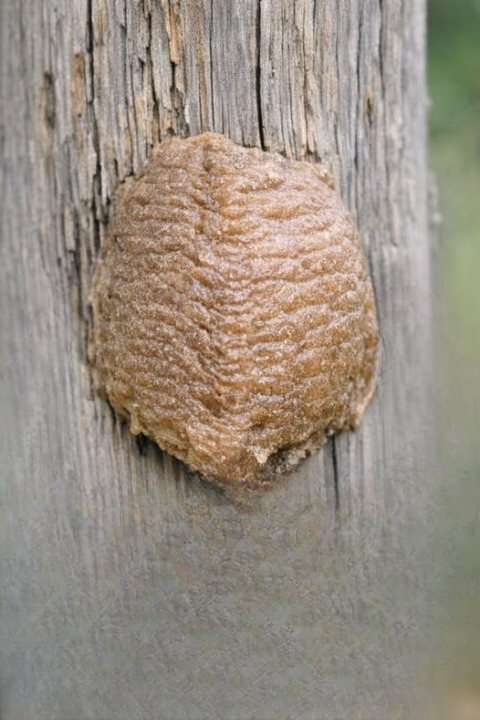
Discovering an unusual, foam-like brown cluster attached to your fence or garden structure can be surprising. At first glance, it might look like something that doesn’t belong there—or even something you should remove right away. However, in many cases, this strange-looking formation is not harmful at all. In fact, it’s often a positive sign that your outdoor space supports a healthy ecosystem.
What you’re likely seeing is an egg case, known as an ootheca, created by a praying mantis. While it may not look particularly appealing, this small structure plays an important role in the natural balance of your garden.
Why This Structure Looks So Unusual
A praying mantis egg case has a distinct appearance that can easily catch your attention. It is typically light brown to dark tan in color and has a hardened, slightly foamy texture. Most are around 1 to 2 inches in length and are attached securely to solid surfaces such as fence posts, tree branches, shrubs, or even outdoor furniture.
The texture may seem strange, but it serves a very practical purpose. The outer layer acts as a protective shell, helping shield the eggs inside from harsh environmental conditions. It provides insulation against cold temperatures, keeps moisture levels stable, and offers protection from predators that might otherwise feed on the eggs.
This natural design allows the eggs to survive through changing seasons, especially during colder months.
A Sign of a Healthy Garden
Although it might seem unusual at first, finding a mantis egg case in your yard is generally a good sign. It suggests that your outdoor environment is balanced and capable of supporting beneficial insects.
Praying mantises are known as natural predators. They feed on a wide range of insects, including flies, aphids, crickets, and caterpillars. Many of these insects can damage plants, vegetables, and flowers.
By allowing the egg case to remain where it is, you are essentially encouraging a natural form of pest control. Once the eggs hatch, the young mantises will begin feeding on other insects, helping to maintain a healthier garden without the need for chemical solutions.
What Happens Inside the Egg Case
Inside the ootheca, there are dozens—sometimes even hundreds—of tiny eggs. These eggs remain safely enclosed within the protective casing during colder weather.
As temperatures begin to rise in the spring, the eggs gradually develop and eventually hatch. When this happens, small mantises emerge from the case. These young insects are miniature versions of adult mantises and are ready to begin hunting almost immediately.
This process helps regulate insect populations naturally, contributing to the overall balance of your garden ecosystem.
Is It Something to Worry About?
There’s no need for concern if you find one of these egg cases in your yard. They are completely harmless to people and pets. They do not sting, spread illness, or cause damage to structures.
In fact, removing or destroying an egg case can reduce the number of beneficial insects in your garden. Since mantises help control other insect populations, keeping them around can be beneficial in the long run.
When and How to Move It (If Necessary)
In most situations, it’s best to leave the egg case exactly where you found it. However, if it’s located in an area where it could be easily damaged—such as on a frequently used gate or walkway—you may consider relocating it carefully.
If you do need to move it, here are a few simple guidelines:
- Gently cut or remove the small branch or surface it is attached to
- Place it in a sheltered location, such as within a shrub or a quiet corner of your garden
- Keep it positioned upright to maintain its natural orientation
- Secure it lightly so it doesn’t fall or get disturbed
It’s important to handle it with care. Avoid crushing, scraping, or exposing it to extreme conditions, as this could damage the eggs inside.
How to Tell It Apart from Similar Objects
Mantis egg cases are sometimes confused with other natural formations, such as wasp nests or certain types of fungi. However, there are a few key differences that can help you identify it correctly:
- Mantis egg case: Firm, foam-like texture with an elongated shape and subtle ridges
- Wasp nest: Papery structure with visible hexagonal cells
- Fungus: Usually softer, irregular in shape, and may appear moist or spongy
Recognizing these differences can help you better understand what you’re seeing and avoid unnecessary concern.
A Small Detail with a Bigger Purpose
What may initially seem like an odd or out-of-place object is actually a fascinating example of how nature quietly works in the background. That small cluster on your fence is a temporary home for a future generation of beneficial insects.
If left undisturbed, it can provide you with a unique opportunity to observe nature up close. In the spring, you might witness dozens of tiny mantises emerging from the case—a brief but remarkable moment that highlights the complexity and beauty of the natural world.
Instead of viewing this foam-like structure as something to remove, it can be helpful to see it as a sign that your garden is thriving. Praying mantises contribute to a balanced environment by naturally managing insect populations.
By allowing the egg case to remain, you’re supporting a simple yet effective ecological process. Sometimes, the most unusual discoveries in your backyard turn out to be the most beneficial ones.
Observing the Hatching Process
If you’re lucky enough to have a mantis egg case in your yard, one of the most fascinating experiences is witnessing it hatch. This usually happens in mid to late spring, depending on your local climate and temperatures.
When the time is right, the egg case will begin to open along tiny seams. From these openings, dozens of tiny mantises slowly emerge. At first, they may appear clustered together, almost like a moving mass. Within a short time, however, they begin to disperse, spreading out into the surrounding plants and garden areas.
Each young mantis is independent from the moment it hatches. There is no parental care, and they immediately begin searching for food. Despite their small size, they are capable hunters and will start feeding on very small insects right away.
Watching this process can offer a unique glimpse into the life cycle of beneficial insects and the quiet complexity of your backyard environment.
How to Encourage a Mantis-Friendly Garden
If you find a mantis egg case, you may already have a garden that supports helpful wildlife. Still, there are a few simple steps you can take to make your space even more welcoming:
- Limit pesticide use: Chemical sprays can harm not only harmful insects but also beneficial ones like mantises
- Provide plant diversity: A mix of flowers, shrubs, and greenery creates a habitat that attracts a variety of insects
- Leave some natural areas: Small sections of your yard that are less maintained can serve as shelter for insects
- Add water sources: A shallow dish of water or a small garden feature can support many forms of wildlife
These small adjustments can help create a balanced environment where helpful insects thrive naturally.
Common Misunderstandings
It’s easy to misinterpret unusual natural formations, especially when they appear suddenly or look unfamiliar. Many people assume that anything strange on a fence or plant must be harmful or invasive.
However, mantis egg cases are a good reminder that not everything unusual is a problem. In many cases, these small discoveries are signs of a functioning ecosystem. Learning to recognize them can help reduce unnecessary worry and encourage a more thoughtful approach to nature.
Another common concern is that too many mantises might become an issue. In reality, their population tends to regulate itself based on available food sources. They do not overrun gardens or create imbalances when left alone.
Seasonal Changes and What to Expect
As the seasons progress, the egg case itself will eventually become empty after the young mantises have hatched. You may notice small openings or cracks where they emerged.
Over time, the casing may dry out further, fade in color, or even fall apart naturally. This is completely normal and part of the life cycle. There is no need to remove it unless you prefer to do so for aesthetic reasons.
Meanwhile, the young mantises will continue to grow throughout the warmer months. As they mature, they will become more visible and easier to recognize, especially as they take on the familiar shape of adult mantises.
A Simple Reminder of Nature’s Balance
Finding something unexpected in your backyard can spark curiosity, concern, or even a bit of discomfort. But moments like these also offer a chance to better understand the natural world.
That small, foam-like structure on your fence is more than just an oddity—it represents growth, survival, and the balance of life happening quietly around you.
By choosing to leave it undisturbed, you’re allowing nature to take its course in a positive way. Over time, what once seemed unusual may become something you look forward to seeing each year.
In the end, it’s a simple reminder that even the smallest details in your yard can have a meaningful purpose.