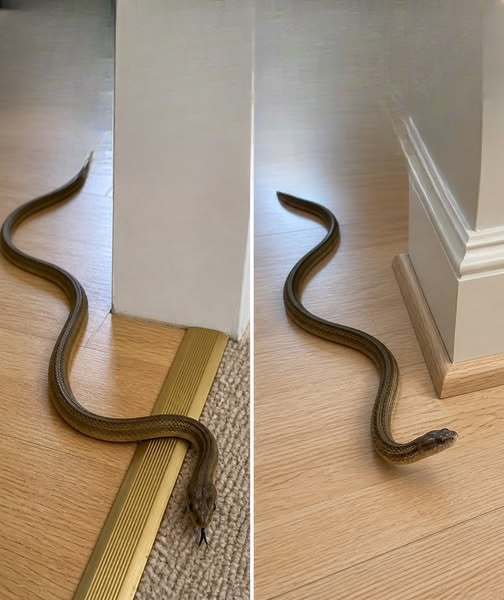
Imagine walking through your home late at night, flipping on the hallway light, and suddenly spotting a snake on the floor. It’s the kind of moment that instantly triggers fear, confusion, and a rush of adrenaline. For many people, discovering a snake indoors is one of the most unsettling situations imaginable.
While it may feel like a nightmare, the reality is that snakes sometimes enter homes for very practical reasons. They are not there to scare you or cause harm—they are simply trying to survive. Understanding why snakes come inside and knowing how to respond can make all the difference between panic and safe, controlled action.
Why Snakes Enter Homes in the First Place
Snakes do not randomly wander into houses. In nearly every case, their behavior is driven by basic survival needs such as food, shelter, and temperature control.
1. Food Sources Attract Them
One of the most common reasons snakes enter homes is the presence of prey. If your home has mice, rats, or even large numbers of insects, it becomes an attractive hunting ground.
Rodents leave behind scent trails and nesting areas, which snakes can detect easily. To a snake, your home may appear to be a reliable food source rather than a place to avoid.
2. They’re Looking for Shelter
Snakes prefer dark, quiet, and undisturbed environments. Areas like basements, attics, garages, and storage spaces provide ideal hiding spots.
Cluttered spaces make it even easier for them to remain unnoticed. Boxes, piles of clothes, or unused furniture can quickly turn into perfect hiding zones.
3. Weather Drives Them Indoors
Extreme weather conditions are another major factor.
- Hot weather: Snakes may seek cooler indoor areas, especially damp places like bathrooms or basements.
- Cold weather: As cold-blooded animals, snakes look for warmth. Heated homes become very attractive during colder months.
- Heavy rain or flooding: Snakes may enter homes to escape water and find dry ground.
In these situations, your home becomes a temporary refuge—not a permanent destination.
Are Snakes in the House Dangerous?
Not all snakes are dangerous. In fact, many common species are completely non-venomous and actually beneficial. They help control pests like rodents and insects.
However, the problem is that most people cannot quickly identify whether a snake is harmless or potentially dangerous. Because of this uncertainty, it is always safest to treat every encounter with caution.
Even non-venomous snakes can bite if they feel threatened, especially if someone tries to handle or corner them.
What You Should Do Immediately If You See a Snake
Your reaction in the first few moments is critical. Acting calmly and carefully can prevent injury and keep the situation under control.
1. Stay Calm and Keep Distance
It’s natural to feel afraid, but sudden movements can provoke the snake. Slowly step back and give it space.
2. Do NOT Try to Handle It
Many bites happen when people attempt to catch or kill snakes. Avoid touching it, trapping it yourself, or getting too close.
3. Contain the Area if Possible
If you can safely do so:
- Close the door to the room
- Block gaps under doors
- Keep the snake confined to one space
This makes it easier for professionals to handle the situation.
4. Keep Children and Pets Away
Immediately move everyone to a safe area. Curious pets and children are especially at risk because they may approach the snake without understanding the danger.
5. Call Professionals
Contact:
- Animal control
- Wildlife removal services
- Pest control experts
These professionals have the training and equipment needed to remove the snake safely without harm to anyone involved.
What NOT to Do
Avoid these common mistakes:
- Don’t try to kill the snake
- Don’t throw objects at it
- Don’t attempt DIY removal
- Don’t assume it’s harmless
These actions increase the risk of bites and make the situation more dangerous.
How to Prevent Snakes from Entering Your Home
Once the snake is gone, prevention becomes the top priority. Taking a few simple steps can significantly reduce the chances of another encounter.
1. Seal All Entry Points
Inspect your home carefully for openings such as:
- Cracks in the foundation
- Gaps under doors
- Holes around pipes and vents
Use caulk, weatherstripping, or mesh to seal these areas.
2. Eliminate Food Sources
If snakes are entering your home, there’s a good chance prey is already there.
- Use pest control to eliminate rodents
- Store food properly
- Keep garbage sealed
No food means less reason for snakes to stay.
3. Reduce Clutter
Snakes love hidden spaces. Keeping your home organized removes potential hiding spots.
- Clean storage areas
- Avoid stacking unused items
- Keep floors clear
4. Maintain Your Yard
Outdoor conditions play a huge role in attracting snakes.
- Keep grass short
- Trim bushes and hedges
- Remove woodpiles and debris
- Clear leaf buildup
A clean yard makes your property less appealing.
5. Consider Natural Deterrents
Some homeowners use plants believed to repel snakes, such as:
- Lemongrass
- Marigolds
- Wormwood
While these may help slightly, they are not as effective as sealing entry points and controlling pests.
Why Snakes Are Actually Helpful (In Nature)
Although they can be frightening, snakes play an important role in the ecosystem.
They help:
- Control rodent populations
- Reduce insect infestations
- Maintain ecological balance
This is why professionals aim to remove and relocate snakes rather than harm them.
Final Thoughts: Stay Calm, Stay Prepared
Finding a snake in your home is a shocking experience, but it doesn’t have to turn into a dangerous one.
The key points to remember are:
- Snakes enter homes for survival—not aggression
- Most are not dangerous, but caution is always necessary
- Never attempt to handle a snake yourself
- Professional removal is the safest option
- Prevention is the best long-term solution
With the right knowledge and preparation, you can handle the situation safely and reduce the chances of it happening again.
Your home should feel secure—and with a few simple steps, you can make sure it stays that way.
Common Places Snakes Hide Inside a Home
After entering a house, snakes rarely stay in open areas for long. They instinctively seek out hidden, low-traffic spaces where they feel safe. Knowing where they are most likely to hide can help you stay alert and avoid unexpected encounters.
Some of the most common indoor hiding spots include:
- Behind appliances like refrigerators, washing machines, and ovens
- Inside closets, especially those filled with boxes or clothing
- Under beds, couches, or large furniture
- In basements, crawl spaces, and attics
- Near water sources such as sinks, bathtubs, or floor drains
Snakes prefer areas that are quiet, dark, and slightly warm. If you suspect one may still be inside your home, avoid reaching into tight or hidden spaces without checking first.
Signs That a Snake Might Be Nearby
In some cases, you may not see the snake directly—but there can be warning signs that one has been inside your home.
Watch for:
- Unusual droppings that resemble those of rodents but may contain hair or bone fragments
- Shed snake skin, which can appear in corners or hidden areas
- A sudden drop in rodent activity (snakes may already be feeding on them)
- Strange, subtle movement sounds in walls or under flooring
While these signs don’t always confirm the presence of a snake, they are strong indicators that something may be sharing your space.
When to Take Immediate Action
Not every situation requires emergency response, but certain conditions should be treated as urgent.
You should act immediately if:
- The snake appears large or aggressive
- You cannot clearly see where it went
- It is located near sleeping areas or children’s rooms
- Anyone in the home feels unsafe or panicked
In these situations, it’s best to leave the area and wait for professionals rather than trying to manage the situation yourself.
How Professionals Handle Snake Removal
Wildlife experts and animal control teams follow a careful and structured approach when removing snakes from homes.
Their process usually includes:
- Assessment – Identifying the species and level of risk
- Containment – Safely isolating the snake’s location
- Removal – Using specialized tools to capture it without harm
- Relocation – Releasing the snake into a suitable natural environment
- Inspection – Checking your home for entry points and risk factors
This method ensures both your safety and the protection of the animal.
Long-Term Safety Tips for Homeowners
Preventing future encounters requires consistency. A one-time fix is rarely enough if the environment still attracts snakes.
Here are a few long-term habits that can help:
- Regularly inspect your home’s exterior for damage or gaps
- Keep storage areas clean and well-lit
- Avoid leaving pet food outside overnight
- Install door sweeps to block small openings
- Use proper drainage to prevent moisture buildup
Small maintenance steps can make a significant difference over time.
Understanding Fear vs. Reality
Fear of snakes is incredibly common, and for many people, it is deeply instinctive. However, understanding their behavior helps replace fear with awareness.
Snakes do not:
- Chase humans
- Enter homes intentionally to harm people
- Attack without feeling threatened
Most encounters happen because the snake is startled or feels trapped. By staying calm and giving it space, you greatly reduce the risk of any negative outcome.
Final Reminder: Awareness Is Your Best Protection
The idea of a snake inside your home can feel overwhelming, but knowledge turns fear into control.
By understanding why snakes enter, knowing how to respond, and taking preventative steps, you can protect your home and your peace of mind.
The key is simple:
Stay calm.
Keep your distance.
Call professionals.
Prevent future entry.
With the right approach, even the most unsettling situation can be handled safely and effectively.