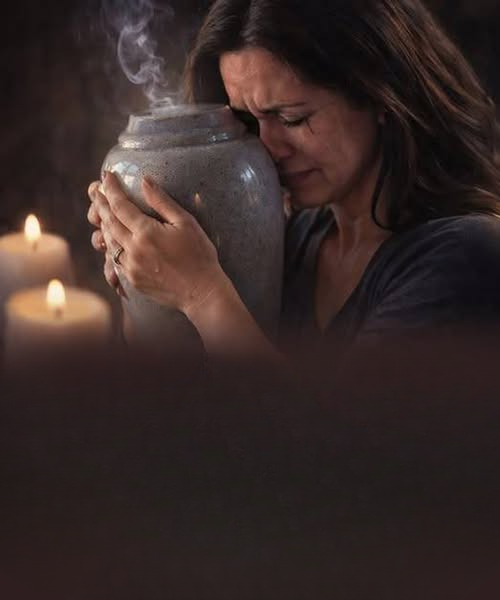
Receiving the ashes of someone you love is often far more emotional than people expect. Even after the funeral ends and the condolences fade, holding an urn in your hands can suddenly make the loss feel permanent in a way words never could. For many families, that moment becomes the beginning of an entirely new question: what should happen next?
Some people immediately know what feels right. Others feel completely uncertain.
As cremation becomes increasingly common across the world, more families are choosing personalized ways to honor loved ones. Ashes may be kept at home, buried in memorial gardens, scattered in meaningful places, or divided among relatives. There is no single universal approach, and opinions can vary dramatically depending on culture, religion, personality, and emotional needs.
For some, keeping ashes nearby creates comfort during grief. The presence of the urn can feel grounding, especially during the difficult months after loss. A photograph beside the urn, a candle lit in the evening, or a quiet moment spent reflecting can help people maintain a sense of connection while adjusting to life without the person physically present.
Others experience the opposite reaction.
Seeing the ashes every day may make it difficult to move forward emotionally. Certain people describe feeling “stuck” in grief, as though the mourning process cannot fully settle while the remains remain inside the home. Neither response is wrong. Grief affects everyone differently, and emotional reactions often shift over time.
Religious and spiritual beliefs also shape how families approach cremated remains.
In Christianity, especially within Catholic traditions, cremation is accepted by many churches, though ashes are generally encouraged to be placed in sacred or respectful locations such as cemeteries or columbariums. The emphasis is often on dignity, remembrance, and treating human remains with care rather than keeping them casually stored away.
In Hindu traditions, cremation carries deep spiritual meaning connected to the soul’s transition after death. Ashes are often scattered in flowing water, symbolizing release and continuation. In Buddhism, practices vary widely, but many teachings emphasize balancing remembrance with acceptance and non-attachment.
Across many Asian cultures, ancestor remembrance remains central to family life. Some households maintain memorial spaces where loved ones are honored through photographs, offerings, or prayers. In these traditions, remembrance is viewed not as unhealthy attachment, but as an ongoing expression of family respect.
Modern grieving practices, however, are becoming increasingly personal.
Today, some families transform ashes into memorial jewelry, glass art, or keepsakes. Others scatter ashes in places connected to important memories — near oceans, forests, mountains, gardens, or hometowns. Some families delay making any decision at all, simply because they are not emotionally ready.
And that is more common than many people realize.
There is often pressure to “handle” grief correctly, but loss rarely follows a schedule. A person may initially want the ashes close, then later decide on burial or scattering years afterward. Emotional needs evolve, and decisions made during intense grief do not always have to be permanent.
Practical considerations matter too.
If ashes are kept at home, many funeral professionals recommend placing the urn somewhere secure, dry, and unlikely to be accidentally disturbed. Families with small children or pets may choose enclosed memorial cabinets or shelves. Others prefer temporary keepsake urns until a long-term decision feels right.
Legal rules can also differ depending on location. Certain countries or states regulate where ashes may be scattered, especially in public parks, waterways, or protected natural areas. Families planning ceremonies or memorial scatterings often benefit from checking local guidelines beforehand.
But beyond religion, law, or tradition, the deeper reality remains emotional.
Human beings struggle with absence.
An urn can represent comfort, unfinished grief, remembrance, guilt, closeness, or peace — sometimes all at once. For some families, the ashes symbolize continued love. For others, they represent the painful reality that life has changed forever.
That is why conversations around cremation can become surprisingly sensitive, even among close relatives. One person may view keeping ashes at home as loving and respectful, while another may feel the deceased deserves a more traditional resting place. These disagreements are usually not about the ashes themselves, but about different ways people process love, memory, and loss.
And perhaps that is the most important thing to understand.
There is no perfectly correct way to honor someone who mattered deeply.
Some people find healing through closeness.
Others find healing through release.
Some need a physical memorial.
Others carry remembrance quietly within themselves.
What matters most is intention — treating the memory of the person with care, dignity, and sincerity.
Because in the end, ashes are not really about death alone.
They are about the relationship that existed before the loss.
The moments shared.
The love that remains.
And the deeply human desire to keep that connection meaningful, even after goodbye.