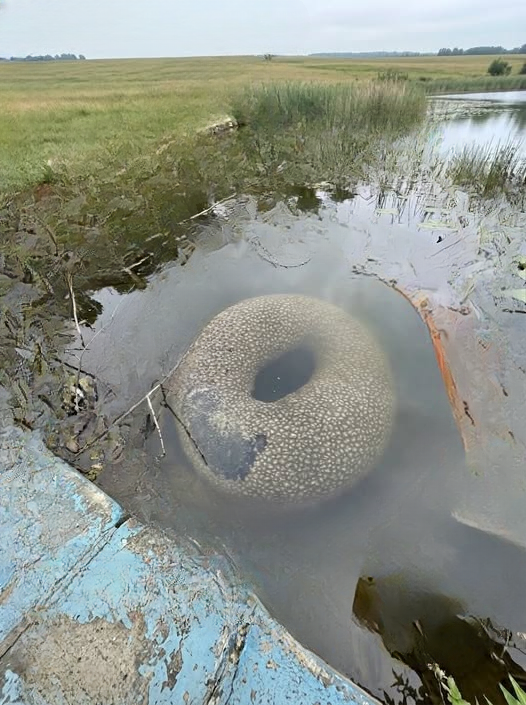
Some moments in life feel insignificant while they are happening, only to settle into memory later with surprising weight. A glance across a lake. A strange shape in the water. A silence shared among strangers. What should have been an ordinary afternoon walk became, for me, an unsettling lesson in fear, perception, and the extraordinary power of imagination.
It happened on a cool afternoon in the village, beside the artificial lake where people often walked to clear their minds. The water reflected the pale sunlight in soft ripples, and the entire scene felt calm in the predictable way small places often do. Nothing seemed unusual at first.
I had taken that path countless times before.
The walk was routine—quiet enough to think, peaceful enough to slow the constant noise in my head. Children occasionally rode bicycles nearby, older couples sat on benches overlooking the water, and fishermen sometimes stood motionless along the banks. It was the kind of place where very little ever happened.
But that afternoon, something interrupted the normal rhythm of the lake.
At first, it was only a shape.
Far out near the center of the water floated a dark circular object, partially submerged and strangely still. I noticed it only because the sunlight hit the water at the right angle, creating contrast against the surface. My eyes lingered longer than they normally would have.
Something about it felt wrong.
I stopped walking.
The object was too large to ignore yet too unclear to identify immediately. For a moment, I convinced myself it was probably nothing—a floating branch, perhaps, or debris carried by wind and rain. But the longer I looked, the stranger it appeared.
The shape seemed deliberate.
Watching it from a distance triggered a subtle but immediate discomfort that spread through me faster than logic could catch up. My stomach tightened. My breathing changed slightly. I could feel the strange alertness that appears when the brain quietly shifts from calm observation into threat assessment.
And then I noticed I was not the only one staring.
Several other people had gathered along the shoreline, all focused on the same object. No one spoke loudly. Conversations dropped into whispers. A strange tension settled over the small group without anyone directly acknowledging it.
That silence made everything worse.
Human beings are deeply influenced by collective emotion. When uncertainty spreads through a group, even silently, it amplifies individual fear. Seeing other people stare at the object confirmed my own unease. If everyone else felt unsettled too, then surely something about it really was disturbing.
The mind began filling the gaps immediately.
Maybe it was an injured animal trapped beneath the surface.
Maybe someone had dumped something dangerous into the lake.
Maybe it was part of some abandoned machinery drifting loose.
And because fear rarely stays rational for long, darker possibilities slowly emerged from the edges of imagination.
The object became mysterious simply because it lacked explanation.
That is one of the strangest things about the human mind: uncertainty often feels more threatening than reality itself. When we cannot identify something clearly, our brains instinctively begin constructing narratives to explain it. And those narratives are usually shaped more by fear than probability.
As the minutes stretched on, the atmosphere near the lake transformed completely.
The ordinary scenery no longer felt comforting. The stillness of the water became eerie. The shadows beneath nearby trees appeared darker than before. Every small sound—the movement of leaves, distant birds, footsteps on gravel—suddenly felt amplified.
The object itself had not changed.
But our perception of it had.
That realization fascinates me now far more than the object ever did.
A harmless shape floating in water had altered the emotional atmosphere of an entire group of strangers. Without speaking to one another directly, we had collectively created tension from ambiguity alone.
Then came the interruption that dissolved everything almost instantly.
An older man approached from farther down the walking path, hands folded behind his back, moving with the relaxed confidence of someone entirely unaffected by the unease surrounding the lake. He looked toward the water, squinted briefly, and laughed.
Not nervously.
Not cautiously.
Just casually.
“It’s an old inner tube,” he said.
A few people blinked in confusion.
He explained that the rubber tube had likely drifted from a nearby storage area years ago and become covered in algae, moss, and lake residue over time. The discoloration and warped shape made it look strange from a distance, especially in shifting sunlight.
And just like that, the mystery vanished.
The object remained exactly where it had been moments earlier.
But emotionally, everything changed.
People exhaled. Some laughed awkwardly. Others immediately looked embarrassed by how tense they had become. A few quietly walked away as if trying to disconnect themselves from the experience altogether.
Relief moved through the group quickly—but not completely.
What surprised me most was how the discomfort lingered even after the explanation arrived. Rationally, I understood there had never been danger. Emotionally, however, the tension did not disappear immediately.
The body often reacts faster than logic can recover.
Even once the mind understands something is harmless, traces of fear can remain behind like echoes.
That lingering sensation stayed with me long after I left the lake that day.
In the following weeks, I found myself thinking less about the object itself and more about what the experience revealed about human psychology. It exposed how quickly perception can shift under uncertainty, how easily ordinary environments become unsettling when explanation disappears.
Fear does not always require a real threat.
Sometimes it only requires absence of certainty.
I also began noticing how often this happens in everyday life beyond that afternoon at the lake.
A strange noise in the middle of the night becomes an intruder before becoming a loose pipe.
An unread message becomes bad news before becoming a dead phone battery.
A shadow becomes danger before becoming a harmless object viewed at the wrong angle.
The mind constantly builds stories to protect us from uncertainty. That instinct is ancient and deeply human. In many situations, it serves an important survival purpose. But it also means we often suffer emotionally from possibilities that never truly existed.
The floating inner tube became memorable not because it was dangerous, but because it briefly activated something primal inside everyone watching it.
The unknown.
That afternoon also taught me something unexpected about shared emotion. None of us knew each other standing near the shoreline, yet we experienced the same tension together almost instantly. Fear can spread socially without words. Humans mirror one another emotionally in subtle ways—through posture, silence, eye movement, and attention.
One uncertain glance becomes collective suspicion.
One unexplained object becomes communal anxiety.
It reminded me how fragile our sense of normalcy can be. The lake had looked peaceful moments earlier. Nothing physically changed except our interpretation of what we saw.
Yet perception altered reality emotionally.
Even now, whenever I walk near water and notice something floating in the distance, I feel a faint echo of that afternoon. Not panic exactly—just awareness. A small memory resurfacing before logic catches up.
And perhaps that is what stayed with me most: not the fear itself, but the realization that the mind never simply observes the world objectively. It interprets constantly. It fills emptiness with narrative. It searches for meaning even in silence.
Sometimes those meanings are harmless.
Sometimes they become terrifying.
And sometimes, as with the abandoned inner tube drifting quietly across the lake, they reveal far more about us than about the object we fear.