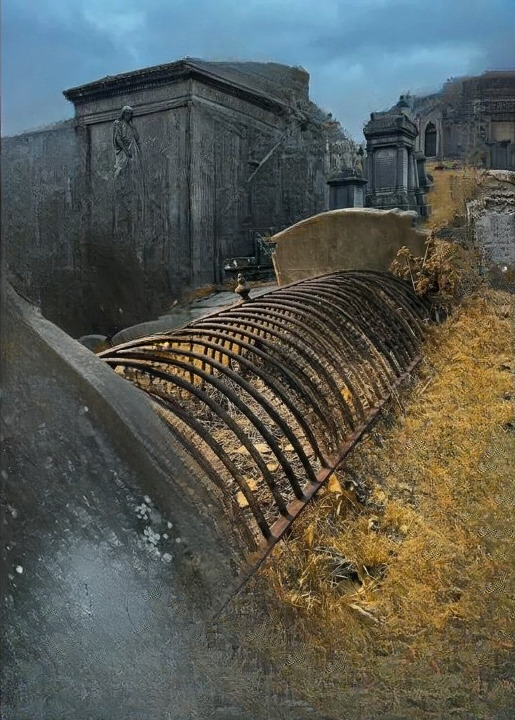
For centuries, cemeteries were meant to be quiet places of remembrance, but in parts of Europe during the 1700s and 1800s, some graves were covered with heavy iron structures that look strange to modern eyes. These were not decorative features or religious symbols. They were practical security devices known as mortsafes, designed for one specific purpose: to protect graves from being disturbed.
At the time, a serious and unsettling problem existed across many regions—grave robbing. Medical schools were rapidly expanding, and the study of human anatomy was becoming increasingly important for scientific progress. However, there was a major shortage of legally available bodies for dissection. Because of strict burial laws and limited donation systems, medical institutions often could not obtain enough cadavers through legal means. This created a gap between medical demand and legal supply.
Unfortunately, that gap was sometimes filled illegally. Criminal groups known as “resurrectionists” or body snatchers would secretly dig up recently buried bodies and sell them to medical schools. This practice caused widespread fear among ordinary families. For many people, the idea that a loved one might not remain undisturbed after burial was deeply distressing. Cemeteries, which were supposed to represent peace and final rest, became places of anxiety and nighttime vigilance.
To respond to this fear, communities developed protective measures. One of the most effective was the mortsafe. These were heavy iron cages placed directly over fresh graves. Their design varied, but most consisted of thick metal bars, reinforced frames, and locking mechanisms that made quick removal nearly impossible. Some were so heavy that multiple people were needed just to position them correctly.
Mortsafes were not meant to remain permanently. In most cases, families or cemetery caretakers would leave them in place for several weeks after burial. This waiting period was important because body snatchers typically targeted graves shortly after burial, before natural decomposition had progressed. Once the risk period had passed, the iron cover could be removed and reused for another burial.
In some communities, protection went even further. Families would hire guards or organize informal night watches to patrol graveyards. Neighbors sometimes took turns staying awake near burial sites, especially in areas where grave robbing had become common. Cemeteries were no longer only sacred spaces—they also became places requiring community defense.
Although these practices may seem unusual today, they reflect the level of concern people felt at the time. The protection of graves was not driven by superstition, but by a very real fear rooted in the medical and legal realities of the era. It also shows how societies respond when scientific advancement moves faster than ethical or legal systems can adapt.
Over time, this situation began to change. Governments gradually introduced laws that allowed donated bodies to be used for medical education. Some regions passed legislation permitting unclaimed bodies from hospitals or workhouses to be used legally for anatomical study. As these reforms expanded, the illegal trade in bodies declined significantly.
With the rise of modern medical ethics and regulated donation systems, the need for mortsafe protection disappeared. Cemeteries became more secure through law enforcement and social change rather than physical barriers. Eventually, the iron covers were no longer necessary and fell out of use.
Today, the remaining mortsafes can still be found in some historic cemeteries, particularly in parts of the United Kingdom. They are often preserved as historical artifacts rather than functional objects. To modern visitors, they may look heavy, cold, or even unsettling, but they represent a very human story—one shaped by fear, grief, science, and the struggle to protect dignity after death.
Looking at them now offers a window into a time when communities had to physically guard the dead to ensure peace for the living. They stand as reminders of how far medical science and legal protections have come, and how societies evolve to solve problems that once seemed unavoidable.
In the end, iron-covered graves were not symbols of mystery or superstition. They were practical solutions to a very specific historical problem—one that connected medicine, law, and human emotion in a way that left a lasting mark on cemetery history.