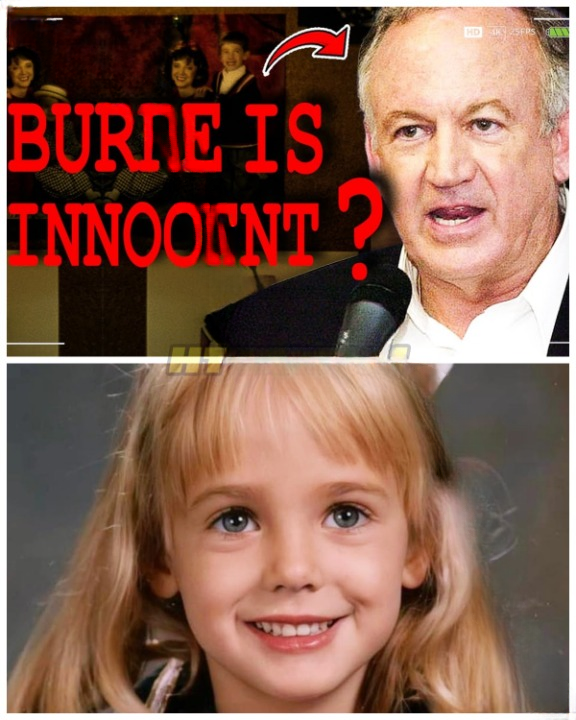
Nearly three decades after the death of JonBenét Ramsey shocked the United States, the case continues to generate worldwide attention, online speculation, and renewed forensic interest. In recent months, viral headlines and social media posts have once again pushed the investigation back into public conversation, claiming that a “shocking new clue” could finally change everything investigators thought they knew.
Some online articles suggest that former detectives now believe major mistakes were made during the original investigation and that overlooked evidence may hold the key to solving one of America’s most famous unsolved murder cases.
But how much of this is confirmed fact — and how much is online exaggeration?
While it is true that investigators and former law enforcement officials have acknowledged problems during the early stages of the case, authorities have not announced that the mystery has been solved. No official arrest has been made, and no suspect has been publicly confirmed through forensic evidence.
Still, advances in DNA technology and growing public interest continue fueling hope that answers may someday emerge.
The Crime That Captivated the Nation
JonBenét Ramsey was just six years old when she was found dead inside her family’s Boulder, Colorado home on December 26, 1996.
Earlier that morning, her mother discovered a lengthy ransom note demanding money and claiming the child had been kidnapped. Hours later, JonBenét’s father discovered her body in the basement of the home.
The case immediately became national news.
Because of the child’s participation in beauty pageants, the family’s public profile, and the unusual circumstances surrounding the crime scene, the investigation quickly turned into one of the most heavily scrutinized criminal cases in modern American history.
Television networks covered the case nonstop. Newspapers published endless theories. Public speculation exploded.
Yet despite decades of investigation, the case remains officially unsolved.
Why the Investigation Became So Controversial
Part of the reason the JonBenét Ramsey case remains so debated is because of the confusion surrounding the earliest hours of the investigation.
Many former investigators and outside experts have argued that mistakes at the crime scene complicated the case from the beginning.
Among the most discussed concerns:
- people moved freely through the home before evidence was fully secured,
- potential contamination risks emerged,
- and investigators struggled with conflicting theories early on.
Former Boulder Police Chief Mark Beckner has publicly acknowledged that certain investigative decisions made during the first hours of the case created long-term challenges.
Crime scene preservation is critical in homicide investigations. Once evidence becomes contaminated, moved, or compromised, recovering accurate forensic conclusions becomes significantly more difficult.
This reality has fueled decades of debate about whether crucial evidence may have been lost or overlooked.
The Viral Claims Circulating Online
Recently, online posts have reignited public interest by claiming:
- “detectives missed something huge,”
- “new evidence changes everything,”
- or “a shocking clue finally exposes the truth.”
These headlines often use dramatic language designed to provoke emotional reactions and encourage clicks.
However, many of these claims stretch far beyond what authorities have officially confirmed.
At this time:
- investigators have not publicly identified a killer,
- no confirmed arrest has been announced,
- and no official statement says the case has been solved.
The renewed attention largely comes from ongoing forensic reviews and public discussion — not from a definitive law enforcement breakthrough.
Why DNA Evidence Remains Central to the Case
One of the most important aspects of the investigation continues to involve DNA evidence recovered from JonBenét’s clothing.
For years, investigators analyzed unidentified male DNA found during forensic testing.
Some believe the DNA supports the theory that an unknown intruder committed the crime. Others caution that interpreting trace DNA is extremely complicated and does not automatically identify a killer.
Modern forensic science has made tremendous advances since the late 1990s.
Today, laboratories can:
- analyze smaller DNA samples,
- separate mixed profiles more effectively,
- and use advanced genetic genealogy techniques unavailable during the original investigation.
Because of these improvements, cold cases once considered impossible to solve are now being reopened successfully across the country.
The Rise of Genetic Genealogy
Public interest in the JonBenét Ramsey case has increased partly because of recent breakthroughs in other cold-case investigations.
Genetic genealogy gained worldwide attention after investigators used it to identify the Golden State Killer decades after his crimes.
This process combines:
- DNA analysis,
- ancestry databases,
- and family-tree research
to identify possible suspects through distant relatives.
The success of these methods has raised hopes that similar technology could eventually produce meaningful breakthroughs in the Ramsey investigation.
However, experts caution that not every DNA sample is suitable for genealogical analysis.
Challenges may include:
- degraded samples,
- contamination concerns,
- insufficient DNA quantity,
- or uncertainty about how the DNA arrived at the scene.
The Complexity of Forensic Evidence
Many people assume DNA automatically provides clear answers.
Real investigations are often far more complicated.
DNA evidence can identify that someone’s genetic material was present, but investigators must still determine:
- how it got there,
- when it arrived,
- and whether it is connected directly to the crime itself.
This distinction is critical.
A DNA profile alone does not automatically explain:
- motive,
- timeline,
- or criminal responsibility.
That complexity is one reason the JonBenét Ramsey case remains unresolved despite decades of forensic review.
Media Coverage and Public Fascination
The Ramsey case became one of the earliest examples of modern true-crime obsession.
During the late 1990s:
- cable television expanded rapidly,
- tabloid journalism thrived,
- and public fascination with sensational criminal cases intensified.
The investigation became more than a police case — it evolved into a national cultural phenomenon.
Over the years:
- documentaries,
- books,
- podcasts,
- and television specials
have repeatedly revisited the mystery.
Social media has now accelerated this cycle even further.
Today, dramatic headlines and emotional claims can spread globally within minutes, often blurring the line between verified reporting and speculation.
The Human Cost Behind the Headlines
Behind every theory and online debate is the reality that a child lost her life and a family spent decades under public scrutiny.
The Ramsey family faced enormous media attention, speculation, and criticism for years.
Even without criminal charges against the parents, public suspicion persisted through repeated television coverage and sensational reporting.
High-profile cases often create a difficult balance between public interest and personal tragedy.
As years pass, the emotional weight of unresolved cases can continue affecting families, investigators, and communities alike.
Why Cold Cases Are So Difficult to Solve
Cold-case investigations face unique challenges that grow over time.
As years pass:
- witnesses forget details,
- evidence deteriorates,
- records become harder to verify,
- and investigative leads disappear.
Additionally, forensic standards and investigative procedures from the 1990s differ greatly from modern practices.
Mistakes that may seem obvious today were not always fully understood at the time.
This is why many cold cases require repeated re-analysis as technology improves.
What Investigators Continue Examining
Although officials have not announced a solution, reports indicate investigators continue:
- reviewing evidence,
- conducting forensic testing,
- and re-examining investigative materials.
Authorities have emphasized that the case remains active.
This ongoing work reflects a broader trend across law enforcement, where advances in technology are helping reopen older investigations once considered impossible to solve.
Why the Public Still Wants Answers
Part of the enduring fascination with the JonBenét Ramsey case comes from the human need for closure.
Unsolved crimes leave unanswered questions that continue lingering for decades.
People naturally want to know:
- who committed the crime,
- why it happened,
- and whether justice will ever be achieved.
The combination of mystery, tragedy, media coverage, and forensic uncertainty has kept the case alive in public consciousness for nearly 30 years.
The Difference Between Speculation and Confirmation
The internet often rewards emotional headlines and dramatic storytelling.
Phrases like:
- “everything changes,”
- “haunting discovery,”
- or “the truth is finally exposed”
generate strong reactions online.
But official criminal investigations rely on evidence, verification, and legal standards — not viral speculation.
At this moment:
- the case remains unsolved,
- DNA testing continues,
- and no definitive public breakthrough has been confirmed.
Understanding that distinction is essential when discussing high-profile investigations.
Final Thoughts
The renewed attention surrounding the JonBenét Ramsey case highlights both the power of modern forensic science and the dangers of sensational online speculation.
While former investigators have acknowledged early mistakes and forensic technology continues evolving, authorities have not announced that the case has been solved.
Still, the possibility of future breakthroughs remains real.
Advances in genetic genealogy and DNA analysis are transforming cold-case investigations across the country, offering hope in cases once considered impossible to crack.
For now, however, the JonBenét Ramsey investigation remains one of America’s most enduring unsolved mysteries — a case where questions continue outlasting answers.
And until verified evidence produces a definitive conclusion, separating facts from viral exaggeration remains more important than ever.