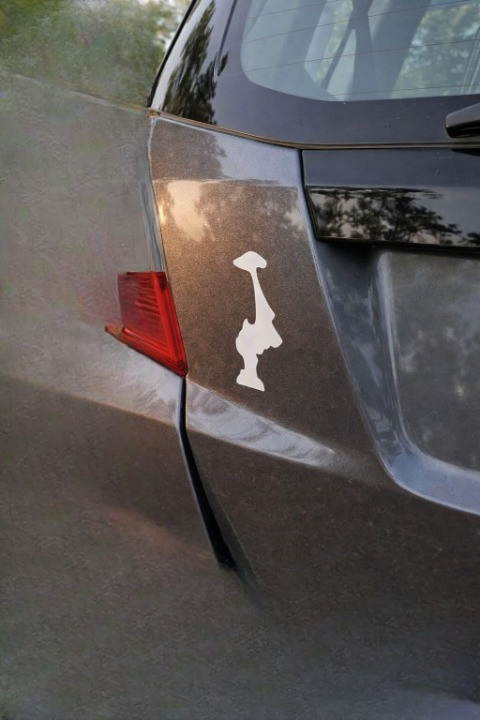
Across highways, coffee shop parking lots, hiking trailheads, and crowded city streets throughout the Pacific Northwest, a strange symbol has quietly become impossible to ignore. It appears on pickup trucks, laptops, water bottles, ski helmets, and old Subarus coated in mountain dust: the outline of Washington state turned completely upside down.
To outsiders, it often looks accidental.
Some assume the sticker was applied incorrectly. Others think it’s a printing mistake or a joke with no real meaning behind it. But among many Washington locals, the inverted state outline has slowly evolved into something much more interesting — a subtle symbol tied to regional identity, local humor, and a shared appreciation for Pacific Northwest culture.
Unlike loud slogans or oversized decals, the upside-down sticker works almost like a quiet inside joke. People who recognize it immediately understand the reference, while everyone else is left confused.
And that confusion is part of the appeal.
The Rise of Minimalist State Pride
The trend traces back to the growing popularity of minimalist state-outline decals during the early 2010s. Across the United States, people began displaying simple outlines of their home states on cars, phone cases, and outdoor gear as a way to represent where they came from.
Washington’s shape quickly became one of the most recognizable.
Its clean rectangular structure, coastal edge, and distinctive Puget Sound curves made it visually unique and easy to identify from a distance. Soon, local artists and independent designers started experimenting with the image in creative ways.
At some point, someone flipped it upside down.
What began as a playful design variation unexpectedly gained traction, especially among younger residents, outdoor enthusiasts, college students, and longtime locals who appreciated subtle forms of regional expression.
Instead of displaying state pride in a traditional way, the upside-down version felt more understated and uniquely Pacific Northwest.
A Symbol of Local Humor
Part of the sticker’s popularity comes from the region’s famously dry sense of humor.
Washington residents are known for embracing gloomy weather with a kind of sarcastic resilience. Endless rain, gray skies, and months of cloud cover are often joked about as defining features of local life.
Over time, one explanation for the upside-down state became especially popular:
“The rain got so heavy the whole state flipped over.”
The joke perfectly matches the Pacific Northwest personality — self-aware, slightly ironic, and rooted in shared experience. For locals who spend much of the year under overcast skies, the inverted map became a humorous badge of survival.
It quietly says:
“Yes, it rains constantly here. We’ve accepted it.”
More Than Just a Joke
While humor plays a big role, many people also connect the upside-down design to the region’s outdoor culture.
When flipped vertically, the shape of Washington takes on a surprisingly different appearance. Some people believe the inverted outline resembles a sharp mountain peak, echoing the dramatic alpine landscapes that dominate the Pacific Northwest horizon.
For residents surrounded by places like Mount Rainier, Mount Adams, and the Cascade Range, that interpretation feels fitting.
The Pacific Northwest has always maintained a deep connection to wilderness and outdoor life. Hiking, skiing, kayaking, climbing, and camping are not just hobbies for many residents — they are central parts of personal identity.
The upside-down sticker quietly reflects that culture without needing words or slogans.
The Appeal of Subtle Identity
Part of what makes the symbol so effective is its subtlety.
In an era dominated by loud online opinions, aggressive branding, and constant self-promotion, many people appreciate symbols that feel quieter and more personal. The inverted Washington decal doesn’t demand attention. It rewards recognition.
That low-key approach aligns strongly with the Pacific Northwest personality stereotype:
- Independent
- Slightly unconventional
- Environmentally aware
- Reserved but expressive
- Proud of local culture without being overly flashy
For many residents, the sticker represents belonging without needing explanation.
Social Media Helped Spread the Trend
Although the symbol began as a niche local design, social media helped it spread far beyond small circles.
Photos of upside-down Washington decals began appearing across Instagram, hiking forums, local clothing brands, and outdoor communities. Soon, the design started appearing on everything from hoodies and mugs to ski gear and camping equipment.
Local artists and small Pacific Northwest companies embraced the trend because it felt authentic compared to mass-produced tourist merchandise.
Unlike standard souvenir items, the upside-down state outline felt like something you only understood if you lived there long enough to “get it.”
That exclusivity made it more appealing.
Why People Love Small Regional Symbols
Cultural researchers often point out that small regional trends become powerful because they create shared identity.
Simple symbols can help people feel connected to a place, especially in areas with strong environmental or cultural character. In Washington, nature shapes daily life in a very visible way — from forests and mountains to rainstorms and coastlines.
The upside-down sticker reflects that connection indirectly.
It isn’t political.
It isn’t corporate.
It isn’t trying too hard.
Instead, it feels personal and local.
That’s why the trend continues to grow.
A Reminder That Meaning Evolves
What makes the inverted Washington symbol fascinating is that it never had one official meaning. It evolved naturally through local interpretation, humor, and shared culture.
For some people, it represents resilience through endless rainy seasons.
For others, it symbolizes outdoor adventure and mountain life.
And for many, it’s simply a quiet nod to Pacific Northwest identity.
That flexibility is part of why it has lasted.
The sticker proves that even something as simple as a flipped map can become meaningful when communities attach stories, humor, and identity to it over time.
More Than Just a Sticker
At first glance, the upside-down Washington decal seems insignificant — just another random trend attached to modern car culture.
But for many locals, it represents something deeper:
a shared understanding of place.
In a fast-moving world where trends constantly disappear, small regional symbols like this continue to matter because they create connection. They remind people that identity isn’t always expressed loudly. Sometimes it exists in tiny details only certain people notice.
And somewhere along a rainy Washington highway, another driver will spot that upside-down outline, smile quietly to themselves, and immediately understand exactly what it means.