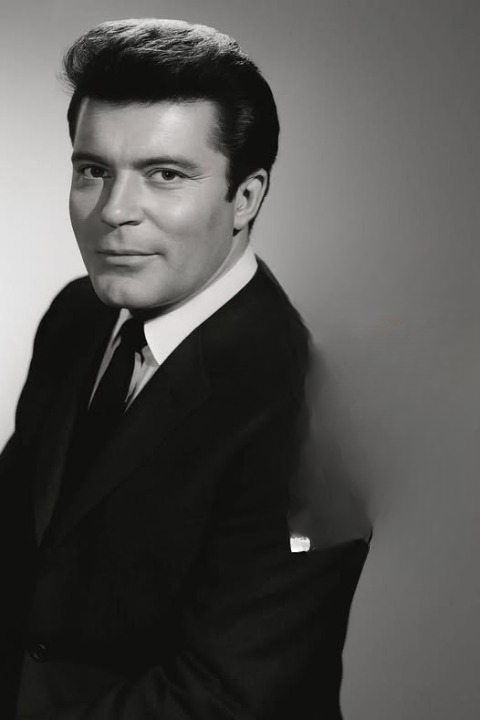
In an entertainment world that constantly chases youth and new trends, there is something almost shocking about artists who never truly disappear. Instead of fading away, they continue to stand as living proof that talent doesn’t expire with age. It evolves, deepens, and sometimes becomes even more powerful with time.
At the center of this rare group is Ray Anthony, a 103-year-old musical legend who represents one of the last living connections to America’s big-band era. His career stretches back to a time before modern pop, before rock and roll, and before television became a household standard. Yet his legacy still resonates today, not just as history—but as living culture.
A Living Bridge to Music History
Ray Anthony isn’t just a name from the past. He is a direct link to the golden age of swing orchestras, when live big-band music filled dance halls across America. His trumpet style and orchestral leadership helped define an entire generation of sound that shaped mid-20th-century entertainment.
What makes his longevity remarkable is not only that he lived through history—but that he remains part of its living memory.
Legends Who Redefined Aging in Entertainment
Surrounding him is an extraordinary group of performers who prove that creativity doesn’t end at retirement age. Each one represents a different era of film, television, or music history, and each continues to influence modern culture in unique ways.
Elizabeth Waldo dedicated her life not only to performance but also to preserving indigenous musical traditions. Her work ensured that cultural sounds and histories were not lost, turning her career into both art and historical preservation.
From early Hollywood, Karen Marsh Doll remains one of the last living connections to cinema’s earliest studio era. Her presence reflects a time when film production was transforming from silent storytelling into the foundation of modern Hollywood.
Television audiences still recognize June Lockhart, whose warm and steady performances helped define family entertainment during the golden age of TV. Her work remains timeless because it focused on comfort, sincerity, and emotional connection.
Similarly, Eva Marie Saint built a reputation for powerful yet subtle performances, showing that true acting depth often grows stronger with experience rather than fading over time.
Icons Who Continue to Inspire New Generations
Few entertainers embody lifelong joy like Dick Van Dyke. Known for his dancing, comedy, and infectious optimism, he remains a symbol of energy and positivity well into his later years.
Comedy legend Mel Brooks also continues to represent fearless creativity. His sharp humor and satirical brilliance reshaped modern comedy, and his influence still echoes through today’s entertainment industry.
Science fiction fans continue to celebrate William Shatner, whose career extended far beyond his iconic role as Captain Kirk. He remains active as a writer, performer, and cultural voice, constantly reinventing himself across decades.
And then there is Barbara Eden, whose charm and timeless screen presence continue to make her one of television’s most enduring figures.
Masters of Reinvention and Longevity
Some stars didn’t just stay relevant—they transformed their careers completely over time.
Clint Eastwood evolved from classic Western roles into one of Hollywood’s most respected directors, often exploring themes of aging, morality, and redemption in his later work.
Sophia Loren remained a global symbol of elegance while delivering deeply emotional performances that matured beautifully with age.
Michael Caine built a decades-long career defined by consistency and adaptability, becoming one of the most recognizable voices and faces in modern cinema.
Artists Who Combined Fame With Purpose
Many of these legends expanded their influence beyond entertainment alone.
Jane Fonda balanced acting with activism and fitness advocacy, continually reshaping her public identity across generations.
Julie Andrews transitioned into writing and mentoring after vocal challenges changed her performing career, showing resilience and grace beyond the stage.
Shirley MacLaine explored spirituality, philosophy, and storytelling alongside her acting legacy.
Al Pacino continued delivering intense and emotionally driven performances well into later life, maintaining his reputation as one of cinema’s most powerful actors.
Why These Legends Live So Long in Culture
The reason these artists remain relevant is not just fame—it’s adaptability.
Across their careers, they share a few key traits:
- Continuous creativity and curiosity
- Strong connection to their craft
- Willingness to evolve with new eras
- Emotional resilience through industry change
They didn’t stop participating in culture. They adjusted how they participated.
Living History, Not Just Memory
What makes these long-lived stars so powerful is that they are not just historical figures. They are living archives of entire entertainment eras.
Through them, audiences can still connect to:
- The swing and big-band era
- Early Hollywood studio filmmaking
- The rise of television
- The evolution of modern cinema
- Cultural shifts across the 20th and 21st centuries
Their presence turns history into something personal and human.
The Meaning of a Century-Spanning Career
A figure like Ray Anthony, now over 100 years old, represents more than just longevity. He represents continuity across eras that most people only read about.
He has lived through:
- The Great Depression
- World War II
- The birth of rock and roll
- The digital revolution
- The streaming age
Very few careers stretch across so many transformations in human culture.
Redefining What “Aging” Really Means
These legends challenge the idea that aging equals decline. Instead, they show a different truth: experience can deepen artistry.
In their later years, many of these performers demonstrate:
- Greater emotional depth
- Stronger interpretive skill
- Clearer artistic identity
- A deeper connection with audiences
Talent doesn’t fade—it matures.
Final Reflection
The 103-year-old star at the center of this story doesn’t “compete” with younger generations. He represents something entirely different.
He represents time itself.
And alongside him, a generation of iconic performers continues to prove that creativity does not end with age—it transforms.
From music to film to television, these legends show that legacy is not about when you stop working.
It’s about what continues to matter long after you began.
And in their case, that impact is still very much alive.