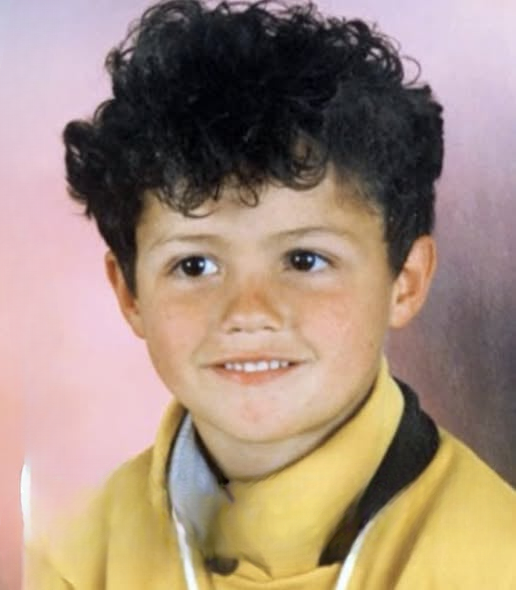
Before stadiums chanted his name and millions of fans around the world wore his jersey, a young boy from a small Portuguese island was simply trying to escape poverty through football.
Long before becoming one of the most recognizable athletes in history, Cristiano Ronaldo grew up in humble surroundings on the island of Madeira, where life was often difficult and opportunities were limited.
What separated him from other children wasn’t fame, money, or privilege.
It was obsession.
Even as a child, football wasn’t just a game to him — it felt like a way out.
Growing Up in Madeira
Ronaldo was born into a working-class family in Funchal, Madeira, Portugal.
His father worked long hours as a municipal gardener and part-time kit man at a local football club, while his mother struggled to support the family financially.
Their home was modest, crowded, and far removed from the luxury people later associated with global football stars.
Money was tight.
But football was everywhere.
From an early age, Ronaldo spent countless hours kicking a ball through narrow streets, local fields, and small neighborhood spaces. Friends and relatives quickly noticed something different about him.
He played constantly.
Not casually.
Relentlessly.
Even then, he hated losing.
Football Became His Escape
For Ronaldo, football represented more than entertainment.
It became purpose.
Teachers reportedly struggled to keep his attention because his mind stayed focused on the game. While other children dreamed casually about becoming famous athletes, Ronaldo approached football with unusual seriousness even at a young age.
He trained longer.
Ran harder.
Practiced constantly.
And eventually, his talent became impossible to ignore locally.
That talent led to an opportunity that would completely change his life.
Leaving Home at Just 12 Years Old
At an age when most children still depend heavily on family comfort, Ronaldo made a decision that required enormous emotional sacrifice.
At just twelve years old, he left Madeira and moved to Lisbon to join the academy of Sporting CP.
The move changed everything.
Suddenly, he was alone in a highly competitive environment filled with other talented young players all fighting for the same dream.
The transition was painful.
He missed his family deeply.
He struggled with loneliness.
Some teammates reportedly mocked his Madeira accent, making him feel isolated even further.
But instead of giving up, Ronaldo used those experiences as motivation.
Pressure, Discipline, and Isolation
Life inside a professional football academy demanded constant discipline.
Training sessions were intense.
Competition was ruthless.
Every mistake mattered.
Young players who failed to perform could easily be replaced.
Ronaldo understood this early.
Coaches quickly noticed his work ethic, speed, and determination. While some players relied mainly on natural talent, Ronaldo became known for practicing obsessively long after formal training ended.
That mindset would later define his entire career.
But before reaching global fame, he faced another major obstacle that nearly ended everything.
The Heart Condition That Almost Ended His Career
As a teenager, Ronaldo was diagnosed with a heart condition that threatened his future in football.
Doctors discovered an irregular heartbeat severe enough to require medical treatment. At one point, there were fears he might never return to professional-level competition safely.
For many young athletes, news like that could have ended the dream permanently.
Instead, Ronaldo underwent treatment and returned to training shortly afterward with even greater determination.
The experience reportedly changed his mentality completely.
It reinforced the idea that nothing — not poverty, distance, criticism, or health setbacks — would stop him from pursuing success.
The Rise to Global Fame
Ronaldo’s performances at Sporting CP quickly attracted international attention.
His speed, confidence, technical ability, and goal-scoring instincts made him stand out immediately.
Soon afterward, he signed with Manchester United under legendary manager Sir Alex Ferguson.
That move transformed him from a promising teenager into an international star.
At Manchester United, Ronaldo developed into one of the world’s best players before later joining Real Madrid, where he reached another level entirely.
His years in Spain helped cement his status as one of football’s greatest athletes ever.
He later played for Juventus and remained a defining figure for the Portugal national football team throughout his career.
More Than Talent
What makes Ronaldo’s story remarkable isn’t simply his ability.
Many talented athletes never achieve lasting greatness.
What separated him was consistency.
Discipline.
Obsession with improvement.
Teammates, coaches, and trainers frequently described him as one of the hardest-working players they had ever seen.
Even after becoming globally famous, he continued training with the same intensity that shaped him as a child.
That mentality helped him break countless records across multiple leagues and international competitions.
The Legacy He Built
Today, Ronaldo is recognized as one of the greatest football players in history.
But behind the trophies, fame, and financial success remains the story of a boy who once left home frightened and alone simply for the chance to chase a dream.
His journey continues inspiring millions of people because it reflects something universal:
Success rarely arrives easily.
It is often built through sacrifice, resilience, discipline, and the refusal to quit during difficult moments.
From the streets of Madeira to the world’s biggest stadiums, Ronaldo’s life became proof that extraordinary futures can emerge from the most ordinary beginnings.
And perhaps the most powerful part of his story is this:
Before the world noticed him, he already believed in himself.