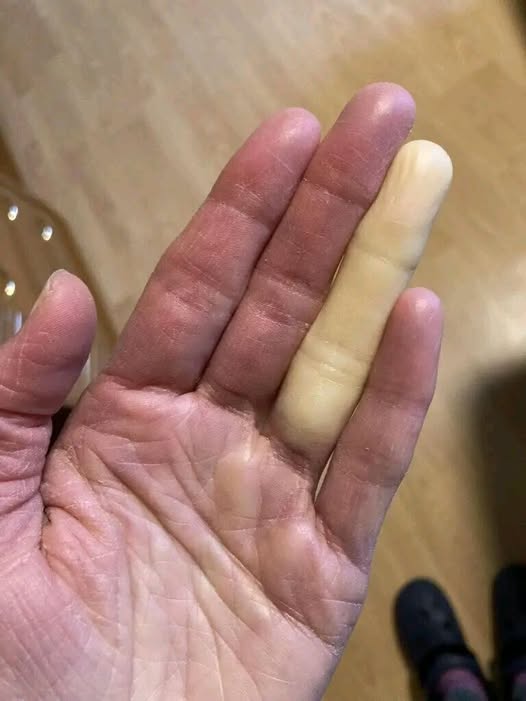
It can happen without warning.
You step outside on a cold morning or hold a cold drink for a few minutes, then suddenly notice one or more fingers turning pale white. The affected fingers may feel numb, icy cold, or strangely tingly, almost as though circulation temporarily stopped.
For many people, this unusual reaction is connected to a condition known as Raynaud’s phenomenon.
Although the symptoms can look alarming at first, the condition is often manageable once people understand what is happening inside the body.
What Is Raynaud’s Phenomenon?
Raynaud’s phenomenon occurs when small blood vessels narrow too much in response to cold temperatures or emotional stress. This temporary narrowing reduces blood flow, most commonly affecting the fingers and toes.
During an episode, the skin may change color in stages:
- White or pale due to reduced blood flow
- Blue as oxygen levels decrease
- Red when circulation returns
As blood flow returns, people may experience tingling, throbbing, warmth, or mild discomfort.
Common Symptoms
People with Raynaud’s-like symptoms may notice:
- Fingers turning white or pale
- Cold hands or feet
- Tingling sensations
- Temporary numbness
- Skin color changes
- Mild throbbing after warming up
Episodes may last only a few minutes or continue longer depending on the trigger and severity.
Why Does It Happen?
The body naturally narrows blood vessels in cold conditions to preserve heat.
In people with Raynaud’s phenomenon, however, this response becomes exaggerated. Even mild cold exposure, emotional stress, or sudden temperature changes can trigger a strong circulation reaction.
Doctors generally classify the condition into two forms:
Primary Raynaud’s
This type occurs on its own without another underlying medical condition. It is often less severe and more common.
Secondary Raynaud’s
This form is linked to other health conditions involving blood vessels, autoimmune diseases, or connective tissue disorders. Secondary cases may require further medical evaluation and treatment.
A Common Real-Life Experience
Many people first notice symptoms during winter months.
For example, someone may suddenly see two fingers turn completely pale while walking outside or holding an iced drink. The episode may disappear after warming up, only to return repeatedly over time.
Experiences like these often lead people to seek medical advice or circulation evaluations for reassurance and proper diagnosis.
Triggers That Can Make Symptoms Worse
Several factors may increase the likelihood of Raynaud’s episodes, including:
- Cold weather
- Stress or anxiety
- Smoking
- Sudden temperature changes
- Air conditioning exposure
- Caffeine sensitivity in some individuals
Managing these triggers may help reduce the frequency and severity of attacks.
Tips That May Help Prevent Symptoms
Doctors often recommend practical lifestyle changes to improve circulation and reduce episodes, such as:
- Wearing gloves and warm clothing in cold weather
- Keeping indoor temperatures comfortable
- Managing stress levels
- Avoiding smoking
- Exercising regularly to support circulation
- Limiting sudden cold exposure
These habits may help many people manage symptoms successfully.
When Should You See a Doctor?
Medical evaluation may be important if symptoms:
- Become painful
- Occur frequently
- Interfere with daily life
- Cause sores or skin damage
- Begin suddenly later in adulthood
- Appear alongside other unusual symptoms
Healthcare providers may recommend tests to rule out underlying vascular or autoimmune conditions if necessary.
Final Thoughts
Seeing fingers suddenly turn white can feel frightening, especially the first time it happens. But in many cases, Raynaud’s phenomenon is simply the body reacting strongly to cold temperatures or stress.
With awareness, proper medical guidance, and healthy circulation habits, many people are able to manage symptoms and continue living normal, active lives.
Sometimes the body is simply responding to the environment in ways that become noticeable only over time.